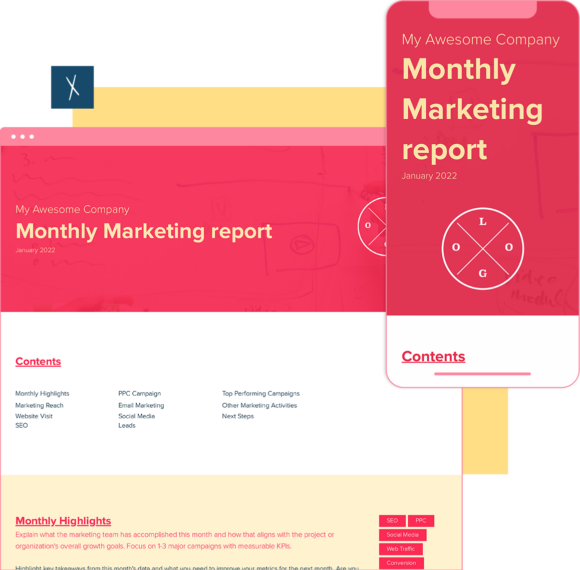
Monthly Marketing Report Template
The monthly marketing report template makes it easy to showcase the results of your marketing strategies and campaigns to clients, managers and other key stakeholders. Keep an ongoing record of your marketing efforts, measure the impact of strategic marketing initiatives and long-term projects and make more informed business decisions by creating your own monthly marketing reports.
- Create a visually-engaging report to track monthly growth of your visits, leads, and customers.
- Identify which marketing channels perform best for your organization.
- Find holes in your marketing strategy, pivot and improve.
Xtensio is your team’s deliverables workspace.
Create, collaborate, and deliver client-ready docs—then keep them current.
Join 407,557 using Xtensio.
Xtensio is the workspace for professional deliverables.
Make one deliverable today—then build a repeatable system for every client and project.
This is where teams create, collaborate, organize, and deliver the documents that run their work.
Everything stays on-brand, current, and ready to share.

Organize every deliverable
Keep strategy, sales, marketing, and client docs together by workspace.
Create fast, stay consistent
Start from 200+ templates or AI drafts, then apply your brand kit.
Collaborate in the doc
No more “final_v7.pdf” loop.
Standardize across deliverables
Apply your brand kit + reusable modules so every deliverable matches.
Improve what you send
See engagement, iterate, and reuse what works across projects.
How to create a monthly marketing report with Xtensio
- Click and start editing, no account or credit card required.
Follow along with the instructional marketing report details. Add charts, graphs, images, and videos to customize the report template and make it your own. Drag & drop. Resize. It’s the easiest editor ever.
- Customize everything in the monthly marketing report template to match your brand.
Define your style guide. Add your (or your client’s) brand fonts and colors. You can even pull colors directly from a website to easily brand your marketing reports and more.
- Work on the monthly marketing report together on the cloud.
Add colleagues (or clients) to collaborate on the monthly marketing report. Changes automatically save and sync across all devices, in real-time.
- Share a link. Present a slideshow. Embed. Download a PDF/PNG.
The marketing report seamlessly adapts to your workflow. No more jumping from tool-to-tool to design different types of deliverables.
- Reuse and repurpose.
Save custom marketing report templates. Or copy and reuse in other documents.

What should be included in a monthly marketing report?
The monthly marketing report includes information that will help shape your marketing strategy. This means it’s crucial to choose your metrics wisely and make sure they are closely connected to your overall business goals. The specific metrics you choose will depend on your marketing goals, but here is a list of items your marketing report should include:
- Goals and KPIs.
- SEO data and website visitors.
- Email marketing data.
- Paid ads and campaign (PPC) stats.
- Leads and customers.
- Social media analysis.
- Key learnings and future strategies.
How do you write a monthly marketing report?
The layout and style of your marketing report will depend on why you’re creating this document and who you’re sharing it with. Dig into Google Analytics and other tools you’re using to track marketing campaigns. And use graphs and charts to visualize your data.
Here’s an outline of how to create your monthly marketing reports:
- Lead with an overview explaining what the marketing team has accomplished in the previous month. Focus on 1-3 major campaigns with measurable KPIs.
- Track the number of website visits you had last month using Google Analytics.
- Highlight increases in search rankings and organic visitors, and share detailed information about what you have done to achieve these results.
- Dedicate a section to paid channel metrics.
- Pull email marketing data into your marketing report.
- Outline social media activity for each active channel: Facebook, Twitter, LinkedIn, Instagram, and Youtube.
- Measure how much new interest you’re generating for your company’s products and services to understand what the sales pipeline is likely to look like in the coming weeks or months.
- Summarize key findings and what this means for your brand or marketing strategy.
- Discuss the marketing strategy moving forward into the next month/quarter/year.
Related to the Monthly Marketing Report Template
Fully customizable templates that you can make your own.
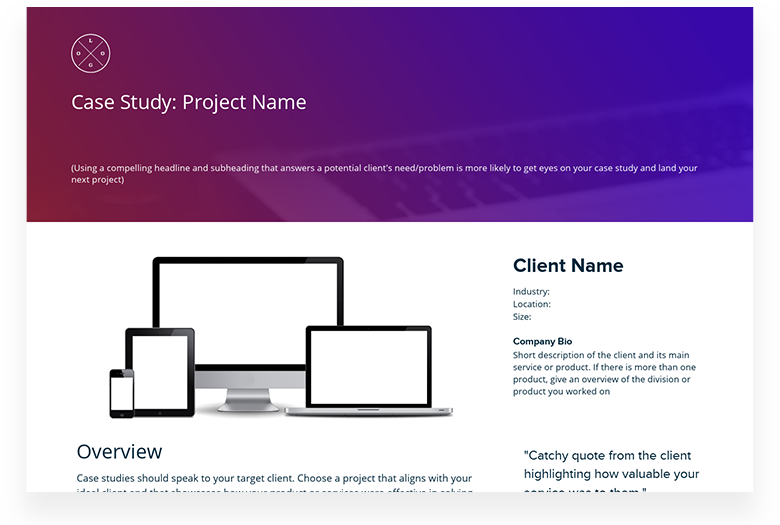
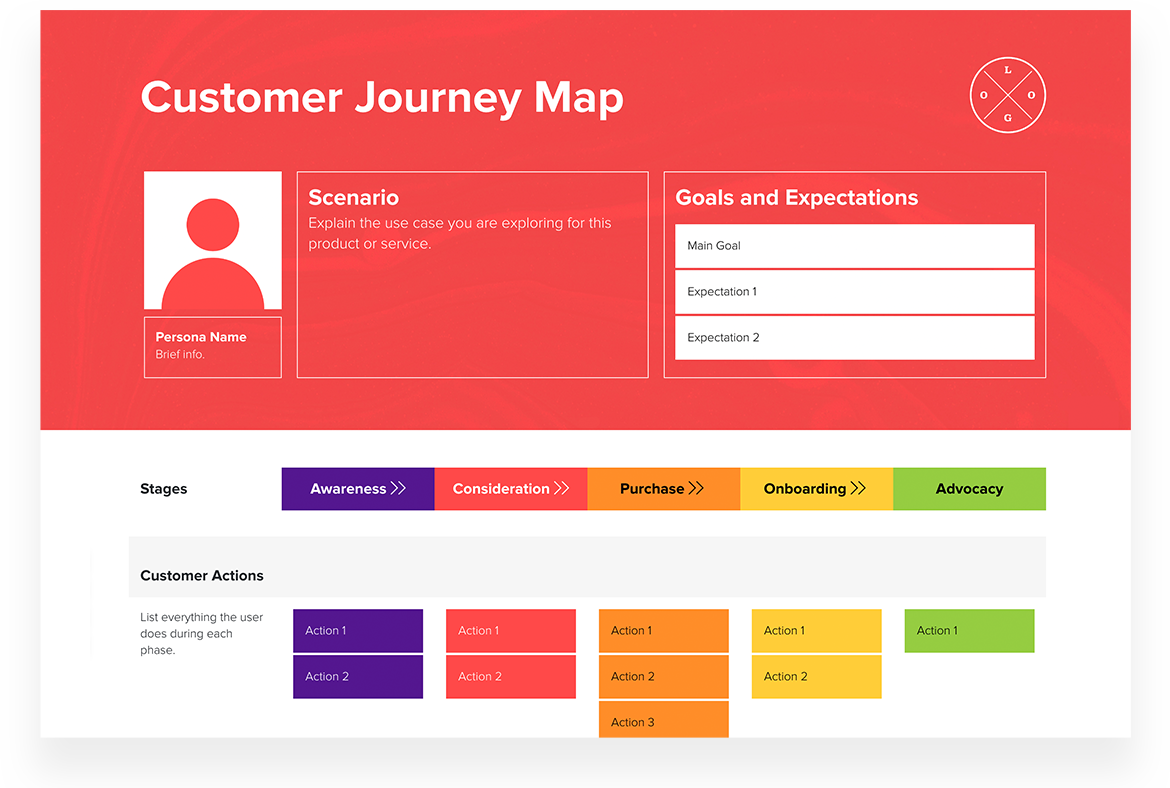


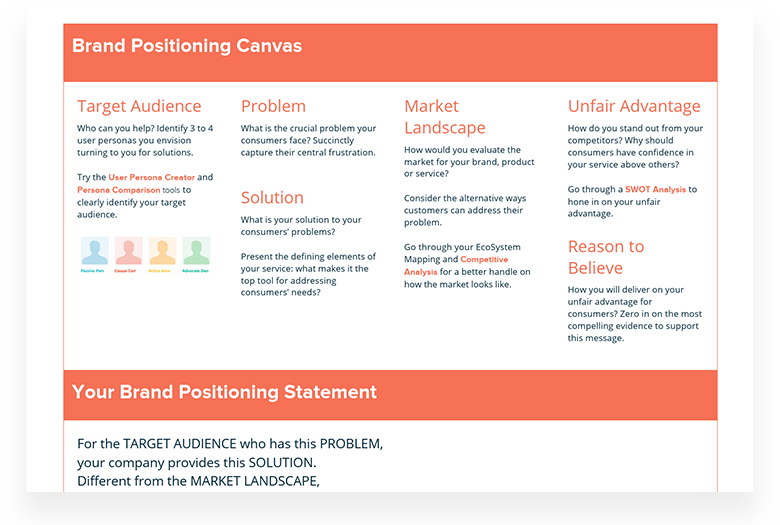
Marketing Report Metrics by Channel
A monthly marketing report that lists every available metric is not useful — it is noise. Stakeholders stop reading when the data is not curated. The best reports include only the metrics that reflect the goals your team committed to at the start of the quarter, with enough context to understand whether performance is on track, improving, or at risk. Here is what to include by channel:
Organic Search (SEO)
Report on impressions, clicks, average position, and CTR from Google Search Console — ideally segmented by branded vs. non-branded queries. Branded traffic reflects awareness; non-branded traffic reflects your ability to capture demand from people who do not yet know you. Track which pages improved or declined in position, and note any significant ranking changes with a brief explanation (new content, algorithm update, competitive movement). Include a 12-week trend line, not just month-over-month — marketing results take time to compound and single-month snapshots are misleading.
Paid Search and Paid Social
For paid channels, impressions and clicks matter less than Cost Per Acquisition (CPA) and Return on Ad Spend (ROAS). Report these at the campaign level, not just the channel level — a campaign with a 5x ROAS and a campaign with a 1.2x ROAS inside the same channel require different decisions. Include spend and budget utilization so finance can see whether your team is on track to hit monthly spend targets. If any campaign is significantly under or over budget, note the reason.
Email Marketing
Report open rate, click-to-open rate, unsubscribe rate, and conversions attributable to email sends — not just clicks. Deliverability is increasingly important: if your domain reputation is declining, list growth and send frequency may be working against you. Include a benchmark comparison (your own historical average is better than industry averages, which vary too widely to be meaningful).
Content and Social
Content metrics should be tied to pipeline contribution, not just pageviews. Which blog posts or guides are driving leads or trial signups? What percentage of your traffic is converting to a lead or a product touchpoint? If you cannot answer those questions, your analytics setup needs work before your reporting setup does. Social media metrics (followers, reach, engagement rate) are useful for understanding distribution reach, but should never be the primary KPI in a report that goes to leadership.
Tailoring Your Report to Different Audiences
The same marketing data presented to different audiences should look different — not because the numbers change, but because the framing, level of detail, and recommended actions differ significantly.
Executive / CEO Summary
Executives want to know: are we on track, what is the trend, and is there anything that needs a decision. A one-page summary with three to five metrics, a traffic light status (green/yellow/red), and two bullet points of context is more useful to a CEO than a 20-slide deck. Lead with the numbers that connect to revenue — MQLs, pipeline contribution, conversion rates — not channel metrics like impressions or social followers.
Client-Facing Reports
If you are an agency or consultancy producing marketing reports for clients, the framing shifts significantly. Clients want to see results in the context of the goals you agreed to at the start of the engagement. Lead with wins — metrics that improved. Follow with areas that need attention, framed as opportunities rather than failures, with a recommended action attached. Do not include internal metrics the client does not need to see (cost-per-click, platform fees, team hours). Include a clear next steps section with owner and due date so the client knows what to expect before the next reporting cycle.
Sending a report as a live link rather than a PDF means you can update the data without re-sending the file. When a client pulls up last month’s report for reference six weeks later, they see the most current version — not a frozen snapshot that may contradict the current conversation. For more on this workflow, see how teams share monthly reports clients actually read.
Marketing Report Structure That Gets Read
Stakeholders decide whether to read a report in the first five seconds. The structure of your report determines whether those five seconds produce engagement or abandonment. Here is the structure that consistently works:
- Executive summary (top of page). Three to five bullet points: biggest wins, biggest challenges, one key decision needed. This should be completable in under two minutes. Executives who read only this section should still know whether marketing is on track.
- Key metrics dashboard. A visual summary of the six to eight metrics that define success for the quarter. Each metric should show current period vs. prior period, with a directional indicator. Keep it on one screen — if it requires scrolling to see all metrics, cut some.
- Channel performance breakdown. Deeper data by channel for readers who need the detail. This section is for marketing team members and analysts, not for executives. Each channel section should follow the same structure: metrics, trend, interpretation, what we are doing about it.
- Campaign highlights. What campaigns ran this month, what the results were, and what the key learning is. This is not a list of everything you did — it is the three to five things that most deserve attention. Include one example of something that underperformed and what you learned from it. Reports that only report wins are not credible.
- Next month priorities. What the team is focused on next month, and why. This closes the loop between reporting and planning, and demonstrates that the team is proactively adapting to what the data shows rather than executing a static plan regardless of results.
For a step-by-step walkthrough of building reports clients engage with as live links, see how to share monthly reports clients actually read. For the template that pairs with this report — covering the strategy behind the numbers — see the content strategy template.
Monthly vs. Weekly vs. Quarterly Reports: What to Track When
The cadence of a marketing report should match the speed at which the decisions it informs need to be made. Reporting too frequently on slow-moving metrics produces noise. Reporting too infrequently on fast-moving data produces blind spots. Here is a framework for matching report cadence to metric type:
Weekly Reports: Campaign and Channel Hygiene
Weekly reports are for operational decisions that cannot wait a month. Paid campaign performance should be reviewed weekly — budget pacing, cost per lead, underperforming ad sets that need pausing or budget reallocation. Email deliverability issues surface within days. If you run time-sensitive campaigns (product launches, seasonal promotions, event-driven pushes), weekly check-ins catch problems before they compound.
Weekly reports should be short — five metrics, a traffic light status, and one paragraph of interpretation. They are not summaries of everything that happened; they are early warning systems for things that need intervention. If nothing needs intervention, the weekly report should take under five minutes to produce and under two minutes to read.
Monthly Reports: Trend Analysis and Attribution
Monthly reports are where most meaningful marketing insight lives. A month is long enough for trends to emerge from noise, and short enough to course-correct before a bad quarter becomes a bad year. Monthly reports should answer: which channels are improving, which are declining, and what is driving the change? Attribution — crediting the right channels and touchpoints for conversions — is more reliable at the monthly level than the weekly level, because longer windows capture more of the customer journey.
Monthly reports should always include a month-over-month comparison and, where possible, a year-over-year comparison. Seasonality makes month-over-month comparisons misleading for many businesses — a 10% traffic decline in December may be expected and healthy; the same decline in March may signal a real problem. Year-over-year removes seasonal distortion and shows actual growth trajectory.
Quarterly Reports: Strategic Assessment
Quarterly business reviews (QBRs) are where marketing strategy is evaluated, not just performance. The quarterly report asks: did we achieve our goals, were those the right goals, and what do we change for next quarter? It includes the same data as the monthly report but adds a retrospective layer — what did we try, what worked, what do we stop doing, and what do we commit to for the next period.
Quarterly reports typically go to a wider audience than monthly ones — including sales leadership, finance, and sometimes the board. This means the framing matters even more. Translate marketing metrics into business outcomes: what revenue is attributable to marketing, what is the cost to acquire a customer by channel, and what is the payback period on marketing spend. These are the numbers that earn marketing a seat at the strategic planning table.
Common Marketing Report Mistakes
- Reporting outputs instead of outcomes. The number of blog posts published is an output. The organic traffic and leads those posts generated are outcomes. Report outcomes. Stakeholders who see only outputs cannot evaluate whether the marketing investment is working.
- Cherry-picking metrics. Reports that only include metrics that look good are not trusted over time. Include one or two metrics that underperformed and explain what the team is doing about them. Credibility comes from honest reporting, not positive spin.
- No benchmark or context. A number without context is useless. “Website traffic was 45,000 visits” tells no one anything. “Website traffic was 45,000 visits, up 12% month-over-month and up 34% year-over-year, pacing ahead of our Q2 goal of 50,000 monthly visits” is actionable.
- Sending as a static PDF. A PDF freezes your report at the moment of creation. Any errors require re-sending. Any updates require re-sending. Recipients who share it with colleagues share an outdated copy the moment you update the source. A live link solves all of these problems — one update, one source of truth, always current for every recipient who has the link.
- No recommendations. A report that describes what happened without recommending what to do next is analysis, not a decision tool. End every section with a recommended action: “Given the 23% decline in organic CTR for non-branded queries, we recommend A/B testing new title tags on the top 10 pages by impressions in Q3.”
Teams use Xtensio to create, share, and improve professional deliverables.
Trusted by 407,557 teams, founders, and consultants.



Jerome Katz
Professor of Entrepreneurship @

Jake Peters
CEO @

Robin Bramman
Founder and Chief Brand Mixologist @

Olakunle Oladehin
Executive Director @
Everybody Dance Now!

Aaron Friedland
Executive Director @
The Walking School Bus

Robin Eyre
Owner @

Adam Sher
CEO @

Stephen Paterson
Chief Product Officer @

Create and deliver beautiful work, professionally.
Build, brand, and deliver living documents your clients actually engage with.







Join 407,557 professionals delivering work with Xtensio.
Related reports: Annual Report Template, Monthly Performance Report Template, Social Media Report Template, Weekly Project Status Report Template