Competitive Analysis Template
Create competitive analyses that reveal your edge — automatically.
Competitors researched. Insights found. Branding applied.
Built automatically into a living, share-ready folio for your team, clients, or investors.
Visualize your competitive landscape, spot opportunities, and refine your strategy — in minutes.
Xtensio is your team’s deliverables workspace.
Create, collaborate, and deliver client-ready docs—then keep them current.
Join 409,729 using Xtensio.
Xtensio is the workspace for professional deliverables.
Make one deliverable today—then build a repeatable system for every client and project.
This is where teams create, collaborate, organize, and deliver the documents that run their work.
Everything stays on-brand, current, and ready to share.

Organize every deliverable
Keep strategy, sales, marketing, and client docs together by workspace.
Create fast, stay consistent
Start from 200+ templates or AI drafts, then apply your brand kit.
Collaborate in the doc
No more “final_v7.pdf” loop.
Standardize across deliverables
Apply your brand kit + reusable modules so every deliverable matches.
Improve what you send
See engagement, iterate, and reuse what works across projects.
Other Competitive Analysis templates
What is a competitive analysis?
Getting to know your competitors is a game-changer for any business. When you understand your strengths and weaknesses compared to others in your field, you can find your unique place in the market, connect with customers more effectively, and win new business.
A Competitive Analysis helps you navigate your competitive landscape with clarity. It’s a practical framework for assessing your market position, identifying opportunities, and staying agile in a fast-changing environment.
Why does this matter? Imagine if your pricing was higher than the average in your market or compared to direct competitors. Without a clear view of where you stand, you might miss out on attracting new customers. A competitive analysis offers valuable insights that can shape a smarter marketing strategy and help your sales team turn more leads into customers.
By regularly diving into competitor research, you keep your finger on the pulse of market trends, giving your business the edge to adapt and thrive.
An effective competitor analysis helps you:
- Gain valuable insights into your competitors to better align your marketing efforts. Assess their strengths, weaknesses, threats, and opportunities to sharpen your own competitive edge.
- Understand key marketing tactics and uncover market opportunities to position your business for success. Stay ahead by analyzing competitor websites and content strategies to identify and adapt to current market trends.
- Minimize risks by quickly responding to changes in the industry.
What information do I need to create a competitive analysis?
The first step in competitor research is identifying who the competition is. There are many ways to identify competitors, but the easiest is just Googling yourself – seriously! You may also use tools like Ahrefs to do a SERP analysis.
Start with a simple web search and relevant social media platforms for your business name, product ideas, and overarching business idea. From there you can explore the competition’s digital footprint as deep as you need to get a comprehensive view of the competitive landscape.
Search the competition’s website content and social media presence, news mentions, support threads, reviews, and online communities – to name a few! Also, look for competitive analysis examples relevant to your business niche. Use this free competitor analysis template to edit and share with your marketing team.
As you’re documenting your competitors track the basics:
- Name of the business
- Location
- Mission statement
- Product offering
- Messaging
- Pricing
- Target customers
- Competitor’s products
When analyzing each competitor’s products or services, make sure you take a close look at the customer experience on their website, content marketing, social media, and digital footprint.
- How solid is their product photography and copywriting? How do they display their offering and communicate value?
- Where are their calls to action on the website? Are they obvious or do they get lost?
- How long does it take for them to respond to emails, live chat, and contact form submissions?
- What’s their market share?
- What information is included in their marketing banners and callouts? How about their email campaigns?
- What is the frequency of their promotions? What benefits do those promotions provide to their customers and potential shoppers, as well as their business?
- How many people follow them on social media? What is the engagement rate of their audience?
- How many employees do they have? What kind of tasks do their employees perform?
How do you write a competitive analysis?
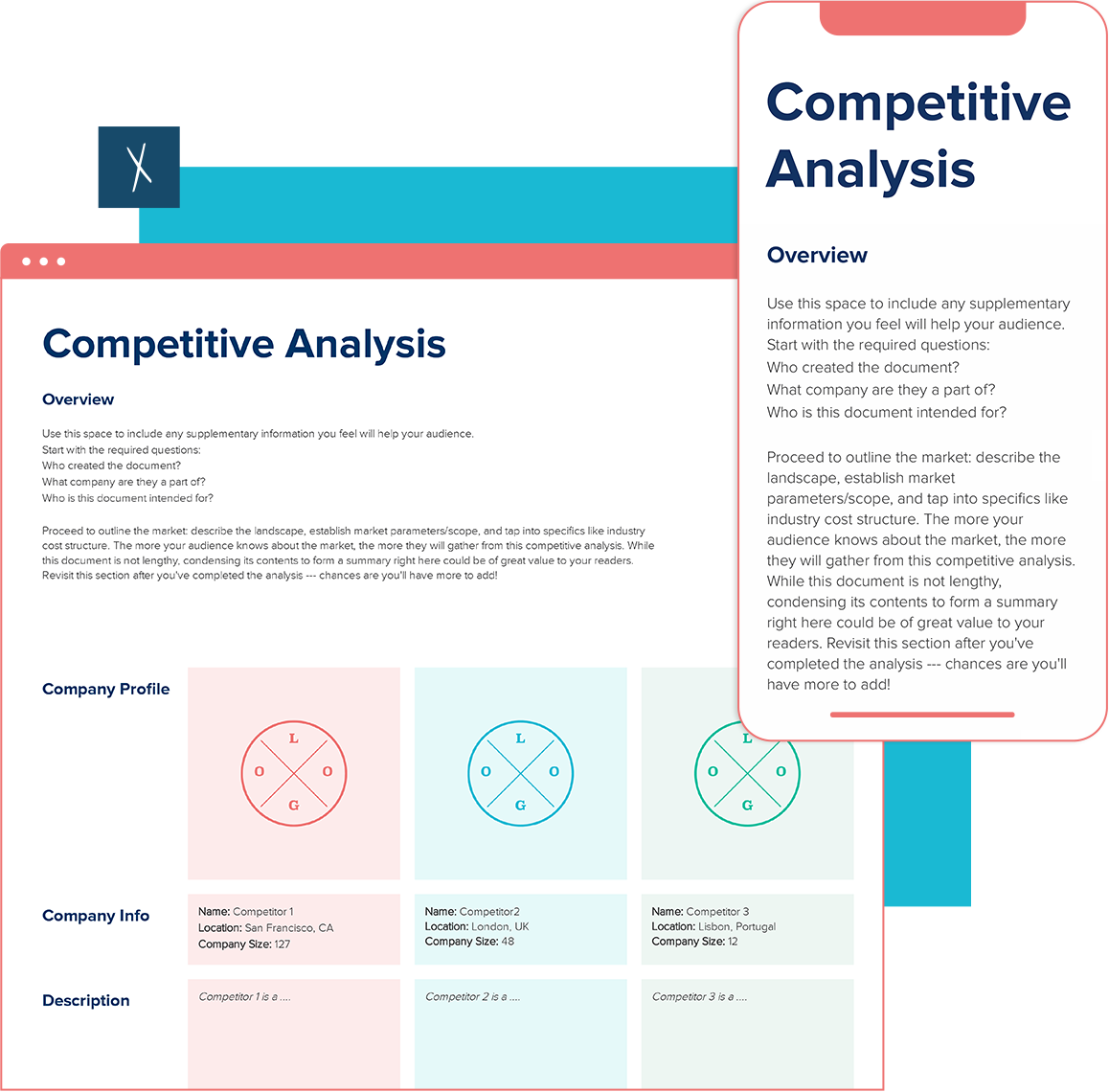
Writing a competitor matrix is the easy part. Once you’ve done a deep dive into the competitive landscape, you’re ready to create a side-by-side comparison of your business and the competition to help your team strategize better, plan business growth, content marketing, customer success, social media and other communication strategies to provide a clearer vision for the organization. Get started with Xtensio’s competitive analysis template.
Step #1: Describe your competitors
Introduce your competitor analysis with your target audience in mind and outline the general market landscape. You’ll list your three main competitors and their basic information: product, mission, location, company size, web presence, social media channels, and tagline.
Step #2 Analyze the competition’s strengths and weaknesses
It’s easy to notice what your competition is doing wrong, but what about the things they’re doing right? In order to compete, dissect all aspects of your competition by completing a SWOT analysis (Strengths, Weaknesses, Opportunities, and Threat Analysis) for each competitor. What are their customers happy about? What are they complaining about? Use this opportunity to dive into some qualitative competitor analysis.
Go online and collect YouTube, Facebook, and Twitter comments. Chat with your competitors’ customers if you can interact with them. You can use all of this information to find your own strengths, weaknesses, and your competitive advantage.
After summarizing your strengths and weaknesses, opportunities, and threats, it’s time to look at the bigger picture as to how this fits in with your marketing strategies. It’s time to figure out where every major competitor currently fits into the competitive landscape.
What’s each competitor’s position with respect to the market landscape criteria? Add new data pieces to compare across the board. Surely, this will help your audience understand the market and where your competitors stand concerning one another.
A competitive analysis will allow you to plan effective strategies to battle the competition and establish your own company in your target market. Remember, the competitive analysis is meant to help your team plan and strategize to stay ahead of the competition.
A report that communicates the findings of your competitive analysis will ensure stakeholders are on board and in the know. Add your team to collaborate or share a link so you can analyze your report together.
Check out Xtensio’s competitive analysis template how-to guide for more tips. Take advantage of other strategic frameworks to review the broader picture:
How to do a competitive analysis with Xtensio
- Create a free account and start editing, no credit card required.
Follow along with the instructional copy. Add charts, graphs, images, and videos to customize your competitive analysis. Drag & drop. Resize. It’s the easiest free competitive analysis template ever.
- Customize everything in the analysis to match your brand guidelines.
Define your style guide. Add your (or your client’s) brand fonts and colors. You can even pull colors directly from a website to easily brand your analysis.
- Work together on the cloud.
Add colleagues (or clients) to collaborate on your competitive analysis. Changes automatically save and sync across all devices, in real-time.
- Share a link. Present a slideshow. Embed. Download a PDF/PNG.
No more jumping from tool-to-tool to create different types of deliverables.
- Reuse and repurpose.
Save your own competitive analysis templates. Or copy and merge into other documents.
See how Xtensio compares
Wondering whether Xtensio is the right fit for your team? See how it stacks up:

Types of Competitive Analysis: Choosing the Right Approach
Not all competitive analysis looks the same. The type you run should match the decision you’re trying to make — choosing the wrong framework means collecting data that doesn’t answer the question on the table.
Direct vs. indirect analysis. A direct competitive analysis compares you to companies selling the same product to the same buyer. An indirect competitive analysis looks at alternatives your buyer might choose instead — different tools, processes, or even doing nothing. Most teams only do direct analysis and miss the real reason deals stall: the buyer chose a different category, not a different vendor.
Product vs. marketing vs. sales analysis. These are three distinct workstreams. A product analysis compares feature sets, integrations, and roadmap signals. A marketing analysis compares positioning, messaging, SEO footprint, content strategy, and audience targeting. A sales analysis compares pricing, deal structure, objection handling, and win/loss patterns. Each feeds a different team. Trying to do all three in one document produces a document too diluted to be useful for any of them.
Strategic vs. tactical analysis. A strategic competitive analysis is a quarterly or annual exercise — it tracks shifts in market positioning, funding, product strategy, and competitive moats. A tactical analysis is run in response to a specific event: a competitor launches a new feature, drops pricing, or wins a marquee customer. Both matter, but they require different data sources and different outputs.
Win/loss analysis is the most underused form of competitive research. Interviewing customers who chose a competitor (and customers who chose you over them) generates primary research that no SEO tool or website audit can replicate. A dozen win/loss interviews surface objections, positioning gaps, and competitive advantages that months of secondary research would miss.
As a starting point: define which type you’re running before you start collecting data. It determines what you look for, who you interview, and what the output should enable.
How to Present Competitive Analysis to Stakeholders
Competitive analysis work dies in spreadsheets. The research is sound but the format kills its impact — fifty-column comparison matrices and dense slide decks don’t give decision-makers what they need. Presenting findings well is as important as gathering them.
Lead with the so-what, not the what. Stakeholders don’t need to see every data point you collected. They need to know: where do we have a defensible advantage, where are we losing ground, and what should we do about it? Start every presentation with a one-paragraph executive summary that answers those three questions. Let the detail live in appendices for those who want to dig in.
Use a visual comparison format. A feature matrix, positioning map, or side-by-side scorecard conveys competitive standing faster than prose. The goal is a visual that someone can absorb in 30 seconds and understand where you sit relative to competitors. If your format requires a verbal explanation to make sense, it’s too complex.
Separate facts from interpretation. One of the most common mistakes in competitive presentations is mixing objective data (they launched X feature, they raised Y in funding, they rank #1 for Z keyword) with interpretive claims (therefore they’re targeting enterprise, therefore this is a threat). Keep both — but label them clearly so stakeholders know what’s verified and what’s your analysis.
Make it a living document. A competitive analysis presented as a PDF becomes outdated the moment it’s shared. Build it as a live document that can be updated in place and accessed via a permanent link. When a competitor drops pricing next quarter, you update the doc, not distribute a new version. Your stakeholders check the same link and see current information. This is how competitive intelligence actually stays useful over time — and it’s exactly what Xtensio’s competitive analysis template is built to support.
Competitive Analysis at Different Company Stages
The right competitive analysis framework depends on where your company is. Early-stage and growth-stage teams need different things, and using a framework built for the wrong stage produces analysis that’s too broad to be actionable.
Early-stage (0–50 customers): The primary questions are validation-oriented. Is anyone already solving this problem? If yes, how are they positioned, what’s missing from their approach, and where is your wedge? The competitive analysis at this stage is less about features and more about market positioning — who is already in the conversation, and how do you make your entry point distinct enough to win the early adopters who will define your reputation.
Growth stage (50–500 customers): Competitive analysis shifts to enabling sales and refining positioning. The questions become: why do we win, why do we lose, and how do we communicate our advantages more clearly? Win/loss data becomes primary. The analysis output is battle cards, objection-handling guides, and positioning updates — materials that go directly into the sales and marketing workflow.
Scale stage (500+ customers): Competitive analysis becomes a continuous intelligence function rather than a periodic exercise. The questions shift to strategic: who is entering our market, who could, what does the competitive landscape look like in 12–24 months, and where should we be building moats now? At this stage, a dedicated competitive intelligence program with regular outputs to product, marketing, and executive leadership is justified.
Wherever you are, the discipline of maintaining a current, shared competitive analysis document — one that your whole team can access, reference, and contribute to — compounds over time. Each update builds institutional knowledge. Each new hire onboards faster. Each sales call benefits from the last hundred conversations with prospects who compared you to a competitor.
Competitive analysis examples: what good looks like
A strong competitive analysis goes beyond listing features. It tells a strategic story: where you stand, where competitors are vulnerable, and where the market is heading. Here are the key patterns that separate useful competitive analyses from checkbox exercises:
Direct competitor comparison
Compare 3-5 direct competitors across consistent dimensions: product capabilities, pricing model, target customer, go-to-market strategy, and key differentiators. Use a side-by-side matrix so stakeholders can scan it quickly. The best competitor matrices include your own company as a column so the strategic gaps are immediately visible.
Market positioning map
Plot competitors on a 2×2 grid using the two dimensions that matter most to your buyers. For example, price vs. feature depth, or ease of use vs. customization. This visual makes your positioning strategy concrete and shareable with your team.
SWOT per competitor
Go deeper than surface-level feature lists. For each key competitor, document their strengths (what they do better than you), weaknesses (where they fall short), opportunities (market shifts you can exploit), and threats (moves they might make). This is where competitive analysis becomes actionable strategy.
Competitive analysis frameworks compared
Different frameworks serve different strategic questions. Choose based on what decision your competitive analysis needs to inform:
- Direct competitor matrix — Best for sales enablement and product positioning. Compare specific features, pricing, and messaging side by side.
- Porter’s Five Forces — Best for understanding industry-level competitive dynamics: supplier power, buyer power, threat of substitutes, threat of new entrants, and competitive rivalry.
- SWOT analysis — Best for internal strategy sessions. Evaluate each competitor’s strengths, weaknesses, opportunities, and threats relative to your position.
- Perceptual mapping — Best for positioning and branding. Plot competitors on a visual grid to find whitespace in the market.
- Win/loss analysis — Best for sales teams. Track why deals were won or lost against specific competitors to refine messaging and tactics.
Most teams benefit from combining two or more frameworks. Start with a direct competitor matrix for tactical decisions, then layer in Porter’s Five Forces or perceptual mapping for strategic planning.
How often should you update your competitive analysis?
A competitive analysis is only as valuable as it is current. But “update it regularly” is vague advice. Here’s a practical cadence based on how fast your market moves.
Quarterly deep review
Every 90 days, do a thorough refresh of your competitive landscape. Revisit each competitor’s product updates, pricing changes, messaging shifts, new hires (especially in leadership), and funding announcements. This is your baseline cadence — treat it like a scheduled audit rather than something that happens “when we get around to it.” Block 2-3 hours for the whole team to contribute insights from their functional areas.
Event-triggered updates
Between quarterly reviews, update your analysis whenever a significant competitive event occurs. Triggers include: a competitor launches a new product or feature, raises funding, changes pricing, gets acquired, publishes a major content piece, or appears in a new market segment. These events don’t wait for your quarterly schedule — and neither should your competitive intelligence. Assign team members to monitor specific competitors so nothing slips through the cracks.
Pre-launch sprint
Before any major product launch, campaign, or sales push, do a focused competitive sprint. This isn’t a full audit — it’s a targeted check: Has anything changed in how competitors position against the same audience you’re targeting? Have they released something that undercuts your differentiator? This 30-minute check can prevent your launch messaging from landing flat because a competitor already addressed the same pain point.
How different teams use competitive analysis
A competitive analysis isn’t just a marketing exercise. Different teams extract different value from the same competitive intelligence. Understanding these use cases ensures your analysis serves the whole organization — not just the team that created it.
Sales teams: win more deals
Sales reps need competitive battlecards — quick-reference summaries of how to position against each competitor during a live conversation. Your competitive analysis feeds these battlecards. For each competitor, distill: their key selling points, their known weaknesses, the objections prospects raise when comparing you, and the specific responses that win deals. Track win/loss data against each competitor to continuously sharpen your positioning.
Marketing teams: differentiate your message
Marketing uses competitive analysis to craft positioning that stands apart. If every competitor leads with “easy to use,” that claim has no differentiation power. Your competitive analysis reveals which messages are already crowded and where there’s whitespace. It also informs content strategy: what topics are competitors ranking for that you’re missing? What content formats are they using that you haven’t tried? Use competitive content gaps to build your editorial calendar.
Product teams: build what matters
Product managers use competitive analysis to inform the roadmap — but not by copying competitors. The goal is understanding the competitive table stakes (features every player must have) vs. differentiators (features that only make sense for your specific positioning). When a competitor launches a feature, the question isn’t “Should we build this too?” It’s “Does this feature serve our ICP’s core job-to-be-done, or is it noise?”
Leadership: strategic planning
Executives use competitive analysis for market-level decisions: pricing strategy, partnership opportunities, M&A evaluation, and market entry timing. At this level, the analysis should zoom out from feature comparisons to business model comparisons. How are competitors monetizing? What’s their growth strategy? Where are they investing — and where does that leave an opening for you?
Common competitive analysis mistakes to avoid
Even experienced teams make structural mistakes in their competitive analysis. These errors don’t just waste time — they produce misleading conclusions that drive bad decisions.
Focusing only on direct competitors. Your biggest competitive threat might not be another product in your category. It might be the spreadsheet your prospects currently use, the agency they hire instead, or the decision to do nothing. Include at least one “alternative approach” in your analysis — the non-product solution your prospects default to when they don’t buy from anyone.
Listing features without evaluating execution. Two products can both have “reporting” as a feature, but one delivers polished, shareable reports while the other exports raw CSV files. Feature lists create false equivalence. Go deeper: test the competitor’s product, read their reviews, talk to their customers. The quality of execution matters more than the existence of a feature checkbox.
Ignoring competitor weaknesses you share. It’s tempting to focus on competitor weaknesses that make you look good. But the most valuable insight is often a weakness you share with competitors — because it represents an unmet market need. If every player in your space has slow customer support, the first company to fix that wins a meaningful differentiator.
Making it a one-time exercise. A competitive analysis created once and filed away is an expensive artifact. Markets shift, competitors evolve, and your own positioning changes. If your competitive analysis doesn’t have a review cadence and an owner, it will be outdated within weeks of creation.
Confusing activity with strategy. Tracking every social media post, blog article, and press release a competitor publishes can feel productive. But volume of intelligence isn’t the same as quality of insight. Focus on the decisions your analysis needs to inform: pricing, positioning, product roadmap, sales enablement. If a data point doesn’t help with one of these decisions, it’s noise.
From competitive analysis to competitive strategy
Analysis without action is just research. The final step in any competitive analysis is translating insights into strategic moves. Here’s how to bridge that gap.
Identify your defensible differentiators. Review your analysis and ask: What can we do that competitors cannot easily replicate? This might be a technical capability, a distribution advantage, proprietary data, a specific customer relationship, or a brand position. Your strategy should double down on what’s defensible, not on what’s currently popular.
Map competitor gaps to your roadmap. Where competitors are weak is where you should be strong. If your analysis reveals that competitors have poor onboarding, invest in onboarding. If their pricing is confusing, make yours transparent. Every competitor weakness is a potential differentiator for you — but only if you invest in it deliberately.
Build competitive positioning into your workflows. Your competitive analysis should flow directly into your sales battlecards, your marketing messaging, your product roadmap priorities, and your investor pitch. In Xtensio, you can keep your competitive analysis alongside your user personas, customer journey maps, and pitch decks in the same workspace. When your competitive intelligence updates, every downstream deliverable stays informed — because they all live in the same system.
Set competitive triggers. Define the events that should trigger a strategic response: a competitor raises prices by more than 20%, enters your primary market segment, launches a feature that matches your core differentiator, or gets acquired. Having pre-defined triggers prevents reactive panic and ensures your team responds thoughtfully rather than emotionally.
Why your competitive analysis should be a living document
Markets move fast. A competitive analysis created in a static document or slide deck goes stale within weeks. Competitors launch new features, adjust pricing, shift messaging, and enter new markets constantly.
The most effective competitive analyses are living deliverables that your team updates continuously and shares as a link — not a file. When your sales team needs the latest competitive positioning, they open the same link and see current intelligence, not a PDF from last quarter.
With Xtensio, your competitive analysis lives in a project workspace where your team can:
- Update in real time — Add new competitor data as you discover it. No version control headaches.
- Collaborate across teams — Sales, marketing, and product teams all contribute insights to one source of truth.
- Share as a branded live link — Send stakeholders a link that always shows the latest analysis. No more emailing attachments.
- Track engagement — See who viewed your analysis, when, and for how long.
- Organize by project or client — Keep competitive analyses alongside related deliverables in your workspace.
- Export when needed — Download as PDF or present directly from the live page.
Your competitive analysis is not a one-time exercise. It is a strategic asset that compounds in value every time your team updates it. Build it once, deliver it professionally, and keep it current.
What’s Next?
A competitive analysis is most useful when it informs your positioning and pitch.
Related to the Competitive Analysis Template
Fully customizable templates that you can make your own.
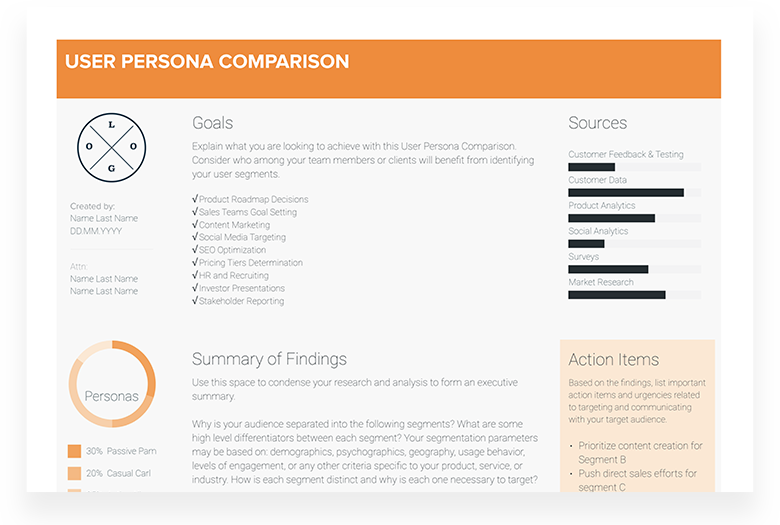
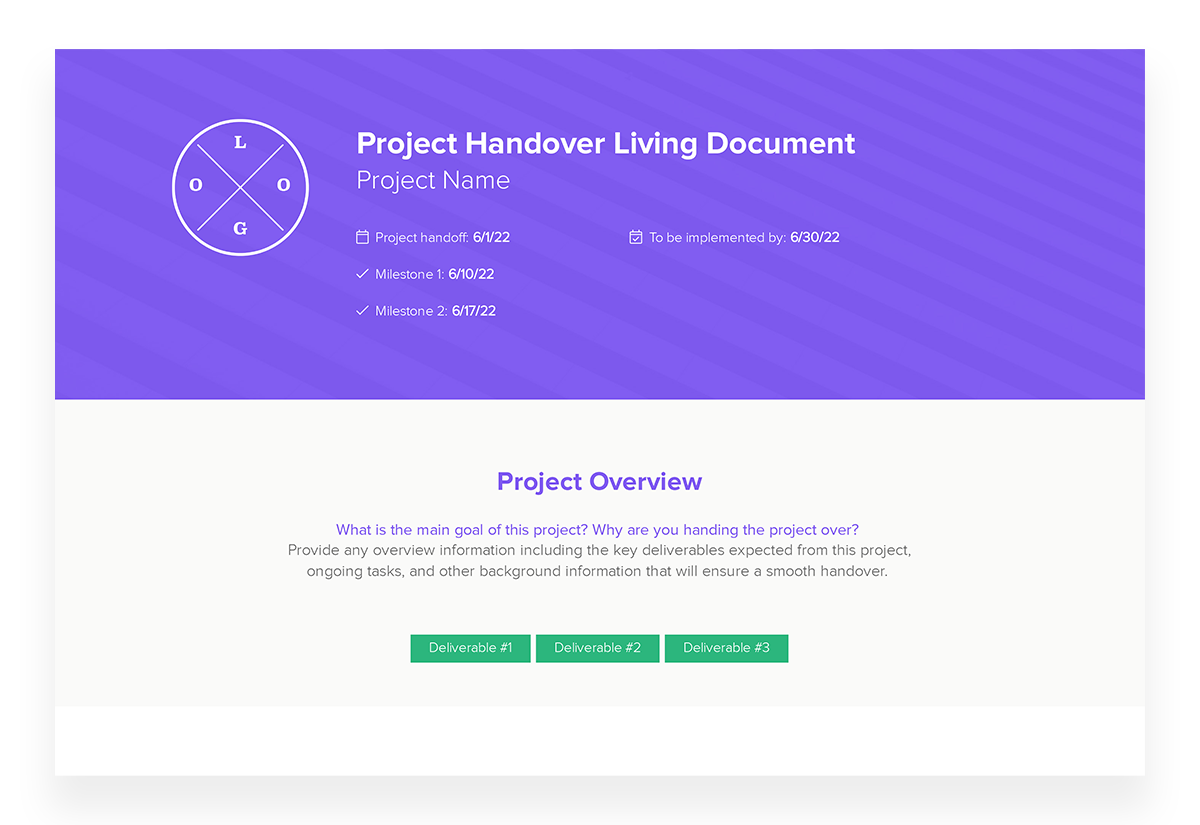
Teams use Xtensio to create, share, and improve professional deliverables.
Trusted by 409,729 teams, founders, and consultants.



Jerome Katz
Professor of Entrepreneurship @

Jake Peters
CEO @

Robin Bramman
Founder and Chief Brand Mixologist @

Olakunle Oladehin
Executive Director @
Everybody Dance Now!

Aaron Friedland
Executive Director @
The Walking School Bus

Robin Eyre
Owner @

Adam Sher
CEO @

Stephen Paterson
Chief Product Officer @
The 3-Layer Competitive Analysis Method
Most competitive analyses fail because they stop at the surface: feature grids and pricing tables. The 3-Layer Method goes deeper. Layer 1 is Market Positioning: how each competitor frames their value proposition, which audience segments they target, and where they show up in the buyer journey. Layer 2 is Operational Capability: their content velocity, product release cadence, partnership ecosystem, and customer support infrastructure. Layer 3 is Strategic Trajectory: where they are heading based on hiring patterns, patent filings, acquisition signals, and investor communications.
Teams that analyze all three layers spot competitive threats 6 to 12 months earlier than teams using feature-only comparisons. The key is treating your competitive analysis as a living deliverable, not a quarterly slide deck. Update it after every competitor launch, pricing change, or major hire. With Xtensio, your analysis stays current because stakeholders access it via a live link that always reflects the latest intelligence.
5 Mistakes That Make Competitive Analysis Useless
1. Analyzing too many competitors. Focus on 3 to 5 direct competitors and 1 to 2 adjacent disruptors. Beyond that, you dilute insight quality. 2. Ignoring indirect competitors. The biggest threat to a project management tool is not another PM tool; it is the spreadsheet the team already uses. Map substitutes, not just alternatives. 3. Collecting data without a hypothesis. Start each analysis cycle with a specific question: “Can competitor X undercut our pricing within 6 months?” is actionable. “What are our competitors doing?” is not. 4. Treating it as a one-time project. A competitive analysis from last quarter is a historical document, not a strategic tool. Set a monthly review cadence and assign an owner. 5. Hoarding the analysis. Competitive intelligence locked in one person’s drive helps no one. Share it across sales, product, and marketing as a workspace deliverable everyone can reference before calls and planning sessions.
Competitive Analysis by Team: Who Needs What
Different teams need different slices of competitive intelligence. Sales teams need battle cards with objection-handling scripts and win/loss patterns, updated after every deal. Build these from your sales battle card template and link them to the master analysis. Product teams need feature gap matrices and roadmap comparisons. Marketing teams need messaging differentiation maps and content gap analyses. Executive teams need the strategic trajectory layer: market share trends, funding signals, and scenario plans.
The most effective approach is a single master competitive analysis that branches into team-specific views. Create the master document with all three layers, then create derivative deliverables for each team’s workflow. All versions link back to the same underlying intelligence, and when the master updates, every team sees the change through their shared live links.
Prefer to start with AI? The AI Competitive Analysis Generator builds a structured competitor breakdown from your market description.

Create and deliver beautiful work, professionally.
Build, brand, and deliver living documents your clients actually engage with.







Join 409,729 professionals delivering work with Xtensio.