For UX Researchers & Designers
The UX deliverables workspace
Create personas, journey maps, usability reports, research briefs, and design documentation that are easy to share, easy to update, and easier for stakeholders to act on.
Trusted by 410,874+ consultants, agencies, and teams. No credit card required.
01
Create fast
Start from UX-ready templates or describe your research output and let AI draft a structured first version.
02
Deliver it clearly
Share live links instead of scattered files. Stakeholders always have the latest research and recommendations.
03
Keep it current
Personas evolve. Findings change. Update once and every stakeholder link reflects the latest insights.
04
Reuse across projects
Build reusable structures for personas, journey maps, and reports. Adapt per product, sprint, or research cycle.
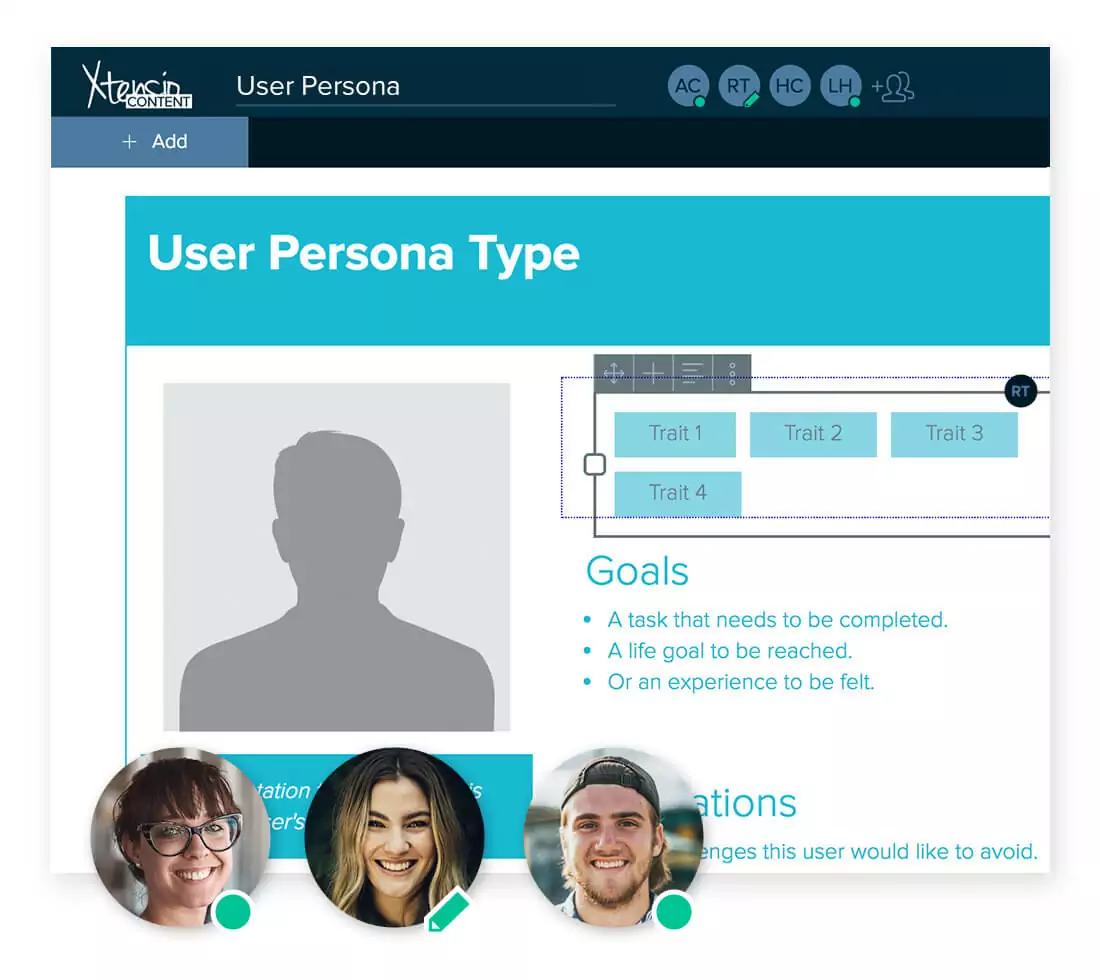
Build UX deliverables your whole team can actually use.
Start from UX-ready templates or your own reusable research structures. Personas, journey maps, usability reports, and research briefs built once and adapted per product, sprint, or stakeholder audience.
- 200+ UX templates for research, design, and strategy work
- Build reusable structures for recurring research deliverables
- Clone any deliverable for a new product area or sprint
- AI drafts your first version; you add the insights and details
Share research that stakeholders actually read.
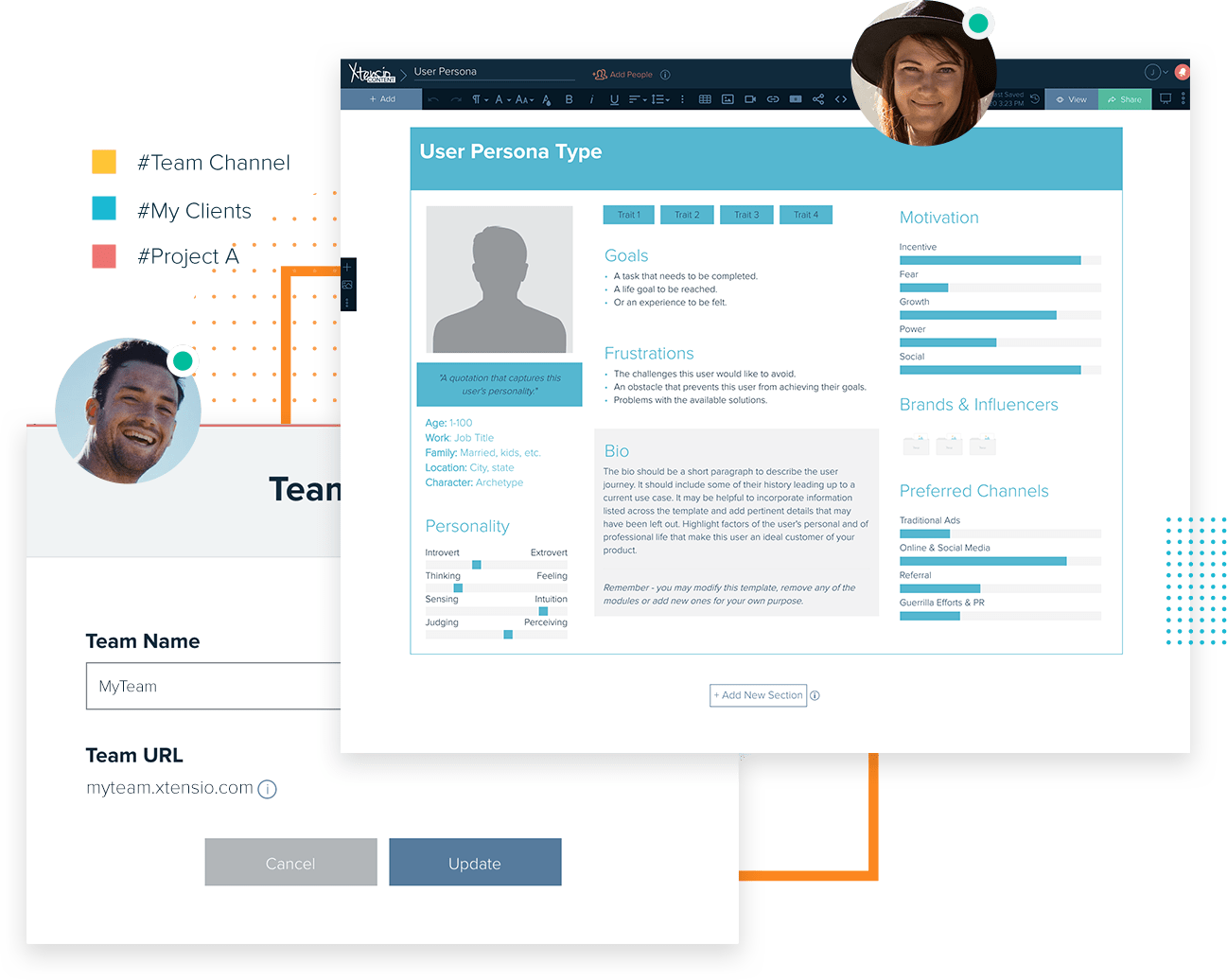
Every UX deliverable lives at a permanent URL. Update your persona as you learn more. Revise your usability findings after each round. Stakeholders always open the same link and see the most current version of your research.
- Live links instead of slide decks and email attachments
- See when product and leadership teams review your research
- Present findings as a full-screen stakeholder presentation
- Export as PDF when a static format is needed
Every project’s research, organized and accessible.
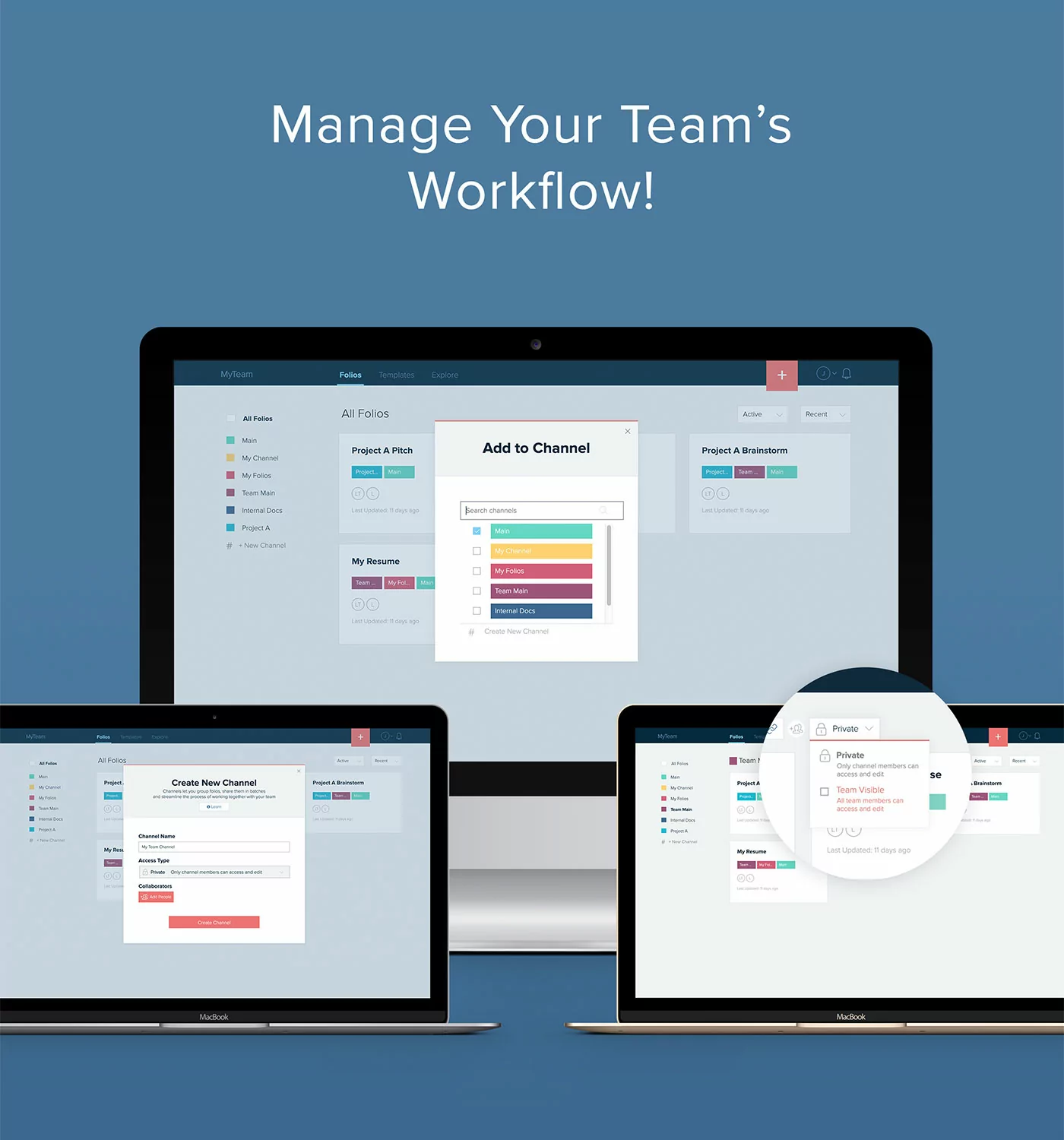
One Xtensio workspace per product, team, or research initiative holds every deliverable from discovery to design. When a project closes, archive it. When a new one starts, duplicate the structure and adapt.
- Organize UX deliverables by product, sprint, or research cycle
- Clone workspace structures for new projects
- Cross-functional visibility: design, product, and leadership aligned
- Track engagement: see who reviewed each research output
Why UX research gets ignored when it should inform decisions
Research gets delivered as a slide deck, shared once, and never referenced again. The persona from last quarter is out of date. The usability findings are buried in a folder nobody opens. Xtensio keeps your research at a permanent URL that updates as you learn.
Research people can find
One permanent link per deliverable. Stakeholders bookmark it and come back.
Insights that stay current
Update your persona or findings without redistributing the whole document.
Work that crosses functions
Product, design, and leadership all working from the same research.
No stale research docs
Every live link you share stays current. Stakeholders always see your latest findings.
No version confusion
One workspace, one current version. No more “which Figma file is the final one?” emails.
No scattered UX files
Every deliverable organized by product, sprint, or initiative. Reuse persona and research templates across every project.
What UX teams build with Xtensio
From discovery to design handoff: every deliverable your product and design teams need.
Guides and resources for designers
Explore UX strategy, client presentations, and design deliverable guides.

Join UX teams using Xtensio to turn research into work that drives decisions.
410,874 users and counting…


UX Deliverables That Win Client Buy-In
UX research only matters if decision-makers act on it. The difference between insights that get shelved and insights that shape product direction comes down to how you present them.
Personas need more than demographics. Stakeholders respond to behavioral patterns tied to revenue outcomes. A persona that says “Sarah, 34, Marketing Manager” gets skimmed. A persona that says “Mid-career marketer who abandons tools after 3 weeks if onboarding takes more than one session” gets quoted in product meetings. Build yours with the user persona template and share it as a live link so the team always references the latest version.
Journey maps reveal where experience breaks down. The best ones connect emotional states to specific interaction points, making it obvious where investment should go. A customer journey map that lives as a shared link stays current as you validate assumptions through testing cycles.
Empathy maps bridge the gap between quantitative data and human understanding. They force teams to articulate what users think, feel, say, and do, which exposes contradictions between stated preferences and observed behavior. Use the empathy map template to capture these insights in a format that product managers and engineers can reference during sprint planning.
Usability reports that drive action lead with severity, not chronology. Rank findings by business impact, include video clips of the failure moments, and pair every problem with a recommendation. When the report lives as a live link, stakeholders can comment directly and you avoid the endless email thread of “which version has the updated findings?”
Design systems documentation keeps implementation consistent across teams. When pattern libraries exist only in Figma, developers interpret specs differently. A living design system doc that links to the latest component states, usage rules, and accessibility notes reduces QA cycles and keeps the product visually coherent.
The pattern across all these deliverables is the same: data-backed insights, visual clarity, and stakeholder-specific framing. When you share each one as a live link through your workspace, stakeholders always see the current version without you re-sending files.
How UX Teams Stay Aligned Across Sprints
UX research has a shelf-life problem. Personas built in Q1 lose relevance by Q3. Journey maps from the last research cycle describe flows that product has already changed. Usability findings from two sprints ago reference screens that no longer exist.
The core issue is not the research itself. It is where the research lives and how teams access it.
Scattered tools create scattered understanding. When personas live in one Figma file, journey maps in a Miro board, research notes in Google Docs, and usability reports in a PDF folder, no one has the full picture. New team members spend their first two weeks asking “where is the latest version of the persona?” Product managers make decisions based on outdated assumptions because the current research is buried three tools deep.
Living deliverables solve the version problem. When each deliverable is a live link, updates happen in one place and everyone who has the link sees the current state. No re-sending files. No “v7_final_FINAL” naming. No wondering if the persona the developer is referencing is the one you validated last month or the draft from six months ago.
Async reviews scale across time zones. UX teams increasingly work across offices, remote setups, and agency-client boundaries. Waiting for a synchronous meeting to review research findings slows the entire sprint. When deliverables are shared as live links, stakeholders review on their schedule, leave comments in context, and you can track who has engaged through engagement analytics.
Reuse across projects compounds your investment. A well-built persona from one product line can inform adjacent products. A journey map template that worked for onboarding research can be duplicated for retention research. When all your deliverables live in organized workspaces, the research from every past project becomes a searchable library rather than a graveyard of forgotten PDFs.
The teams that produce the most impactful UX work are not necessarily the ones with the largest research budgets. They are the ones whose insights are accessible, current, and easy to reference at the moment a product decision is being made.
Frequently asked questions
Is Xtensio designed for UX researchers, designers, or both?
Both. UX researchers use Xtensio to create and share research deliverables: personas, journey maps, usability reports, and research briefs. Designers use it for documentation, stakeholder presentations, and design direction materials.
Can I organize UX deliverables by product, sprint, or research initiative?
Yes. Xtensio workspaces are flexible. You can organize by product area, sprint, research initiative, or team. Each workspace holds all related deliverables, accessible to product, design, and leadership as needed.
How does Xtensio compare to Figma or Notion for UX documentation?
Figma is for design files and prototypes. Notion is a wiki and notes tool. Xtensio is built for the research and documentation deliverables you share with stakeholders outside your immediate team: personas, usability reports, journey maps, and briefs.
Can I share research with stakeholders who do not use Xtensio?
Yes. Every Xtensio deliverable has a permanent URL you can share with anyone. Product managers, engineers, and executives can view it in a browser without needing an account. You control whether they can comment or just view.
What types of UX deliverables work best in Xtensio?
User personas, customer journey maps, usability reports, research briefs, empathy maps, competitive analyses, and design documentation. Any deliverable you share with cross-functional stakeholders and update as you learn will work better as a live Xtensio deliverable.
Explore how Xtensio works: Project Workspaces | Live Links | Engagement Analytics
From research to stakeholder-ready delivery.
Explore the full product overview to see how Xtensio works for your team. Learn how it works in 6 simple steps. Keep every deliverable on-brand with brand controls, and publish under your own URL with custom domains.
From first draft to polished delivery. Professional work that’s ready to send and stays alive as your client relationships evolve.
UX work that’s easy to share and stays current as your product understanding deepens.
*No credit card required.

Jerome Katz
Professor of Entrepreneurship @

Jake Peters
CEO @

Robin Bramman
Founder and Chief Brand Mixologist @

Olakunle Oladehin
Executive Director @
Everybody Dance Now!

Aaron Friedland
Executive Director @
The Walking School Bus

Robin Eyre
Owner @

Adam Sher
CEO @

Stephen Paterson
Chief Product Officer @
Related guides: Learn how to turn personas into campaigns and how to share research with stakeholders professionally. See how a deliverables workspace keeps your insights organized and current.

Create and deliver beautiful work, professionally.
Build, brand, and deliver living documents your clients actually engage with.





Join 410,874 professionals delivering work with Xtensio.