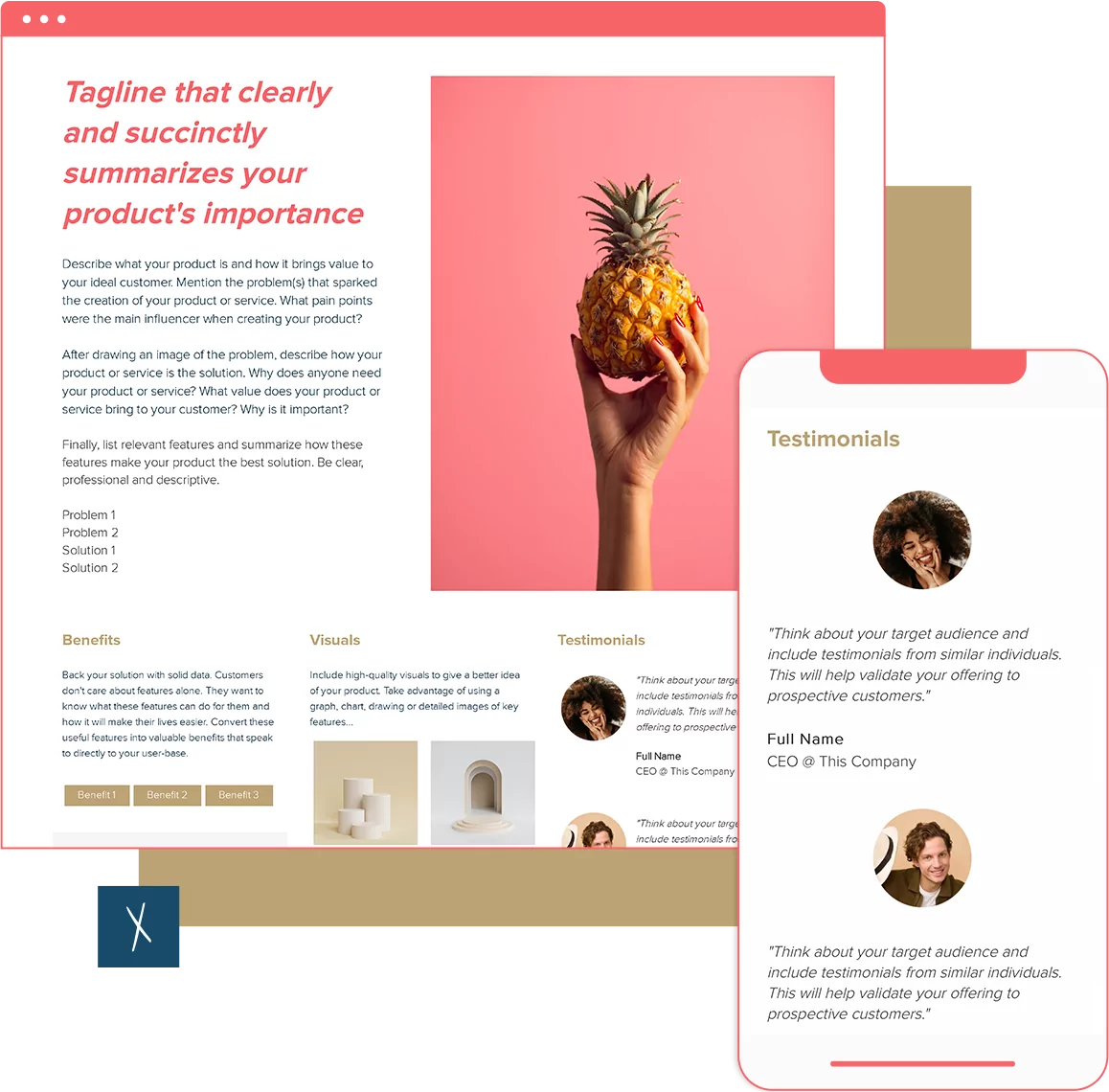
Sales Sheet Template
The sales sheet is a powerful document to take advantage of while reaching out to prospective customers, investors and stakeholders. The sales sheet template will help you capture the essence of your brand’s identity and your product’s purpose, key benefits and values in a single-page format.
- Create a visually-rich sales sheet to introduce your product.
- Raise questions and build brand recognition by highlighting key benefits.
- Quickly and easily present your business idea.
Xtensio is your team’s deliverables workspace.
Create, collaborate, and deliver client-ready docs—then keep them current.
Join 410,571 using Xtensio.
Xtensio is the workspace for professional deliverables.
Make one deliverable today—then build a repeatable system for every client and project.
This is where teams create, collaborate, organize, and deliver the documents that run their work.
Everything stays on-brand, current, and ready to share.

Organize every deliverable
Keep strategy, sales, marketing, and client docs together by workspace.
Create fast, stay consistent
Start from 200+ templates or AI drafts, then apply your brand kit.
Collaborate in the doc
No more “final_v7.pdf” loop.
Standardize across deliverables
Apply your brand kit + reusable modules so every deliverable matches.
Improve what you send
See engagement, iterate, and reuse what works across projects.
Other Sales Sheet templates
How to create a sales sheet with Xtensio
- Create a free account and start editing, no credit card required.
Follow along with the instructional sell sheet details. Add charts, graphs, images, and videos to customize the template and make it your own. Drag & drop. Resize. Customize the sell sheet format however you need. It’s the easiest editor ever.
- Customize everything in the template to match your brand.
Define your style guide. Add your (or your client’s) brand fonts and colors. You can even pull colors directly from a website to easily brand your sell sheet and more.
- Work on your sales sheets together on the cloud.
Add colleagues (or clients) to collaborate on the sales sheet template. Changes automatically save and sync across all devices, in real-time.
- Share a link. Present a slideshow. Embed. Download a PDF/PNG.
The sales sheet seamlessly adapts to your workflow. No more jumping from tool-to-tool to design different types of deliverables.
- Reuse and repurpose.
Save Save your own custom sales sheet templates. Or copy and merge into other documents.

What is a sales sheet?
A sales sheet, also known as a sell sheet, a product one sheet, a line sheet, a sales slick or a product datasheet, is a strategic tool you can use to promote a business idea, product or service on a single-page document. The sales sheet is a powerful document to take advantage of while reaching out to prospective customers, investors and stakeholders via mail, email or meetings because it acts as a physical first impression.
Your sales sheet should capture the essence of your brand’s identity and the purpose of your product. It should highlight your products’ capabilities, features and benefits, and key product images.
How do I write a sales sheet?
There are many resources for sales sheet templates and sales sheet designs out there you can use for inspiration. In all of these, whether you use Xtensio’s sales sheet template or one from Adobe Indesign or Microsoft Word, the real estate on the page should be used to highlight your product as clearly as possible.
Here is a quick checklist of items that should be included in your sell sheet:
- Your product name and logo.
- Full-color visuals – images and videos.
- A catchy phrase that clearly showcases your product in a one-line benefit statement.
- A clear description of your concept and the values it brings to your prospective customer.
- Product specifications, features and benefits.
- Appealing data visualization with charts and graphs.
- Your company contact information: phone number, email address, office location, website, etc.
Sales Sheet vs Product Sheet vs Brochure vs One-Pager
These four documents share shelf space in many sales teams’ toolkits, but they serve distinct purposes. Using the wrong format for the wrong situation weakens your pitch.
A sales sheet is a persuasion tool. Its job is to move a prospect closer to a buying decision. Every element on the page serves one goal: demonstrate why this product solves the prospect’s problem. Sales sheets lead with benefits, include social proof, and end with a clear call to action. They are designed to leave behind after a meeting or to include in an outreach email.
A product sheet is a specification document. It provides detailed technical information: dimensions, integrations, compatibility, pricing tiers, and feature lists. Product sheets serve buyers who are already interested and need to evaluate fit. They answer “can this do what I need?” rather than “why should I care?” Engineering teams, procurement departments, and IT reviewers are the typical audience.
A brochure is a brand narrative. It tells your company’s story across multiple pages with rich visuals, customer testimonials, and brand messaging. Brochures work at trade shows, conferences, and in waiting rooms. They build awareness and credibility but rarely close deals on their own. A brochure is a top-of-funnel asset; a sales sheet is a bottom-of-funnel closer.
A one-pager is an executive summary. It distills your entire offering into a single page for time-pressed decision-makers. One-pagers work best when you have 30 seconds of attention and need to communicate the core value proposition. They overlap with sales sheets but tend to be less sales-focused and more informational.
Most sales teams need all four. The challenge is knowing which to send at which moment. A brochure at the discovery stage, a one-pager for the initial pitch, a sales sheet during evaluation, and a product sheet for technical review. When all four live in a shared workspace, reps grab the right asset without searching through folders or asking marketing for the latest version.
5 Sales Sheet Mistakes That Lose Deals
A weak sales sheet does not just fail to help. It actively hurts your chances. Here are the mistakes that turn a closing tool into a deal-killer.
1. Leading with features instead of benefits. “Our platform supports 47 integrations” tells a prospect nothing about their problem. “Connect your sales sheet data to every tool your team already uses, no manual entry required” shows value. Features describe what you built. Benefits describe what the buyer gains. Every line on your sales sheet should answer the question “so what?” from the prospect’s perspective.
2. Missing social proof. Claims without evidence are just marketing copy. Include at least one customer quote, a specific result (“reduced onboarding time by 40%”), or recognizable logos. Prospects trust other customers more than they trust your copywriting. A sales sheet without social proof asks the reader to take your word for it, and most will not.
3. Generic messaging that fits any competitor. If you can swap your company name with a competitor’s and the sales sheet still reads the same, it is not doing its job. Identify the one thing you do that competitors cannot match and make it the centerpiece. Generic messaging creates generic impressions, and generic impressions do not win deals.
4. No clear call to action. Every sales sheet needs to tell the reader exactly what to do next: book a demo, start a free trial, or contact a specific person. “Learn more” is not a call to action. “Schedule a 15-minute walkthrough with your account manager” is. Make the next step concrete, easy, and urgent.
5. PDF-only distribution. Sales sheets sent as PDF attachments get downloaded, maybe opened once, and then buried in a downloads folder. When you share your sales sheet as a live link, you can update pricing, swap testimonials, and refresh messaging without asking your prospect to re-download anything. The version they see is always current.
Sales Sheet Best Practices by Sales Stage
The most effective sales sheets are not one-size-fits-all. Different stages of the sales cycle call for different emphasis, tone, and content.
Prospecting stage: lead with pain. At this stage, the prospect may not know you exist. Your sales sheet needs to name their problem before pitching your solution. Open with a statistic or scenario that makes them think “that is exactly my situation.” Keep the product details minimal. The goal is to earn a conversation, not close a deal.
Discovery stage: lead with solution fit. The prospect knows their problem and is evaluating options. Your sales sheet should map your capabilities directly to their stated needs. If they mentioned integration concerns in the discovery call, lead with integration capabilities. If they mentioned team adoption, lead with ease-of-use testimonials. A discovery-stage sales sheet should feel like it was written specifically for this prospect.
Proposal stage: lead with ROI. At this point, the prospect believes you can solve their problem. Now they need to justify the investment internally. Your sales sheet should include specific ROI data, implementation timelines, and total cost of ownership comparisons. This is where case studies with hard numbers matter most: “Company X reduced their reporting cycle from 2 weeks to 2 days.”
Closing stage: lead with urgency and proof. The final-stage sales sheet removes last-minute objections. Include your guarantee, onboarding timeline, and a summary of everything the prospect gains by signing. Reference the specific pain points they raised in earlier conversations. This is the leave-behind that the economic buyer reads before approving the deal.
The best sales teams do not create one sales sheet and use it forever. They build a library of stage-specific versions, keep them current with the latest data and testimonials, and reuse the strongest elements across every deal. That is the difference between a sales sheet that sits in a folder and one that closes revenue.
Related to the Sales Sheet Template
Fully customizable templates that you can make your own.
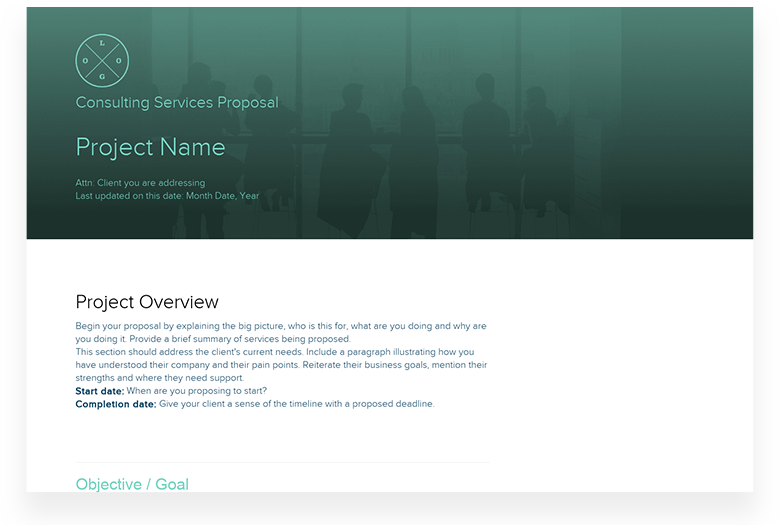
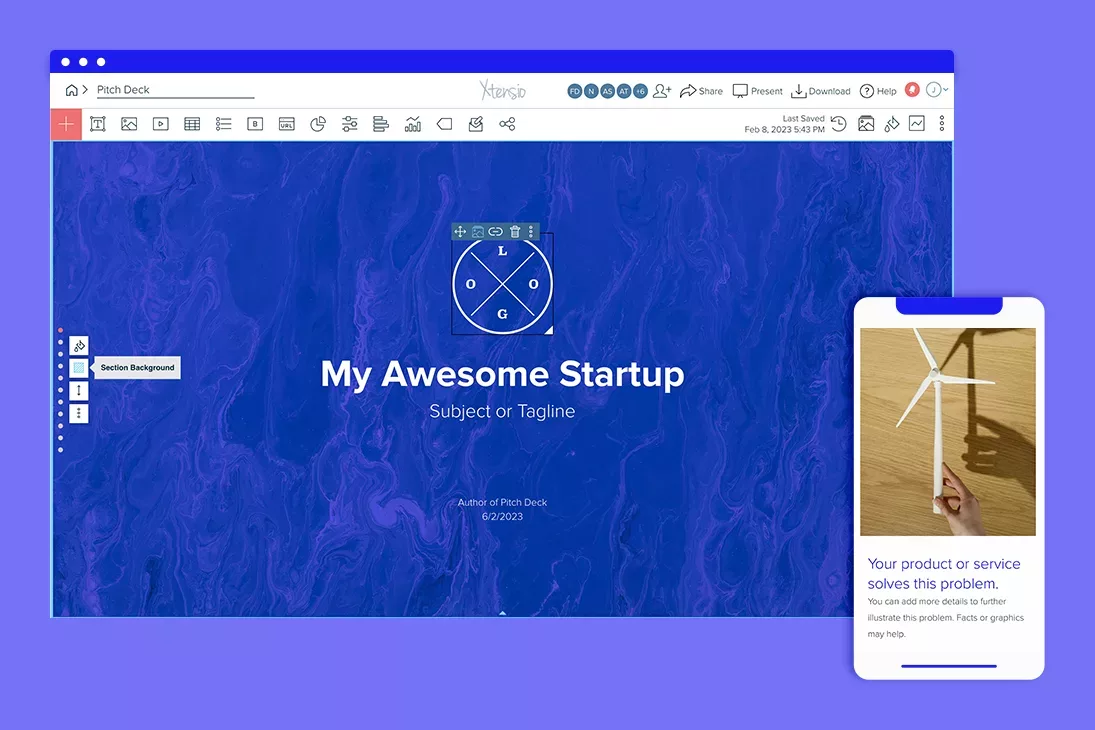
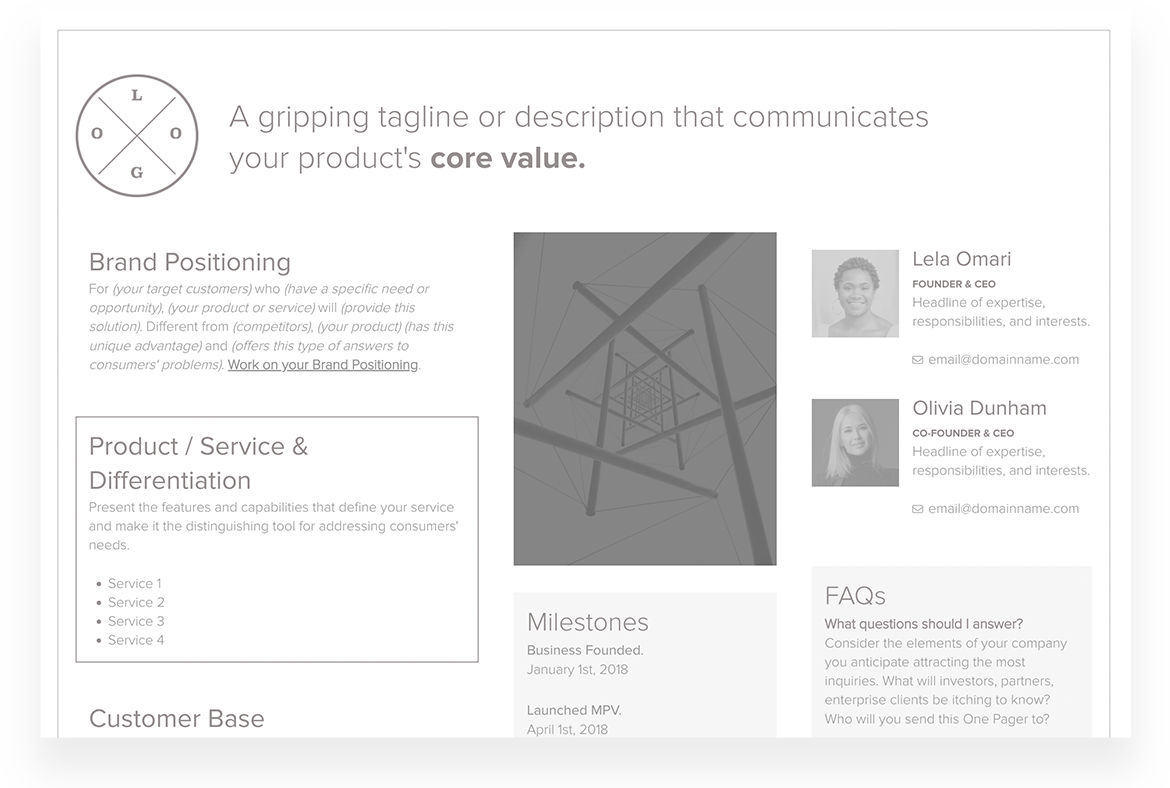


Teams use Xtensio to create, share, and improve professional deliverables.
Trusted by 410,571 teams, founders, and consultants.



Jerome Katz
Professor of Entrepreneurship @

Jake Peters
CEO @

Robin Bramman
Founder and Chief Brand Mixologist @

Olakunle Oladehin
Executive Director @
Everybody Dance Now!

Aaron Friedland
Executive Director @
The Walking School Bus

Robin Eyre
Owner @

Adam Sher
CEO @

Stephen Paterson
Chief Product Officer @

Create and deliver beautiful work, professionally.
Build, brand, and deliver living documents your clients actually engage with.







Join 410,571 professionals delivering work with Xtensio.