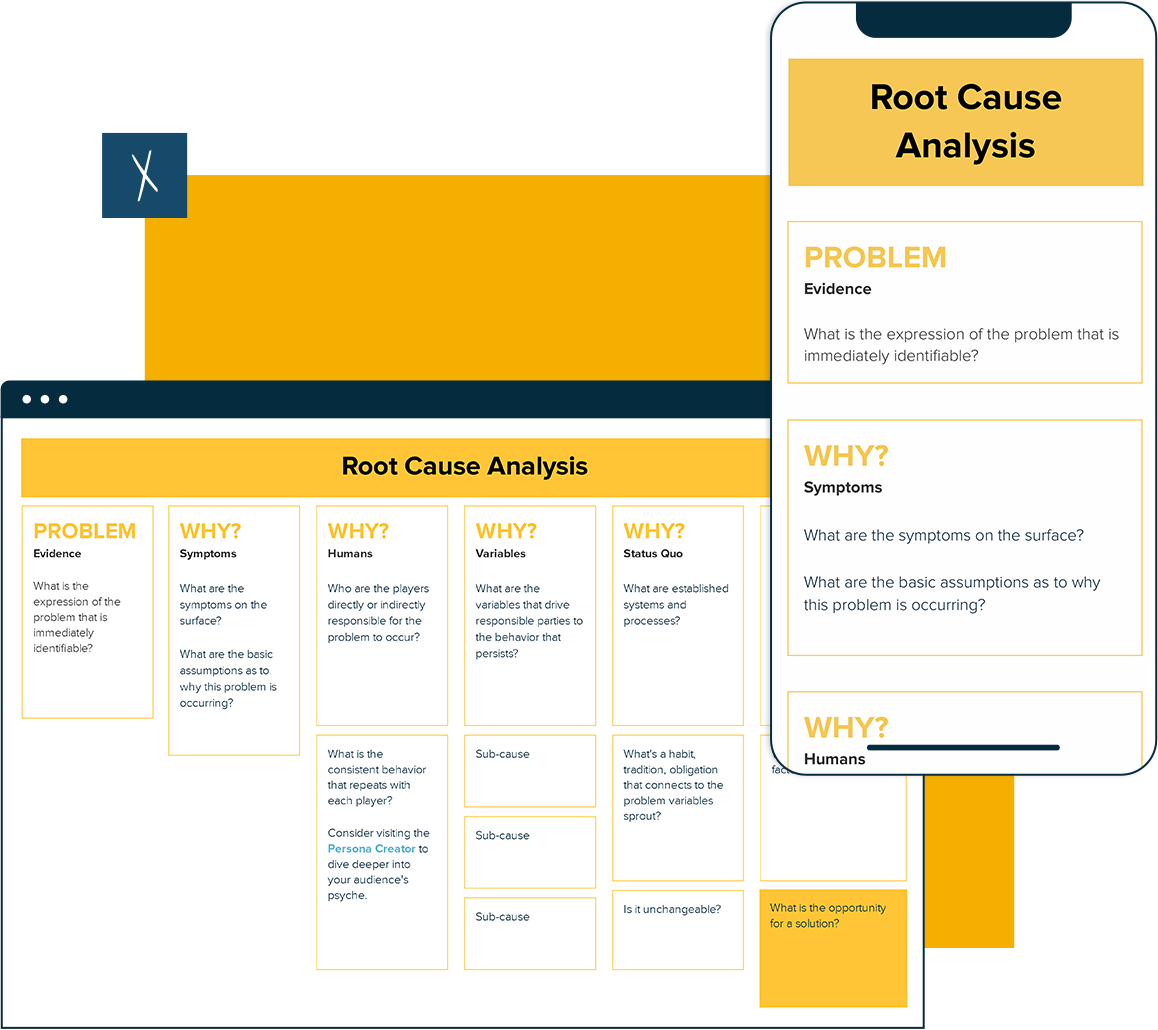
Root Cause Analysis Template
Root cause analysis (RCA) is a method to identify the root causes of a problem, a defect, or a roadblock. This is a great exercise for startups, entrepreneurs and established companies looking for ways they can solve a problem in their industry. By asking a series of “why” questions, the root cause analysis template helps you peel back the layers and attempt to prevent the problem from happening in the first place.
With Xtensio’s Root Cause Analysis Template, you can:
- Create a concise analysis to help align different departments on real problems in your organization.
- Identify areas of focus for short and long-term actions to address these problems.
- Maximize the impact and effectiveness of your team’s work with a concrete understanding of risks and roadblocks your company faces.
Xtensio is your team’s deliverables workspace.
Create, collaborate, and deliver client-ready docs—then keep them current.
Join 409,446 using Xtensio.
Xtensio is the workspace for professional deliverables.
Make one deliverable today—then build a repeatable system for every client and project.
This is where teams create, collaborate, organize, and deliver the documents that run their work.
Everything stays on-brand, current, and ready to share.

Organize every deliverable
Keep strategy, sales, marketing, and client docs together by workspace.
Create fast, stay consistent
Start from 200+ templates or AI drafts, then apply your brand kit.
Collaborate in the doc
No more “final_v7.pdf” loop.
Standardize across deliverables
Apply your brand kit + reusable modules so every deliverable matches.
Improve what you send
See engagement, iterate, and reuse what works across projects.
Other Root Cause Analysis templates
How to create a root cause analysis with Xtensio
- Create a free account and start editing, no credit card required.
Follow along with the instructional root cause analysis details. Add charts, graphs, images, and videos to customize the root cause analysis template and make it your own. Drag & drop. Resize. It’s the easiest editor ever.
- Customize everything in the root cause analysis template to match your brand.
To get started, define your style guide. Add your (or your client’s) brand fonts and colors. You can even pull colors directly from a website to easily brand your root cause analysis and more.
- Work on the root cause analysis template together on the cloud.
Add colleagues (or clients) to collaborate on the root cause analysis template. Changes automatically save and sync across all devices, in real-time.
- Share a link. Present a slideshow. Embed. Download a PDF/PNG.
The root cause analysis template seamlessly adapts to your workflow. No more jumping from tool-to-tool to design different types of deliverables.
- Reuse and repurpose.
Save your own root cause analysis templates. Or copy and reuse in other documents.

What is a root cause analysis?
When an entrepreneur pitches an idea, the first question asked is “What problem are you solving?” In order to gain traction, a product or service must fill a need for its customers. In social entrepreneurship or “changemaking” work, the rule is the same: any new idea must address a documented need and have a strong logic model behind it, leaving no cause of the problem unchecked.
It’s no longer enough to ask “What problem am I trying to solve?” Now we need to ask “What is causing this problem?” We need to peel back the layers and attempt to prevent the problem from happening in the first place. Root cause analysis (RCA) is a method to identify the root cause and effect of a problem, a defect, or a roadblock.
How do you write a root cause analysis?
Before asking why, you need to determine what the problem is that you’re trying to solve by analyzing the cause and effect relationships. Once you identify evidence of the problem, you can look into why it’s happening with a series of why questions.
- Start by naming a symptom, or evidence that there is a problem aka root causes. For example, our company’s net revenue has gone down.
- Then think about the basic reason; ask why this is occurring. Sales remain high, but profit margins have gone down.
- Then ask why again. We lowered our prices in order to compete with a new company. Or, the cost of materials has increased.
- Continue asking why until you’ve uncovered insights that weren’t apparent to you before. Follow different “roots” to discover alternate possibilities. Investigate both deeply and widely to ensure that you have a handle on the complexity of the problem and its interrelated causes.
Root Cause Analysis Methods Compared
The “5 Whys” technique described above is one of several RCA methods. Each method is suited to different problem types and complexity levels. Choosing the right method before you start prevents wasted effort and ensures your analysis is thorough enough for the problem at hand.
5 Whys. Best for simple, single-cause problems where the causal chain is relatively linear. Ask “why” iteratively until you reach a root cause that you can act on. Strengths: fast, requires no training, works well in team discussions. Weakness: can oversimplify problems with multiple contributing factors, and different people asking “why” may follow different causal paths, reaching different conclusions.
Fishbone diagram (Ishikawa). Best for problems with multiple potential causes across different categories. The diagram organizes causes into branches (typically: People, Process, Equipment, Materials, Environment, Management). Strengths: forces you to consider causes you might otherwise overlook, creates a visual map the team can discuss. Weakness: does not inherently prioritize causes or prove which one is the actual root cause.
Fault tree analysis. Best for complex systems where failures cascade through interconnected components. Uses Boolean logic (AND/OR gates) to model how combinations of failures lead to the top-level event. Strengths: handles complex interdependencies that simpler methods miss, quantifies probability when data is available. Weakness: requires technical expertise and can be time-consuming for simple problems.
Pareto analysis. Best when you have data on defect or failure frequency and need to prioritize which root causes to address first. The Pareto principle (80/20 rule) helps identify the 20% of causes responsible for 80% of problems. Strengths: data-driven, focuses resources on highest-impact fixes. Weakness: requires historical data, which may not exist for novel problems.
For most business problems, start with a fishbone diagram to map the landscape of potential causes, then use the 5 Whys on the two or three most likely branches to drill to the root. Document your analysis as a live link so the team can review findings and track corrective actions in real time.
5 Root Cause Analysis Mistakes
Root cause analysis is only as useful as the rigor behind it. These five mistakes turn what should be a problem-solving exercise into a blame-assigning exercise or a waste of time.
1. Stopping at symptoms. The most common RCA mistake is treating the first answer to “why?” as the root cause. If revenue dropped because a key client churned, that is a symptom. The root cause might be that the client’s renewal was not flagged 90 days in advance, or that the product lacked a feature the client needed. Keep asking until you reach a cause you can prevent.
2. Blame-focused culture. When RCA becomes “who caused this?” instead of “what caused this?”, people stop being honest about contributing factors. The analysis produces politically safe conclusions instead of accurate ones. Establish upfront that RCA is about systems and processes, not individuals. Frame findings as “the process allowed X to happen” rather than “person Y made a mistake.”
3. Analyzing without data. Opinions about causes are not root cause analysis. Effective RCA uses evidence: logs, metrics, timelines, interviews, and physical evidence. If your analysis relies on “we think the cause was…” without supporting data, your corrective actions may address the wrong problem entirely.
4. Single-cause thinking. Complex problems rarely have a single root cause. A production outage might result from a code bug AND a missing test AND an approval process that was skipped. If you fix only one contributing factor, the problem will recur. Use the fishbone method to ensure you have mapped all contributing causes before deciding which to fix.
5. No follow-up verification. Identifying the root cause and implementing a corrective action is not the end. You must verify that the fix actually prevents recurrence. Set a follow-up date (30, 60, or 90 days depending on the problem’s frequency) and check whether the same issue has reappeared. If it has, your root cause identification was incomplete.
How to Present RCA Findings to Leadership
Leadership wants to know three things: what happened, why it happened, and what you are doing to prevent it from happening again. They do not need to see the full fishbone diagram or every “why” iteration. Structure your presentation for a time-constrained audience that needs to make decisions, not conduct the investigation themselves.
Executive summary. Open with a two-sentence description of the incident and its business impact. “On March 15, our payment processing system was unavailable for 4 hours, affecting approximately 2,300 transactions and resulting in an estimated $47,000 in delayed revenue.” Lead with impact, not technical details.
Timeline of events. Present a chronological sequence of what happened, when it was detected, and when it was resolved. Keep entries brief and factual. The timeline helps leadership understand the speed and quality of the response, which is often as important as the root cause itself.
Contributing factors. List the two to four factors that contributed to the incident. For each factor, describe what happened and why existing safeguards did not prevent it. Avoid jargon. “The automated monitoring system did not alert the on-call team because the alert threshold was set too high” is clearer than “the Nagios configuration had a miscalibrated threshold parameter.”
Corrective actions with owners and deadlines. For each contributing factor, describe the specific fix, who is responsible, and when it will be completed. “Reduce alert threshold from 95% to 80% CPU utilization (Ops team, completed March 18)” is actionable. “Improve monitoring” is not. Use your RCA template in your workspace to track these actions and share progress with leadership as a living document. For a detailed walkthrough of the full RCA process, see the root cause analysis how-to guide.
Related to the Root Cause Analysis Template
Fully customizable templates that you can make your own.
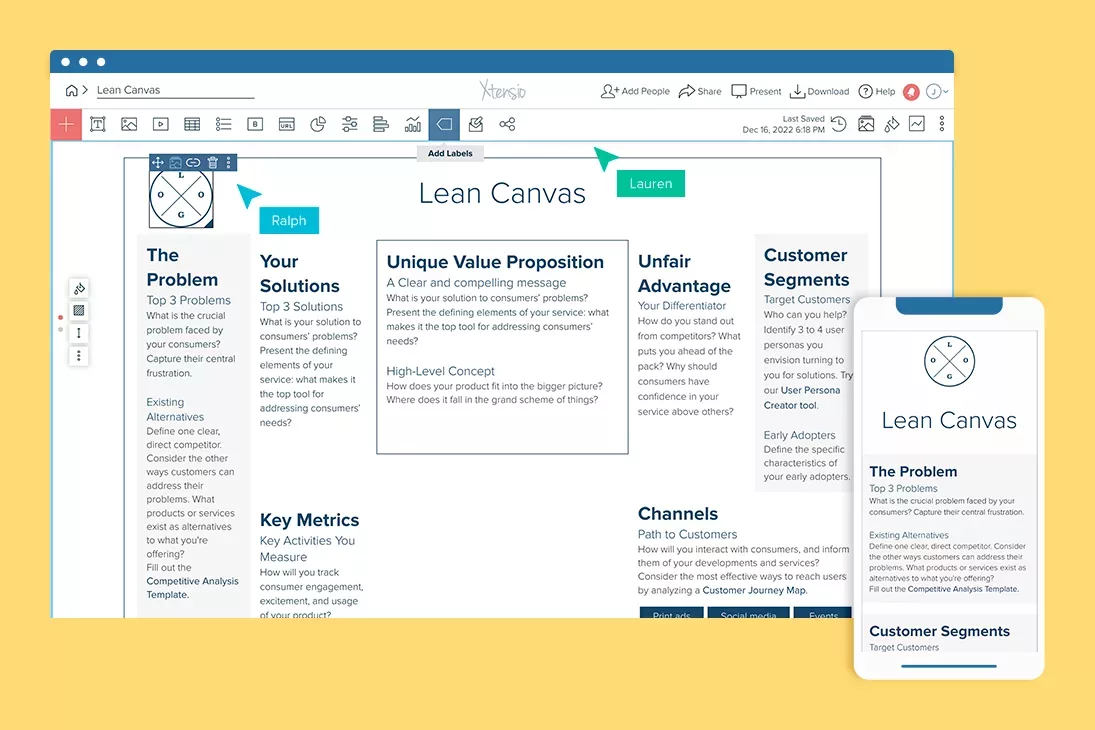
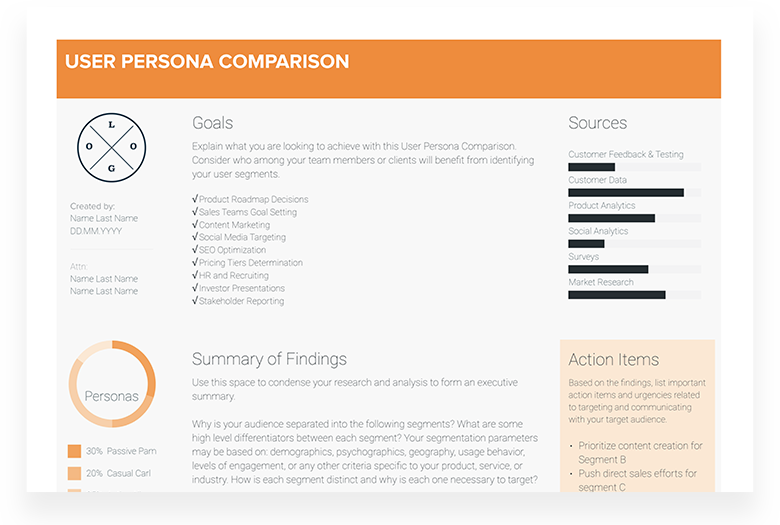
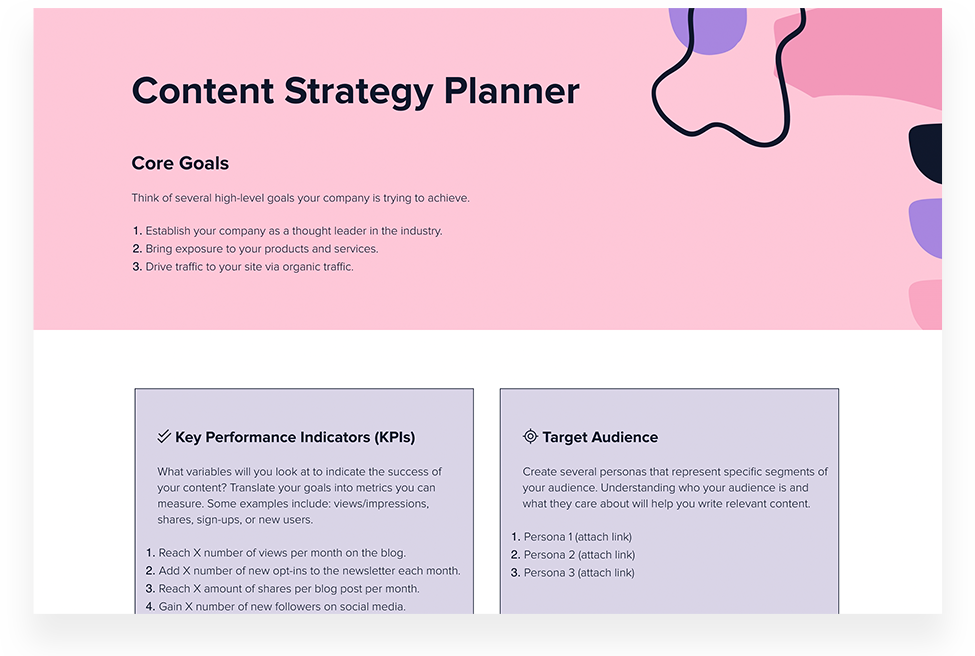

Teams use Xtensio to create, share, and improve professional deliverables.
Trusted by 409,446 teams, founders, and consultants.



Jerome Katz
Professor of Entrepreneurship @

Jake Peters
CEO @

Robin Bramman
Founder and Chief Brand Mixologist @

Olakunle Oladehin
Executive Director @
Everybody Dance Now!

Aaron Friedland
Executive Director @
The Walking School Bus

Robin Eyre
Owner @

Adam Sher
CEO @

Stephen Paterson
Chief Product Officer @

Create and deliver beautiful work, professionally.
Build, brand, and deliver living documents your clients actually engage with.







Join 409,446 professionals delivering work with Xtensio.