How To Write An Annual Report
Updated by Xtensio
Use this step-by-step guide to create your annual reports, easily. This guide will highlight the key aspects of a modern annual report template, from structuring your content to using compelling visuals. Let’s learn how to create a meaningful and impactful financial report that drives stability, and commitment to stakeholders.
Follow along with our FREE Annual Report Template.
Listen to this Article:
Xtensio is your team space for beautiful living documents.
Create, manage and share business collateral, easily.
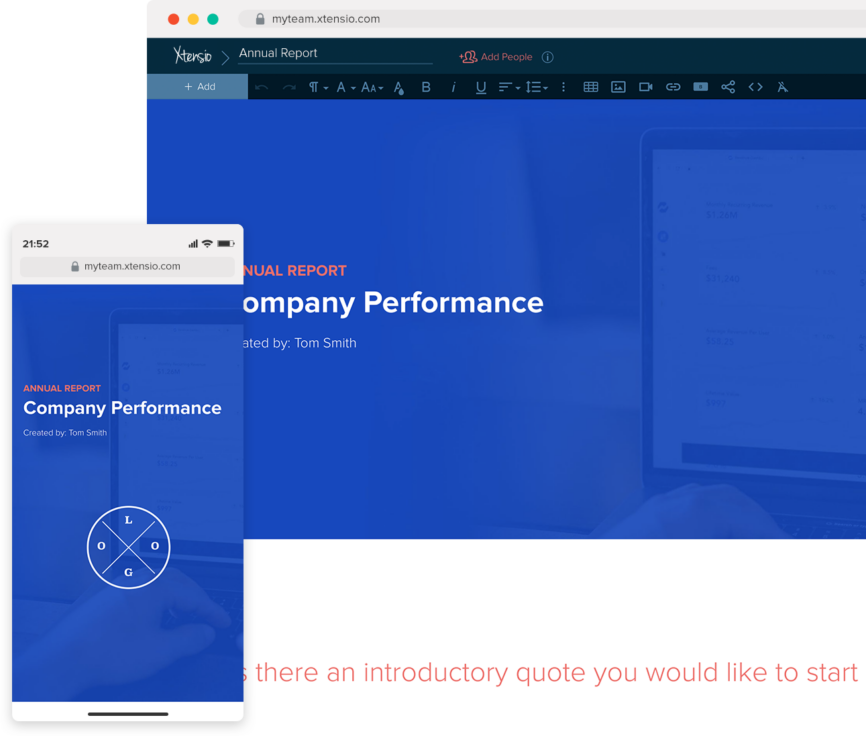
Table of Contents
Your guide to creating a branded annual report for your organization
Annual reports are a crucial part of your business and its yearly operations. The annual report is a financial document that businesses provide to shareholders, potential investors, employees and analysts as a source of information about the past year’s performance and financial well-being. By effectively conveying your organization’s performance, achievements, and future goals, a good annual report can strengthen relationships with investors, employees, and customers.
Generally, the first half of an annual report is devoted to company information, industry trends, and other important business news, while the second half usually contains financial data. Sometimes companies are writing annual reports to use them as a marketing tool or a reminder to shareholders of their business achievements.
A creative annual report template will allow you to:
- Provide investors and shareholders with a thoughtful and visually appealing annual report design to share information on key milestones, mission statements, company’s financial status, and business performance.
- Highlight your company’s key achievements and goals for the coming year.
- Introduce key team members who joined during the previous year.
The annual reporting process should include members of all the departments within your company to get a full view of your organization’s financials and cash flow. Loop your team in to edit. Share the link so your managers and key external stakeholders are always updated.
It’s important to select the right report template as there are a number of annual reports online that you can edit or use. Let’s see what a strong annual report should contain!
Create your annual report header and table of contents
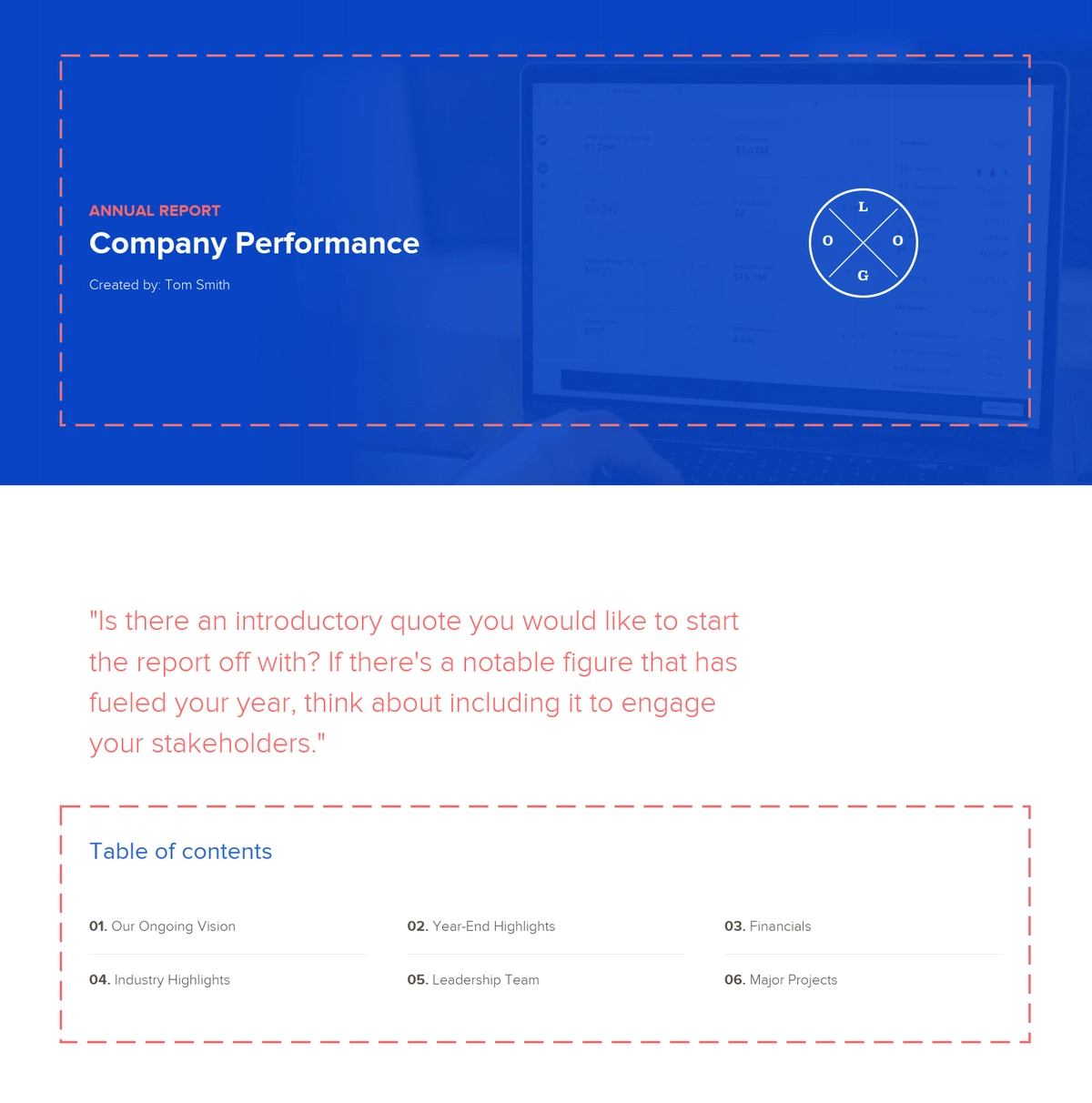
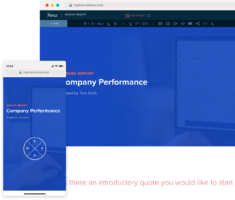
Introduce your annual report with your company or your client’s company name and logo, add the year you’re reporting for, and update the folio color scheme and background to match your company branding. You can also include an introductory quote or notable figure that has fueled your year.
Your creative annual report will provide a fundamental overview of the business for the previous year. Typically, the annual report contains categories such as a letter from the company CEO, data regarding the business’s finances and information about business activities. Use the table of contents to outline what the report will cover.

Quick Tip: Once you set up your header section, you can save a custom template to easily repurpose for your ongoing annual reports.
Introduce your report with a message from the CEO
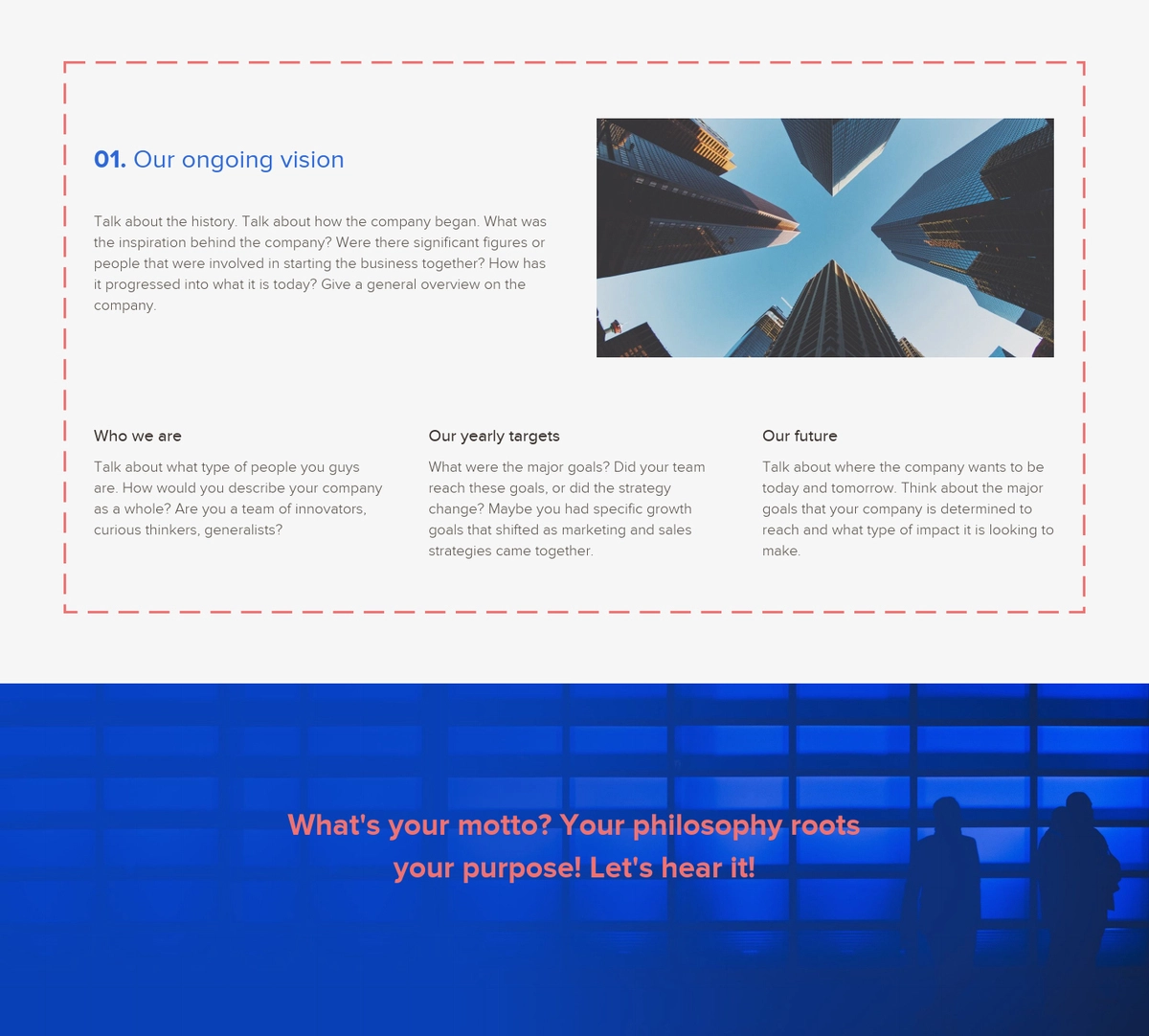
This is your cover page. Talk about your company’s mission and vision. How would you describe your company as a whole? What were the major goals for the previous year? How about your vision looking towards the future?
Some things to include in the CEO message:
- Talk about the history. Talk about how the company began. What was the inspiration behind the company? Were there significant figures or people that were involved in starting the business together? How has it progressed into what it is today? Give a general overview of the company.
- Who is your company? Talk about what type of people you guys are. How would you describe your company as a whole? Are you a team of innovators, curious thinkers, and generalists?
- Explain yearly targets. What were the major goals? Did your team reach these goals, or did the strategy change? Maybe you had specific growth goals that shifted as marketing and sales strategies come together.
- Describe your company’s future. Talk about where the company wants to be today and tomorrow. Think about the major goals that your company is determined to reach and what type of impact it is looking to make.
Highlight year-end achievements
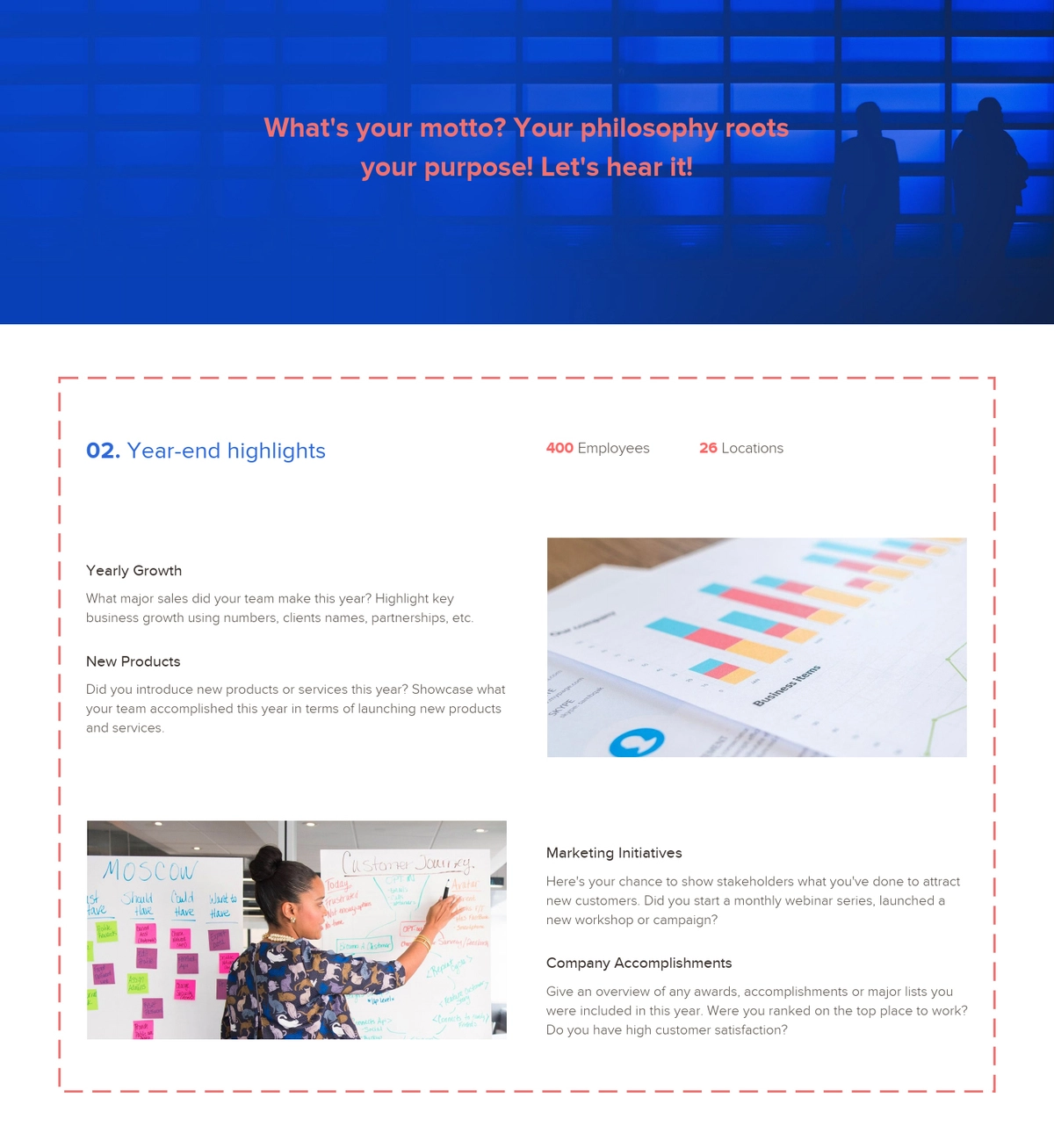
Detail key business growth using numbers, clients’ names, partnerships, etc.
- Yearly growth: What major sales did your team make this year? Highlight key business growth using numbers, clients’ names, partnerships, etc.
- New products: Did you introduce new products or services this year? Showcase what your team accomplished this year in terms of launching new products and services.
- Marketing initiatives: Here’s your chance to show stakeholders what you’ve done to attract new customers. Did you start a monthly webinar series, or launch a new workshop or campaign?
- Company accomplishments: Give an overview of any awards, accomplishments, or major lists you were included in this year. Were you ranked as the top place to work? Do you have high customer satisfaction?
Detail key financial data
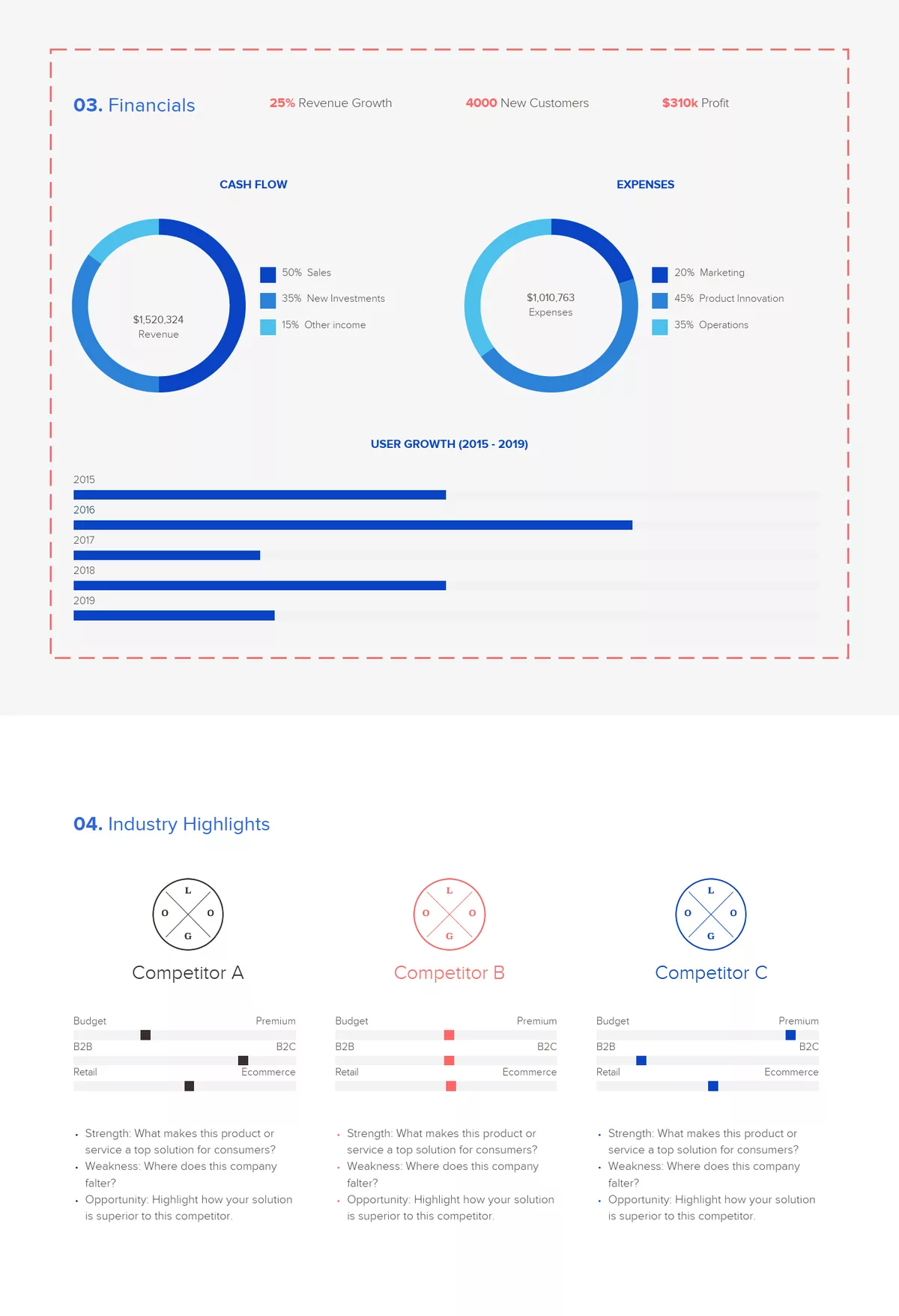
This is what your shareholders really care about in the annual report. Showcasing your company’s financial statements allows current and future investors, shareholders, employees, and other business stakeholders to determine how well the company has performed in the past, its ability to pay off debts, and its plans for growth. You could include financial statements such as:
- Revenue growth
- Balance sheet
- Cash flow statement
- Income statement & profit
- Customer growth statement
Quick Tip: With Xtensio’s pie/donut chart, you can enter data points and easily switch between bar and donut graphs to visualize the data however works best for your specific purpose.
Create an overview of your market & industry
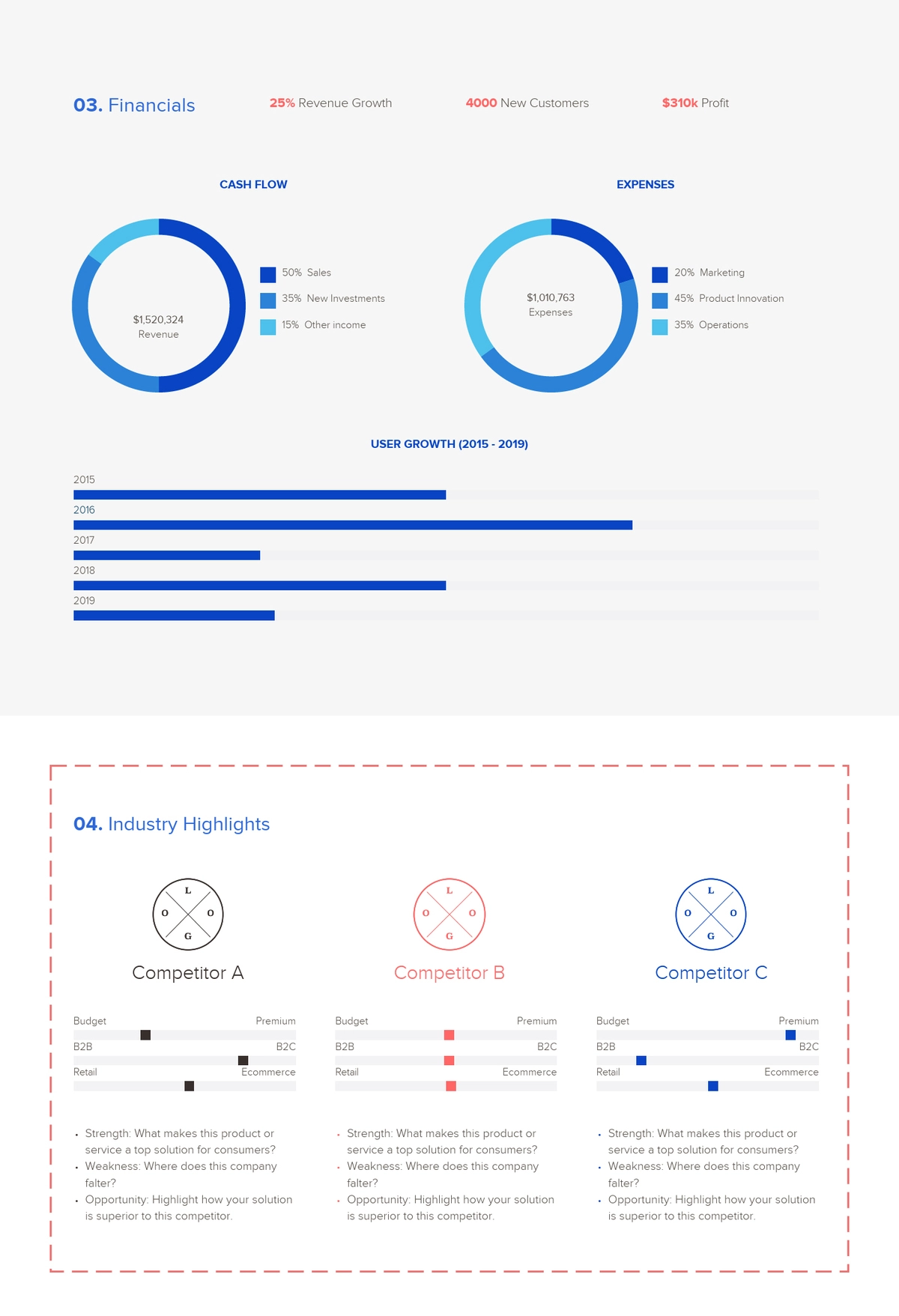
Create an overview of where your market stands by outlining a few of your competitors. Where does the market stand? What did your competitors do well last year? Where did they fall short?
Use the competitive analysis template to do a deep dive into your competition.
Introduce your leadership team
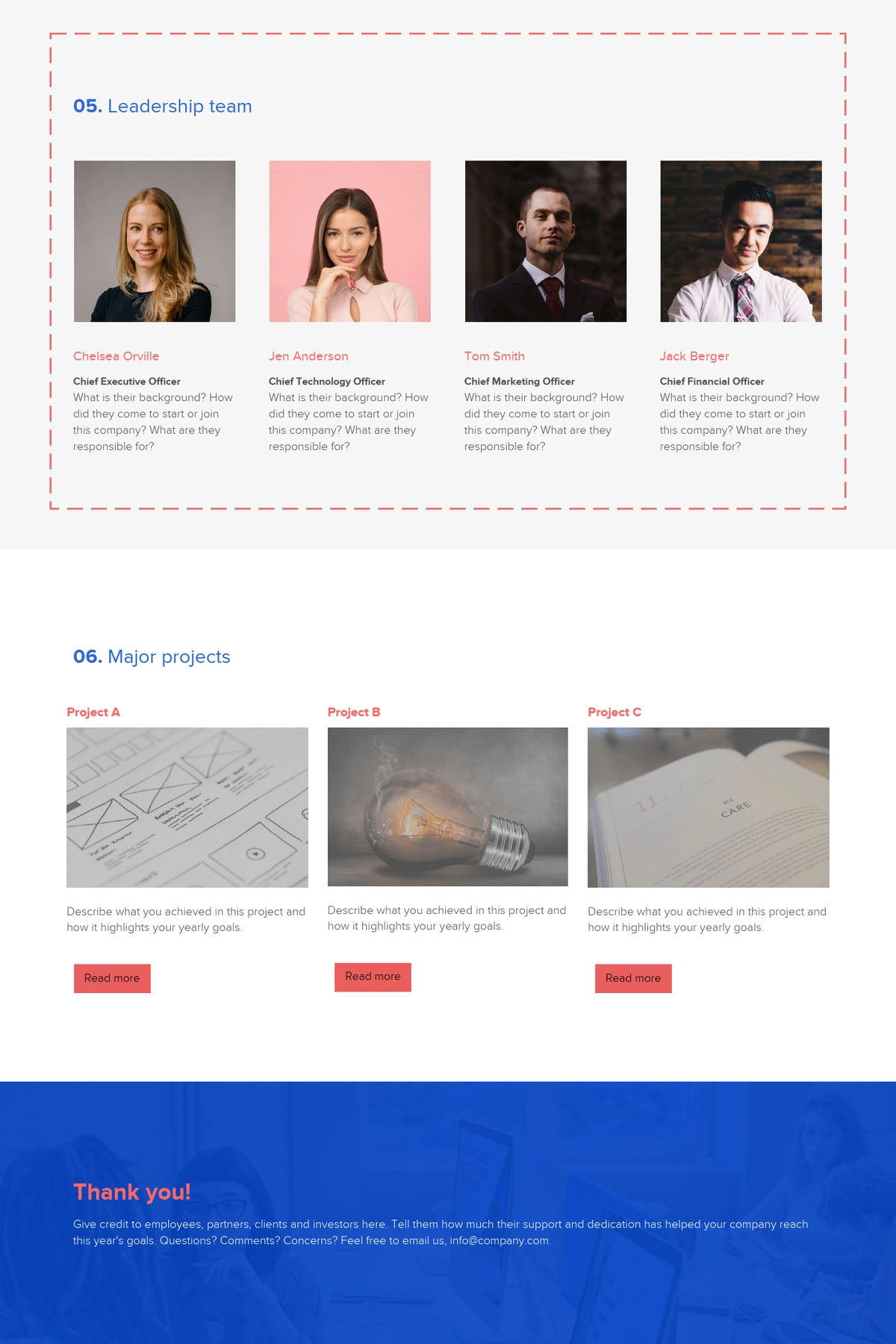
Putting a face to your company is important, especially if you’re using your annual reports as a marketing initiative to gain new interest from investors. Add a high-quality cover photo for each team member and describe how each team member plans to help reach your company vision.
- What is their background?
- How did they come to start or join this company?
- What are they responsible for?
Highlight key projects and say thank you
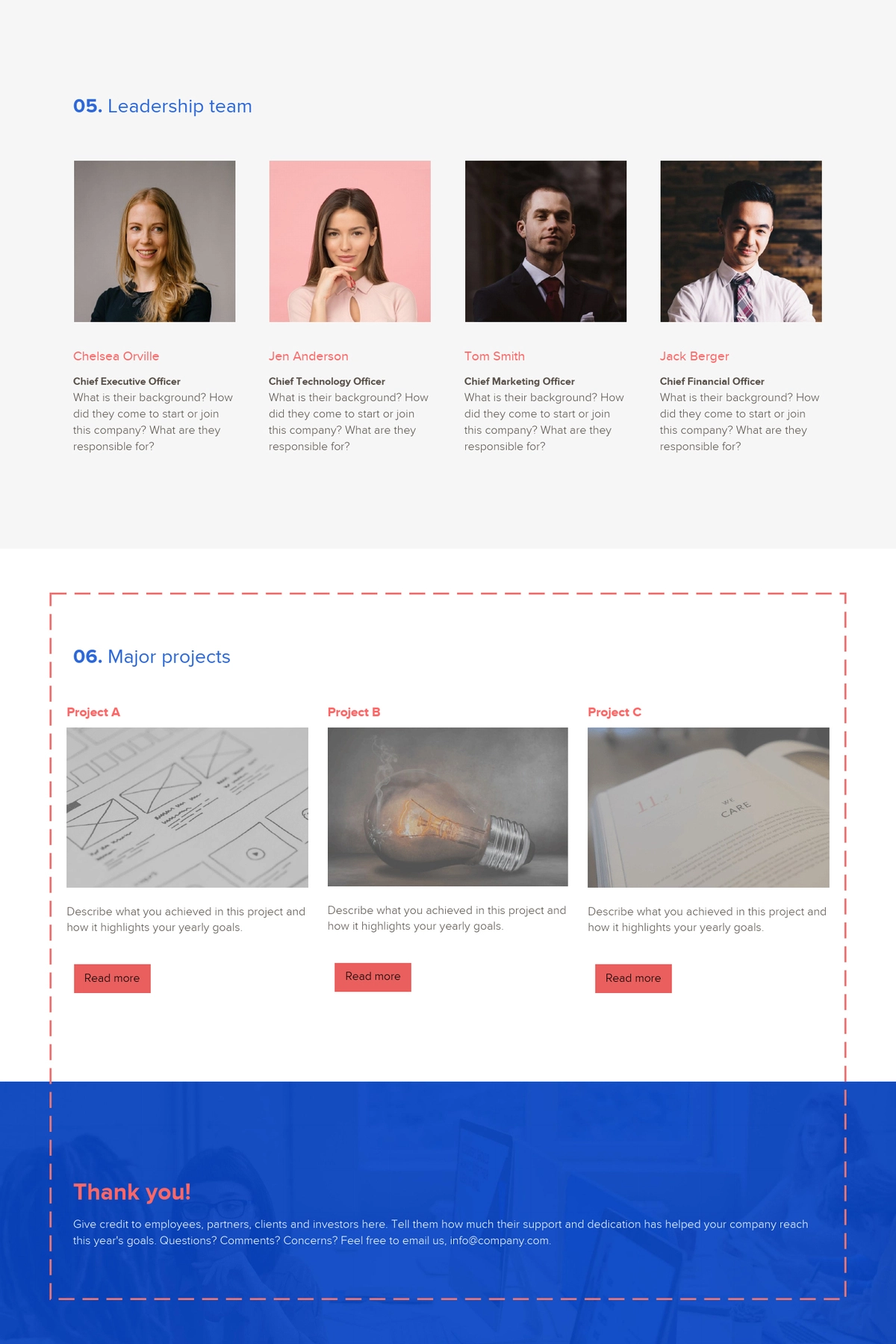
Give your investors more to explore what your company has been up to over the past year. Include links to case studies or major projects that align with your growth goals. Describe what you achieved in each project and how it highlights your yearly goals.
And finally, close the report by giving credit to employees, partners, clients, and investors. Tell them how much their support and dedication have helped your company reach this year’s goals
Share your annual report as a link, monitor & evaluate
When you’ve finished creating your annual report with Xtensio’s editor, you can send the live link to your folio to share it as a responsive webpage (and add password protection). The annual report template is adaptable just like other Xtensio tools, it can and should be repurposed, revisited, and revised regularly throughout the year – we recommend quarterly.
What Types of Annual Report Templates Does Xtensio Have?
With Xtensio’s easy to use and flexible editor, you can customize your entire report to meet most annual reports requirements! Not a small business or enterprise? You can also create these creative annual reports;
- Nonprofit annual report template
- Green annual report template
- Church annual report template
Annual Report vs Impact Report vs Financial Statement
Before you start writing, it helps to understand what type of document you actually need. The terms “annual report,” “impact report,” and “financial statement” are often used interchangeably, but they serve different purposes and audiences.
An annual report is the most comprehensive of the three. It tells your organization’s full story for the year: strategy, milestones, team highlights, financials, and future outlook. It is written for a broad audience that includes investors, board members, employees, partners, and sometimes the general public. The goal is to build confidence and transparency.
An impact report focuses on outcomes and mission-driven results. Nonprofits, foundations, and social enterprises use impact reports to show donors and grant-makers how funds were used and what changed as a result. The narrative centers on beneficiaries, programs delivered, and measurable outcomes rather than revenue or profit margins.
A financial statement is a compliance document. It includes the balance sheet, income statement, and cash flow statement in a standardized format (GAAP or IFRS). Financial statements are prepared for regulators, auditors, and institutional investors. They contain numbers, footnotes, and disclosures with little to no narrative or design.
Here is a quick comparison:
| Annual Report | Impact Report | Financial Statement | |
|---|---|---|---|
| Primary audience | Shareholders, employees, partners | Donors, grant-makers, community | Regulators, auditors, institutional investors |
| Content focus | Strategy, milestones, financials, outlook | Mission outcomes, beneficiary stories | Balance sheet, income, cash flow |
| Tone | Professional, narrative-driven | Inspiring, mission-centered | Formal, compliance-oriented |
| Design expectations | Branded, visual, shareable | Visual, storytelling-heavy | Minimal, standardized format |
| Typical length | 15 to 40 pages | 8 to 20 pages | 5 to 15 pages |
Most organizations need at least two of these documents. A public company will produce both an annual report and audited financial statements. A nonprofit might create an impact report for donors and a shorter financial summary for board compliance. The annual report is the one that tells the complete story, and it is the document where design, narrative, and data come together.
What to Include in an Annual Report
A strong annual report covers both the numbers and the narrative. Here are the key sections to include, regardless of your industry or organization size:
- Letter from leadership. A personal message from the CEO, executive director, or board chair. This sets the tone for the entire report and gives readers a human perspective on the year’s results.
- Year in review. A timeline or narrative summary of the most significant events, launches, partnerships, and milestones from the past 12 months.
- Financial highlights. Key figures presented in a visual, easy-to-scan format: revenue, expenses, profit margins, funding raised, or budget allocation. Use charts and graphs to make the data accessible to non-financial readers.
- Key metrics and KPIs. The numbers that matter most to your business. Customer growth, retention rates, NPS scores, units sold, market share, or any other performance indicators your stakeholders care about.
- Team and culture. Highlight new hires, promotions, team growth, and culture initiatives. Investors and partners want to know the people behind the numbers.
- Product or service updates. What you built, launched, or improved during the year. Include screenshots, feature highlights, or before-and-after comparisons.
- Customer stories. Real examples of how your product or service made a difference. Case studies and testimonials add credibility and make abstract metrics concrete.
- Community and social responsibility. Any CSR initiatives, volunteer programs, sustainability efforts, or charitable contributions your organization made.
- Future outlook. Where the company is headed. Share upcoming goals, strategic priorities, and what stakeholders can expect in the year ahead.
- Appendix or detailed financials. For organizations that need to provide full audited statements, include them as an appendix so they do not interrupt the narrative flow of the main report.
Not every annual report needs all ten sections. A startup might skip the appendix and focus heavily on product updates and future outlook. A nonprofit might replace financial highlights with program impact metrics. Choose the sections that best serve your audience and tell your organization’s story clearly.
Common Annual Report Mistakes
Annual reports take significant effort to produce, and that effort is wasted when the final document fails to connect with its audience. Here are six mistakes that undermine even well-intentioned reports:
- Burying the narrative in numbers. Financial data is essential, but leading with dense tables and footnotes loses most readers before they reach the story. Open with your narrative, then support it with data. The best annual reports present numbers in context, not in isolation.
- No visual hierarchy. A wall of text with no headings, pull quotes, or charts makes a report feel like a compliance filing. Use visual breaks, callout boxes, and infographics to guide readers through the content and highlight what matters most.
- Stale data. Presenting Q1 and Q2 numbers without Q3 and Q4 updates because the data was not ready in time signals disorganization. If you are building the report at the last minute, you are already behind. Plan your data collection cadence early.
- Ignoring the audience. An annual report written for “everyone” speaks to no one. A report for institutional investors needs different depth and tone than one for employees or community partners. Know who will read it and write for them.
- Making it too long without a summary. A 50-page report is fine if the first two pages give readers the key takeaways. Without an executive summary, stakeholders who lack time to read the full document will skip it entirely.
- Treating it as a compliance exercise instead of a storytelling opportunity. The annual report is one of the few documents where your organization gets to control the narrative. If you approach it as a box to check rather than a chance to build trust and excitement, the result will read that way.
The common thread across all of these mistakes is a lack of planning. Teams that start building the report weeks before the deadline will always produce a weaker document than teams that treat it as a year-round project.
How to Keep Your Annual Report Current Year-Round
The biggest annual report bottleneck is not writing or design. It is data collection. Teams spend weeks chasing down metrics, hunting for project summaries, and asking department heads to “send over their section.” By the time the report is assembled, the data is already a quarter old and the team is exhausted.
A better approach is to treat your annual report as a living document that you update throughout the year. Here is how:
- Start your workspace on day one. Open your annual report template at the beginning of the fiscal year, not at the end. Use a workspace like Xtensio where your team can access and edit the document together, in real time.
- Add milestones as they happen. Closed a major deal in March? Add it to the “year in review” section that week. Launched a new product in June? Drop in the screenshots and a one-paragraph summary while the details are fresh.
- Update metrics quarterly. Set a recurring calendar reminder to pull KPIs and financial snapshots at the end of each quarter. Paste them into the report draft so the data is always current.
- Collect stories in real time. Customer wins, press mentions, employee highlights, and community initiatives are easier to capture when they are recent. Waiting until December means relying on memory and incomplete records.
- Share as a live link. When the report is ready, share it as a live link rather than emailing a 40-page PDF. Recipients always see the latest version, and you avoid the version chaos of multiple file attachments. If a number needs correcting after distribution, update it once and everyone sees the fix.
When you maintain the report throughout the year, the final production cycle shrinks from weeks to days. The document is 80% done before anyone formally sits down to “write the annual report.” Your team spends their energy on polish and storytelling instead of scrambling for data. And because the document lives in a shared workspace, every contributor can see the full picture and catch gaps before the deadline.
Written by

Design, manage and share beautiful living documents… easily, together. Explore Xtensio
- Click and edit anything… together.
- Customize to match your branding.
- Share with a link, present, embed or download.

Create and deliver beautiful work, professionally.
Build, brand, and deliver living documents your clients actually engage with.







Join 410,837 professionals delivering work with Xtensio.
Related reports: Monthly Performance Report Template