
How-to Guide
How to Write a Market Research Report
Put the answer first, back every number with a source, and end with what to do next. Here is how to structure a market research report a client will use.
A client asks whether there is room for them in a market. You spend two weeks reading reports, pulling numbers and talking to customers, and then the hard part starts: turning a folder of notes into something a busy person will read and act on. Most reports fail at this step: they run long and bury the answer.
A good report puts the answer first, backs every number with a source, and ends with what to do next. This guide walks through each section of a market research report, in the order a reader needs it, and shows how to send it so the client keeps using it after the first read.
Start With the Question the Report Answers
First, write the question down in one sentence. “Is there demand for a premium version of our service in the north of the country?” is a question a report can answer. “Tell us about the market” is not. The question decides what goes in and, just as usefully, what stays out. Before you start, also pin down:
- Who will read it. A founder deciding whether to enter, a board approving a budget, a marketing lead choosing where to spend. Each needs a different level of detail.
- What decision it feeds. Enter or not, which segment first, what price, which channel.
- When the decision is made. A report that lands after the meeting is a record, not research.
What to Include in a Market Research Report
Keep the main report short enough to read in one sitting and move the detail into an appendix. These six parts cover most projects, in the order a reader needs them:
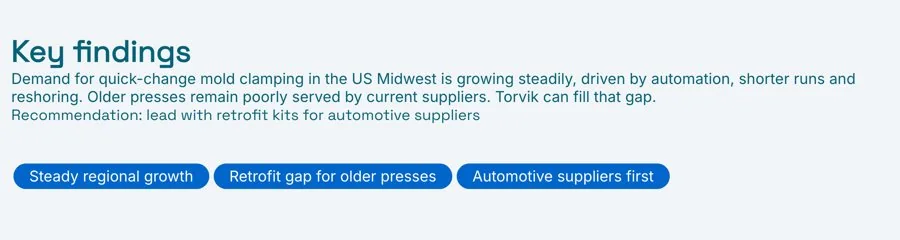
- Key findings. Three to five sentences that answer the question. Write this part last and put it first.
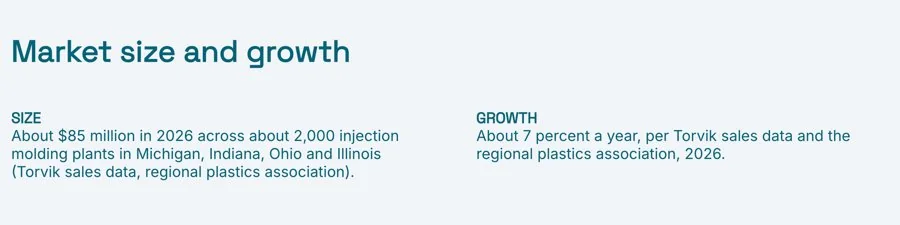
- Market size and growth. How big the market is, how fast it is growing, and where each figure comes from.
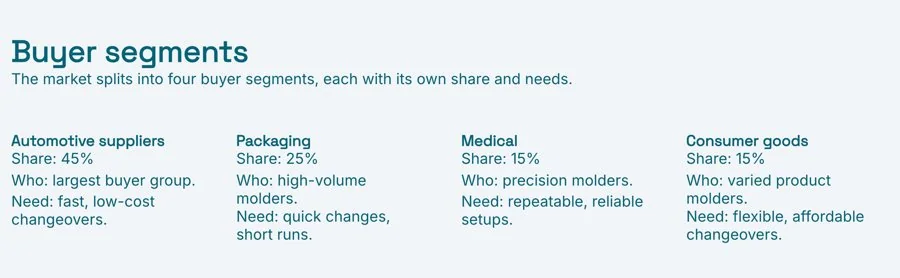
- Segments. The groups of customers inside the market, how they differ, and which matter most for this client.
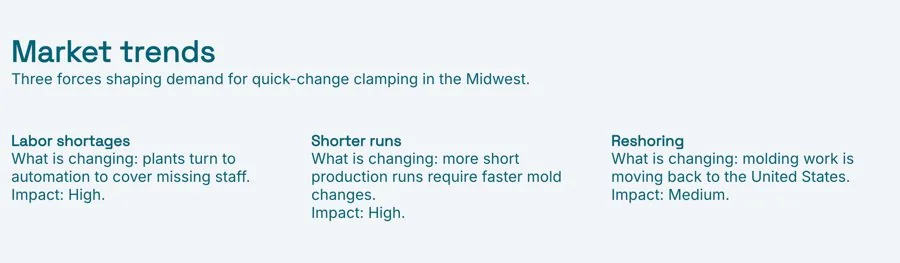
- Trends. What is changing in behavior, technology, regulation or prices, and what each change means for the client.
- Competitors and gaps. Who already serves the market, how they position themselves, and what nobody is doing well.
- Recommendations, method and sources. What to do next, how you gathered the evidence, and a full list of sources.
The Market Research Report Template has these six sections in this order, with a short prompt in each one telling you what to write, and a finished example to follow.
Write the Key Findings Last and Put Them First
The key findings are the only part some readers will see, so they have to stand on their own. Each finding is one sentence with a clear point, followed by the number or quote that supports it.
A useful test: could the reader repeat each finding in a meeting without the report in front of them? “The mid-sized segment is growing fastest and no competitor targets it directly” passes. “There are several interesting dynamics in the market” does not.
Size the Market and Show Your Working
Market size is the number readers trust least. Earn that trust by showing how you got it:
- Name the source for every figure, with the date it was published. A number without a source reads as a guess.
- Say what the number counts. Total spend, the number of buyers, and the share your client could realistically reach are three very different figures.
- Use a range when sources disagree. Two credible sources rarely match. Showing both is more honest than picking the higher one.
- Check it from the bottom up. The number of likely customers multiplied by what each one spends is a useful cross-check on a top-down figure.
Break the Market Into Segments That Behave Differently
A market is rarely one group of customers. Split it by something that changes how people buy: company size, industry, region, budget, or the problem they are trying to solve. Two to five segments is usually enough. For each one, give its size, what it needs, how it buys today, and how well it fits the client.
End the section with a clear view of which segment to go after first and why. That choice often matters more than the size of the market.
Report Trends With What They Mean
A list of trends is easy to write and hard to use. For each trend, add one sentence on what it means for the client: an opening, a threat, or something to watch. Keep the three to five trends that would change the recommendation and drop the rest.
Look for Gaps, Not Just Competitors
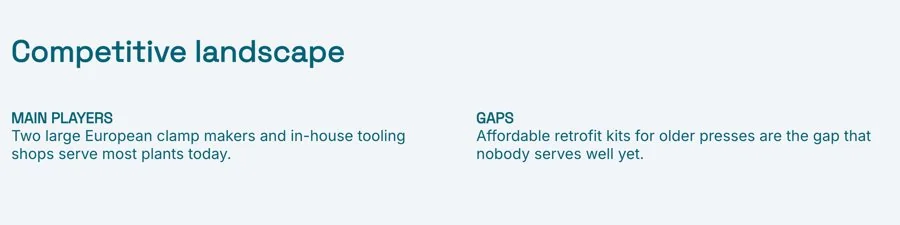
A competitor table shows who exists. The useful part is what nobody does well. Compare competitors on the things the target segment cares about, such as price, service, speed or specialty, and mark where every option falls short. Those gaps are where the client can win, and they lead straight into the recommendations.
End With Recommendations, Then Method and Sources
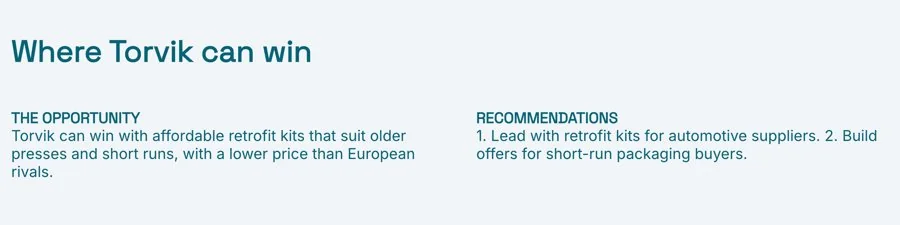
Recommendations should follow from the findings, and each one should be something the client can act on: a segment to target, a price point to test, a channel to try, a question that needs more research. Three to five is enough. Give each one an owner or a next step where you can.
Close with a short method section: how many people you interviewed, which reports and data you used, when the work was done, and what you could not find. Then list every source. That lets anyone check your work and reuse it next year.
Send It as a Live Link, Not an Attachment
A market research report rarely stays still. A new figure is published, the client asks a follow-up question, a competitor changes its prices. If you sent a PDF, every update means a new file and readers who keep quoting last month’s version.
Send a live link instead. The client gets one URL they can share with their team, and when you update a figure or add a source, everyone sees it the next time they open the page. With engagement analytics you can also see whether the report was opened before the review meeting. Download a PDF when someone needs a file for a board pack.
Common Market Research Report Mistakes
- Burying the answer. If the findings sit on page twelve, most readers never reach them.
- Numbers without sources. One unsourced figure makes readers doubt the sourced ones too.
- Describing the market without a point of view. The client paid for a judgment, not a summary of what they could have searched for themselves.
- No method section. Without it, nobody can tell how far to trust the work.
Prefer to start with AI? The AI Market Research Report Generator writes a first draft from your notes, with key findings, market size, segments, trends, competitors and recommendations, ready for you to edit. Check every figure and source before you send it.
Related Templates and Guides
- Market Research Report Template
- Competitive Analysis Template
- PESTLE Analysis Template
- SWOT Analysis Template
- Executive Summary Template
Frequently Asked Questions
What is a market research report?
A market research report sets out what you found about a market: its size and growth, the customer segments, the trends, the competitors and what the client should do next. It answers one business question with evidence.
How long should a market research report be?
Long enough to answer the question and no longer. Many client reports work well as a few pages of findings and recommendations, with the detailed data moved into an appendix.
What is the difference between primary and secondary research?
Primary research is evidence you gather yourself, such as interviews and surveys. Secondary research uses existing sources, such as published reports, public data and competitor websites. Most reports use both.
How do I estimate the size of a market?
Start from published figures where they exist, then cross-check from the bottom up: the number of likely customers multiplied by what each one spends in a year. Give a range when sources disagree, and name every source.
Should I send it as a PDF or a link?
A live link, so the client always sees the latest figures and sources. Download a PDF when someone needs a file for a board pack or an archive.
Ready to write your next market research report?
Start from the template, add your findings and sources, and send one live link the client can share with their team. Free, no credit card required.

