
How-to Guide
How to Write an Investment Memo
An investment memo puts the case for an investment on one page an investor can read and forward. Here is what to include and how to write each section.
An investor who likes your pitch will often ask for “something I can share with my partners”. A pitch deck is built to be presented, so it rarely works on its own. What they need is a short written document that sets out the opportunity, the numbers, the terms and the risks, clearly enough that someone who never met you can follow it.
That document is an investment memo. Founders raising money use it, and so do people raising capital for a property, an acquisition or a single project. This guide walks through each section, what to write in it, and how to send it so the figures stay current.
One note before you start: an investment memo is a summary for information, not an offer to sell shares or any other investment. The rules on how you can raise money, and what you can say to whom, vary by country and by type of investor, so take legal advice before you send it to investors.
When to Use an Investment Memo
- After a first meeting. The investor is interested and wants to share the opportunity internally.
- Alongside a pitch deck. The deck tells the story in the room; the memo carries it when you are not there.
- For a single project or asset. A property, an acquisition or a joint venture is often easier to explain in writing than in slides.
- To test your own thinking. Writing the case in plain sentences shows quickly where it is weak.
What to Include in an Investment Memo
Keep it to one or two pages. These six sections cover what most investors look for, in the order they tend to read:
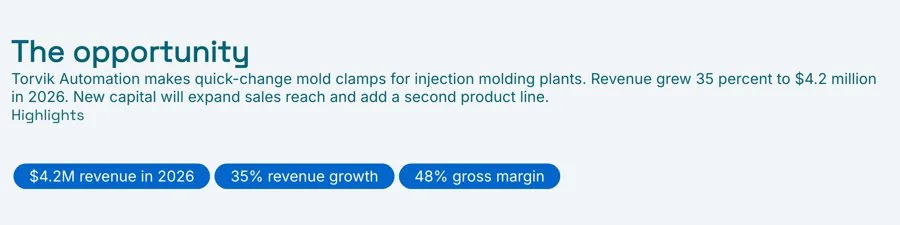
- The opportunity and highlights. What the business or project is, why now, and what the money will do, plus three highlights.
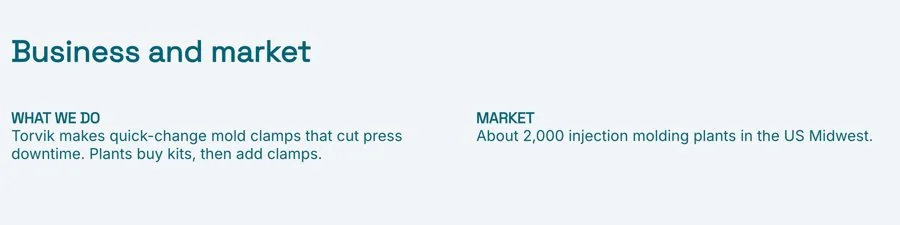
- Business and market. What you sell and who pays for it, and the size and direction of the market, with a source.
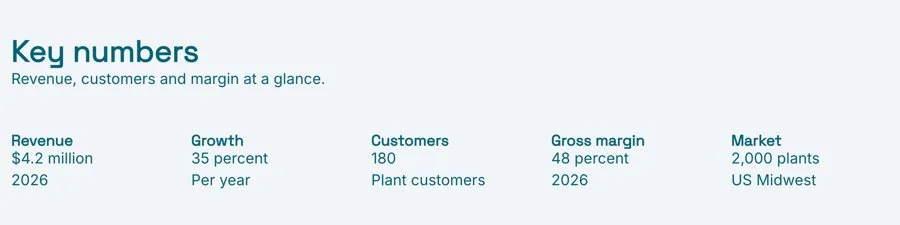
- Key numbers. The three to five figures an investor will ask for first.
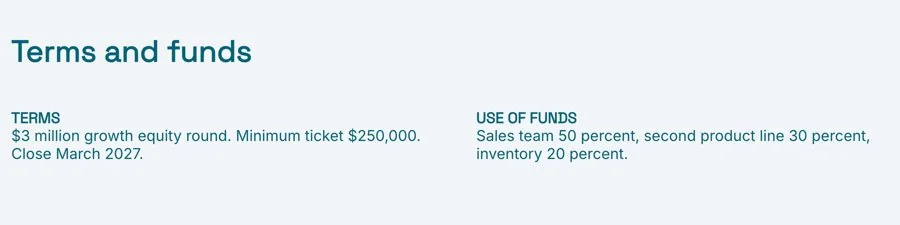
- Terms and use of funds. How much you are raising, on what terms, and where the money goes.
- Team and risks. Who runs it and why they can deliver, and the main risks with how you manage each.
- Contact, next steps and disclaimer. Who to talk to, what happens next, and a short note on what the memo is and is not.
The Investment Memo Template has all six sections in this order, with a short prompt in each one telling you what to write, and a finished example to follow.
Lead With the Opportunity in Three Sentences
Many investors decide whether to keep reading in the first paragraph. Say what the business or project is, why it is attractive now and what the money will do. Then pick three highlights: the strongest facts you have, such as revenue growth, a signed customer, a patent or a team that has done this before. Each one should be a fact an investor could check, not a description.
Explain the Business and the Market Plainly
Describe what you sell, who buys it and how you make money, in words a non-specialist would understand. Then size the market: give the figure, say where it comes from and how recent it is, and explain the trend behind it. One sourced number is more convincing than three large ones with no source.
Choose the Numbers an Investor Will Ask For
Investors scan for a small set of figures. Which ones depend on the business, but the usual candidates are:
- Revenue, and how fast it is growing.
- Customers or users, and how many stay.
- Margins, or what one sale earns after its direct costs.
- Cash and runway: how much you have and how long it lasts.
- For a project or asset: the cost, the expected income and the assumptions behind them.
Give a period for every figure and say whether it is actual or forecast. Mixing the two without saying so is a quick way to lose an investor’s trust.
Set Out the Terms and Where the Money Goes
State the amount you are raising, the type of investment, such as equity or a loan, the price or valuation if you have one, the minimum investment and the timing. Then show how the money will be used, as a few lines with a share of the total each, such as hiring, product and marketing. Investors want to see that the amount matches a plan, and that the plan reaches a milestone that makes the next stage possible.
Keep the full terms for the documents your lawyer prepares. The memo summarizes them; it does not replace them.
Be Direct About the Team and the Risks
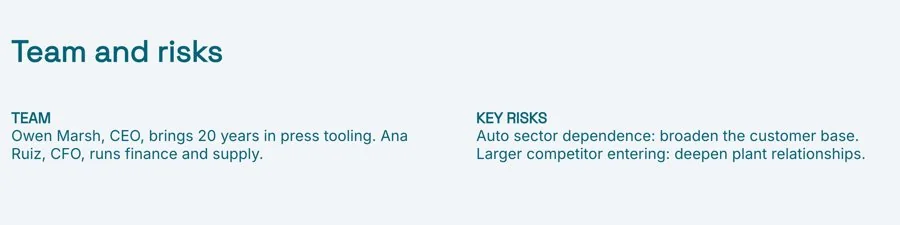
Introduce the people running the business or project and why they can deliver: relevant experience, past results and what each person owns. Then list the main risks, and for each one say how you manage it. Investors will look for the risks anyway. Naming them first, with a plan, shows you have thought it through.
Close With Next Steps and a Disclaimer
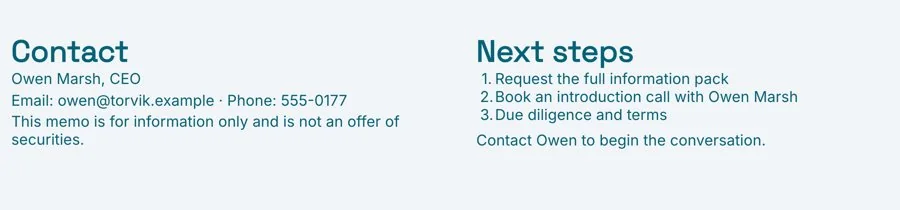
End with who to contact, how, and what happens next: a call, access to further documents, a visit. Add a short disclaimer saying the memo is for information only, is not an offer, and that figures may change.
Send It as a Live Link, Not an Attachment
Investment memos get forwarded. If you send a PDF, each partner reads whatever version they were given, and when your numbers move, the old file keeps circulating with the old figures.
Send a live link instead. Everyone who opens it sees the current version, and you can update the key numbers each month without sending a new file. With engagement analytics you can see when the memo was opened, which helps you time a follow-up. Download a PDF if an investor asks for a file for their records, and put the date on it.
Common Investment Memo Mistakes
- Repeating the pitch deck. The memo should read as sentences, not slide headlines.
- Numbers without periods or sources. Say when each figure is from and whether it is actual or forecast.
- Hiding the risks. Investors trust a memo more when it names them.
- A raise with no plan. Show what the money achieves and which milestone it reaches.
- Sending it without advice. Check with a lawyer what you can say, and to whom, before it goes out.
Prefer to start with AI? The AI Investment Memo Generator writes a first draft from your notes, with the opportunity, key numbers, terms, team and risks, ready for you to check and edit.
Related Templates and Guides
- Investment Memo Template
- Pitch Deck Template
- Executive Summary Template
- Fundraising Summary Template
- Startup One-Pager Template
Frequently Asked Questions
What is an investment memo?
An investment memo is a short written summary of an investment opportunity: what it is, the market, the key numbers, the terms, the team and the risks. Investors use it to understand the opportunity and share it internally.
What is the difference between an investment memo and a pitch deck?
A pitch deck is built to be presented and leans on visuals. An investment memo is written to be read on its own, so it explains the case in full sentences.
How long should an investment memo be?
One or two pages for most raises. Keep detailed financials and legal documents separate and point to them from the memo.
Is an investment memo an offer to investors?
No. It is a summary for information only and should say so. Take legal advice on what you can send, and to whom, before you share it with investors.
Should I send it as a PDF or a link?
A live link, so every reader sees the current figures and you can update them without sending a new file. Download a dated PDF if an investor needs one for their records.
Ready to write your investment memo?
Start from the template, add your figures and terms, and send one live link investors can read and share. Free, no credit card required.

