
How-to Guide
How to Write a Brand Strategy
A brand strategy turns research and opinions into decisions a whole team can use. Here is what to include, how to write each part, and how to roll it out.
Most brand projects produce plenty of material: interview notes, competitor screenshots, mood boards, a long list of words the founder likes. What they often lack is one document that says what was decided. Without it, the designer, the copywriter and the client’s own sales team each make their own call, and the brand comes out slightly different every time it is used.
A brand strategy is that document. It sets out where the brand stands today, who it is for, how it is different, how it looks and sounds, and how the change will roll out. This guide walks through each part, whether you are writing it for a client or for your own business.
When You Need a Brand Strategy
Write one before any visible brand work starts, not after. The common moments are:
- A new business or product. Decide what the brand stands for before the name, logo and website lock it in.
- A rebrand. The strategy explains why the change is happening, which stops a debate about colors replacing a debate about direction.
- A brand that has drifted. When every team describes the company differently, a strategy gives them one version to work from.
- A new agency or freelancer joining. It is the fastest way to brief someone from outside the business.
What to Include in a Brand Strategy
Keep it short enough to read in one sitting. These six parts cover what most brands need, in the order the thinking happens:
- Where the brand is today. What research found: how customers, staff and competitors see the brand now.
- Audience. Who the brand must win, and the need or frustration it answers for them.
- Positioning and competitors. A positioning statement, and two or three alternatives with how the brand differs from each.
- Personality and values. Three to five traits that guide how the brand looks and sounds, each with what it does not mean.
- Messaging, visual direction and tone of voice. The core message and supporting points, the direction for design, and how the brand writes.
- Rollout. What changes first, who owns each step, and when.
The Brand Strategy Template has all six parts in this order, with a short prompt in each one telling you what to write, and a finished example to follow.
Start With What You Heard, Not What You Want
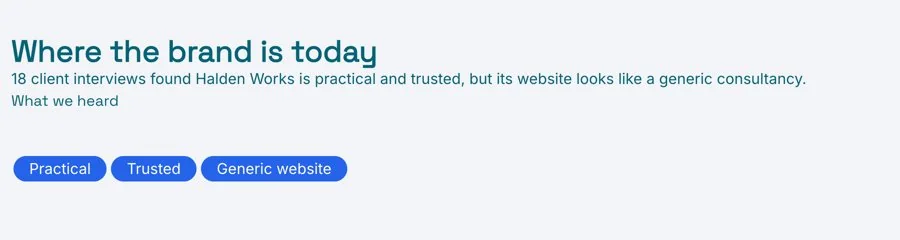
The first section is a short, honest summary of the brand as it is today. Draw it from research: a handful of customer interviews, a few conversations with staff, a read through reviews and support messages, and a look at how competitors present themselves. Write three or four sentences, then pull out the three insights that matter most.
This section gives the rest of the document its credibility. When the client asks why the strategy recommends a change, the answer is on the first page, in their customers’ words.
Name the Audience Precisely
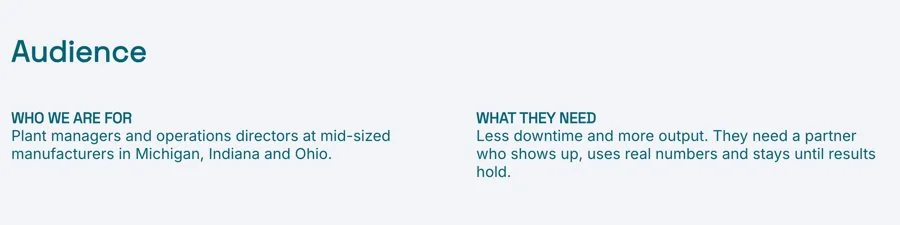
“Small businesses” or “anyone who cares about quality” is not an audience. Describe the people the brand must win in a sentence each: their role, their situation and what they are trying to get done. Then write down the need or frustration the brand answers. If you have a user persona, link to it rather than repeating it.
A precise audience makes every later decision easier, because tone, visual direction and messaging all follow from who you are talking to.
Write a Positioning Statement You Can Test
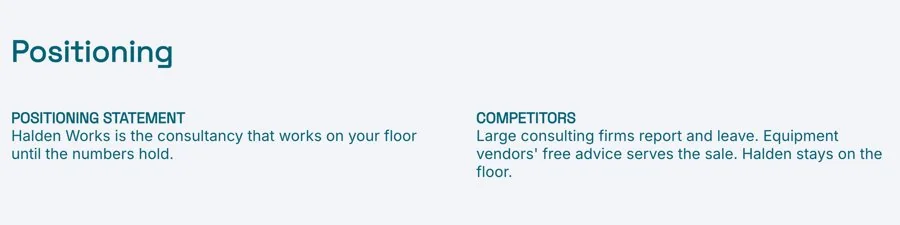
The positioning statement is the most useful sentence in the document. A simple structure works for most brands:
For [audience] who [need], [brand] is the [category] that [main benefit], because [reason to believe].
Then test it. If you could swap in a competitor’s name and the sentence still holds, it is not positioning yet. Name two or three alternatives the audience really considers, including doing it themselves, and write one line on how this brand differs from each. The Brand Positioning Canvas is a good place to work this out before you write it up.
Give Each Personality Trait a Limit
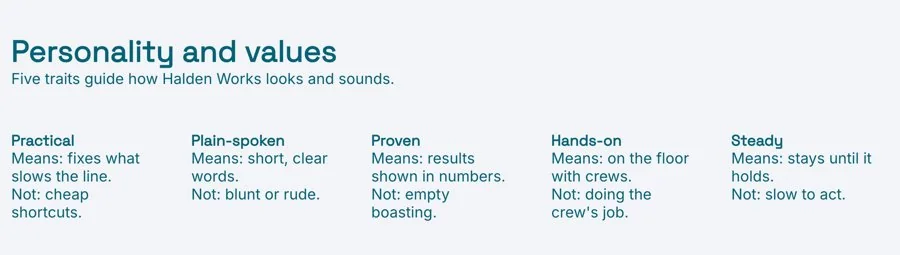
Personality is where brand strategies most often go vague. “Friendly, innovative, trustworthy” could describe almost any company. Pick three to five traits, and for each one write what it means in practice and what it does not mean:
- Confident, not arrogant: we make clear recommendations and explain why.
- Warm, not casual: we write like a person, but we never joke about the client’s problems.
- Precise, not cold: we use plain words and specific examples, never jargon.
The “not” line is what makes a trait usable. It shows a designer or writer where the edge is.
Turn the Strategy Into Words and Pictures
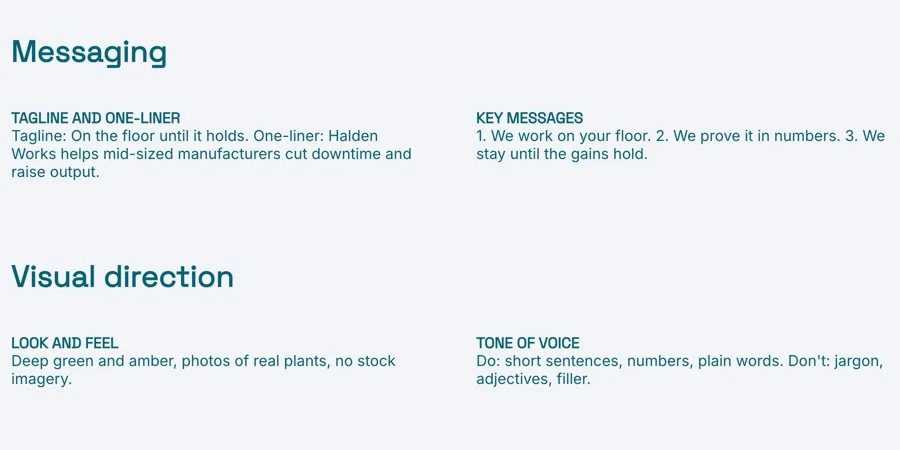
This is the section the people doing the work will use most. Cover three things:
- Messaging. One core message, three supporting points, and the proof behind each one.
- Visual direction. The feeling the design should create, shown with reference images or a mood board. The strategy sets the direction; the final logo and palette come from the design work.
- Tone of voice. How the brand writes, with a short before-and-after example of a real sentence rewritten in the new voice.
When the design is done, the detailed rules belong in brand guidelines. The strategy explains why; the guidelines explain how.
Plan the Rollout Before You Present
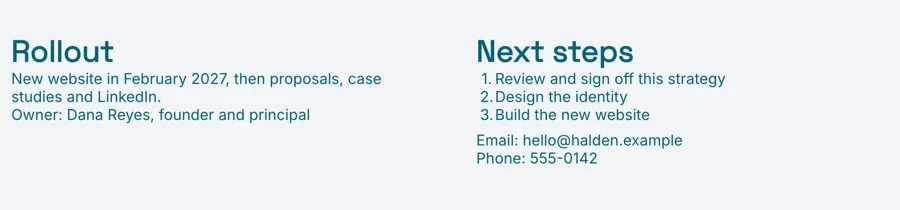
A strategy that ends at the presentation rarely changes anything. Close with a short rollout plan: what changes first, often the website, sales materials and email signatures, what follows, who owns each step and when it is due. Mark the steps that depend on the client’s team, since those are the ones that slip.
Share It as a Live Link the Team Keeps Open
A brand strategy only works if people read it after the presentation. A PDF in an email thread is opened once and forgotten, and when you refine a message or add an example, the old file keeps circulating.
Share a live link instead. The client and their team open the same page every time, and any change you make shows up at the same link. Keep it in a project workspace with the research, the mood board and the guidelines, and invite the client in, so the whole brand project lives in one place. Download a PDF when someone needs a file for a board pack.
Common Brand Strategy Mistakes
- Starting with the logo. Visual work before the strategy turns every review into a matter of taste.
- An audience of everyone. If you cannot describe the person, you cannot write for them.
- Traits with no limits. Without the “not” line, a trait can justify anything.
- Positioning a competitor could copy. Test the statement by swapping in their name.
- No rollout. Decide who changes what, and by when, before you present.
Prefer to start with AI? The AI Brand Strategy Generator writes a first draft from your notes, with the audience, positioning, personality, messaging and rollout, ready for you to edit.
Related Templates and Guides
- Brand Strategy Template
- Brand Positioning Canvas Template
- Brand Guidelines Template
- Mood Board Template
- User Persona Template
Frequently Asked Questions
What is a brand strategy?
A brand strategy is a document that sets out who a brand is for, how it is different, what it stands for and how it should look and sound. It guides the design, copy and marketing that follow.
What is the difference between a brand strategy and brand guidelines?
The strategy records the decisions: audience, positioning, personality and messaging. Brand guidelines show how to apply them, with rules for the logo, colors, type and layout.
How long should a brand strategy be?
Short enough to read in one sitting. Keep the detailed research in a separate document and link to it.
How long does it take to write a brand strategy?
For a small business, research and writing usually take a few weeks, mostly depending on how many interviews you run. The writing is quick once the research is done.
Should I share it as a PDF or a link?
A live link, so the client’s team always reads the current version and sees refinements without a new file. Download a PDF when someone needs one for a board pack or an archive.
Ready to write your brand strategy?
Start from the template, add what you learned in research, and share one live link your client’s team can keep coming back to. Free, no credit card required.

