
How-to Guide
How to Write a Statement of Work
The proposal won the work. The statement of work agrees exactly what that work is. Here is what to include so scope, dates and fees stay clear.
The proposal won the work. The statement of work is where you agree exactly what that work is. It sets out the scope, the deliverables, the dates, who does what, what it costs and how changes are handled. When a project goes sideways, it is usually because one of those was never written down.
This guide walks through each section of a statement of work (often shortened to SOW), what to write in it, and how to send it so both sides work from one agreed version. A statement of work is often part of a contract, so have a lawyer check any binding terms before you sign.
Where a Statement of Work Fits
Most service projects move through three documents:
- The proposal. Why you, the approach, and the price. Its job is to win the work.
- The statement of work. Exactly what will be done, by when, by whom and for how much. Its job is to run the project.
- The contract terms. The legal terms that cover the relationship, such as confidentiality, liability and who owns the work.
Some firms put all three in one document. Others sign a master agreement once and a new statement of work for each project. Either way, the statement of work is the practical part both teams keep coming back to.
What to Include in a Statement of Work
These six parts cover what most service projects need:
- Project overview. The client, the project, the goal and the dates, linked to the signed proposal.
- Scope in and out. What is included, and what is not.
- Deliverables and milestones with acceptance. What you will hand over, when, and how each item is signed off.
- Roles and responsibilities. Who does what on both sides, including what the client must provide.
- Fees and payment schedule. The price, how it is calculated, and when each payment is due.
- Assumptions, change requests and sign-off. What the plan depends on, how changes work, and signatures.
The Statement of Work Template has these six sections in this order, with a short prompt in each one telling you what to write, and a finished example to follow.
Open With an Overview Linked to the Proposal
Start with a short summary: who the client is, what the project is, what it should achieve, and the start and end dates. Then point to the signed proposal, so you do not have to rewrite the reasoning and both sides know which version was agreed.

Write Scope In and Scope Out
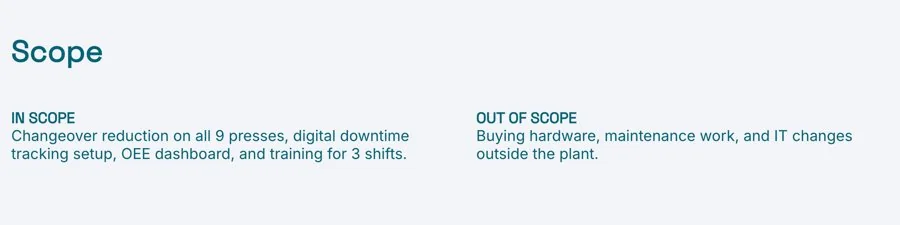
Scope is the section that prevents the most arguments. List what is included in plain words, then list what is not. The out-of-scope list is the one that protects you: extra pages, support after launch, content writing, translations, third-party costs, weekend work. Each is reasonable for a client to assume and awkward to refuse halfway through the project.
Tie Each Deliverable to a Milestone and an Acceptance Test
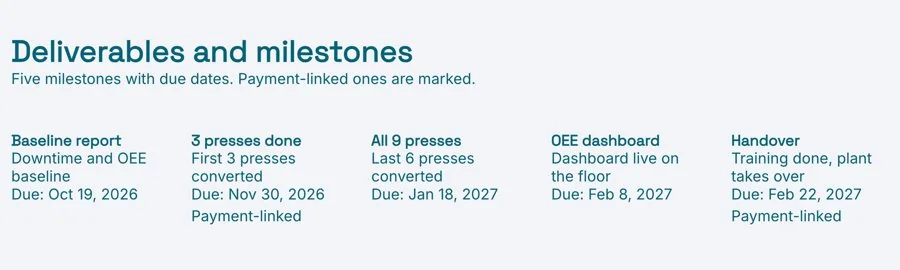
For every deliverable, give a date and say how it will be accepted. Acceptance is the part most statements of work skip, and it is the one that decides when work is finished and when you can invoice. For each deliverable, write down:
- What it is, in enough detail that both sides would recognize it
- The date it is due
- Who on the client’s side reviews it, and how long they have
- What counts as accepted, and what happens if nobody replies
Name Roles and Responsibilities on Both Sides
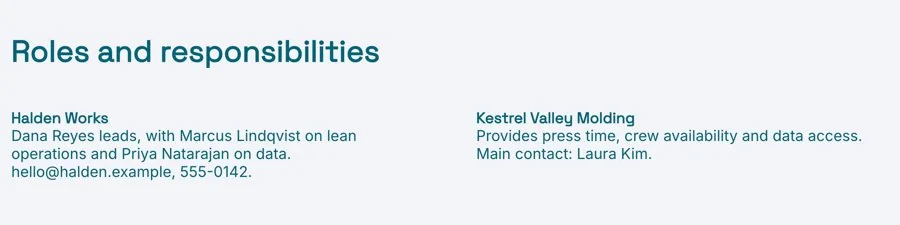
List who does what on your team and on the client’s. Include what the client must provide and by when: access, content, feedback, approvals. Many delays come from client tasks that were never written down, so listing them protects the timeline for both sides. A client onboarding page is a good place to turn that list into a dated checklist once the work is signed.
Set Out Fees and the Payment Schedule
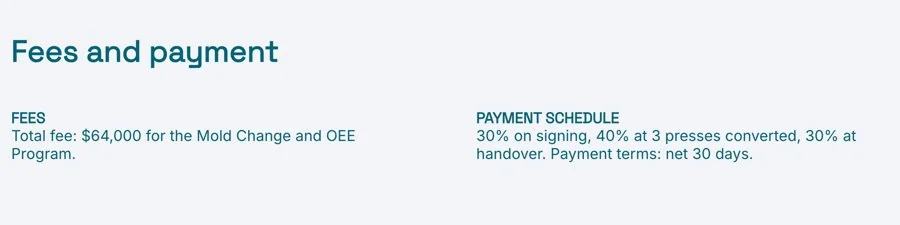
State the fee and how it is calculated: a fixed price, time and materials, or a monthly retainer. Then set the payment schedule. Linking payments to milestones or acceptance keeps cash coming in and gives both sides a clear moment to close each stage. Say what is billed separately, such as travel or software licences, and when invoices are due.
Agree Assumptions, Change Requests and Sign-Off
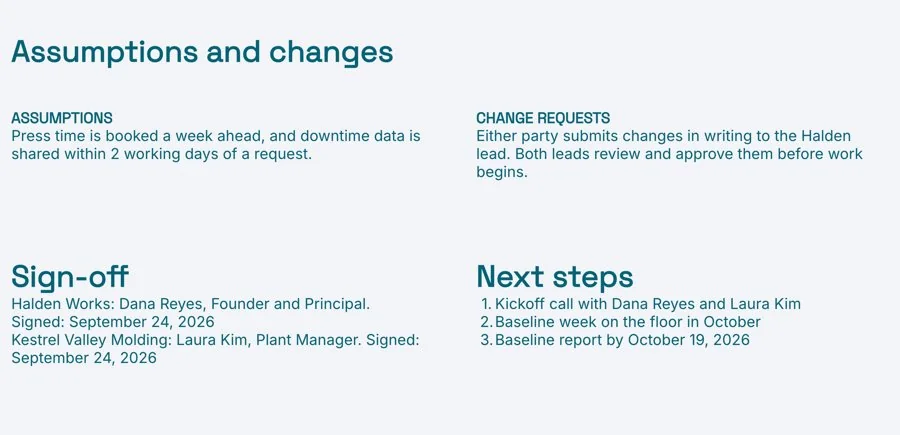
List the assumptions the price and dates depend on, such as the number of review rounds or how quickly the client replies. If an assumption turns out to be wrong, it becomes the starting point for a fair conversation rather than an argument.
Then describe how changes work: who can ask for one, how you will estimate it, and that nothing outside scope starts until the change is approved in writing. Finish with a sign-off block for both sides, with names, roles and dates.
Send It as a Live Link, Not an Attachment
A statement of work should stay fixed once it is signed, but getting to signature usually takes a few rounds. Sending a new attachment each round makes it hard to know which version is final, and easy to sign the wrong one.
Share it as a live link while you agree the terms, so both sides read the same page, and keep it in a project workspace beside the proposal and the onboarding page. Once it is signed, download a PDF for both parties’ records and keep the page as the reference your teams use day to day.
Common Statement of Work Mistakes
- No out-of-scope list. Anything not ruled out will be assumed to be included.
- Deliverables without acceptance. Without a sign-off test, work is never quite finished and invoices wait.
- Leaving out client tasks. If the client’s part is not written down, delays become your problem.
- Invoicing only at the end. One payment after months of work puts all the risk on you.
- Agreeing changes in a call. Extras agreed out loud and never written down are the start of most disputes.
Prefer to start with AI? The AI Statement of Work Generator writes a first draft from your proposal and notes, with scope, deliverables, roles, fees and change requests, ready for you to edit. Read every term closely before you send it.
Related Templates and Guides
- Statement of Work Template
- Consulting Proposal Template
- Client Onboarding Template
- Project Brief Template
Frequently Asked Questions
What is a statement of work?
A statement of work is a document that sets out exactly what a project includes: scope, deliverables, dates, roles, fees and how changes are handled. Both sides sign it before the work starts.
What is the difference between a statement of work and a proposal?
A proposal makes the case for hiring you and sets out your approach and price. A statement of work agrees the details of the work itself once the client has said yes.
Is a statement of work legally binding?
It can be, especially when it is signed or referenced in a contract. Have a lawyer check any binding terms before you sign.
Who writes the statement of work?
Usually the agency or consultant doing the work writes it, and the client reviews and signs it. Both sides should read the scope and acceptance sections closely.
Should I send it as a PDF or a link?
Share a live link while you agree the terms, so everyone reads the latest version. Once it is signed, download a PDF for both sides’ records.
Ready to agree your next project?
Start from the template, set out scope, deliverables and fees, and send one live link the client can read before they sign. Free, no credit card required.

