
How-to Guide
How to Write a Client Guide
A short guide that teaches clients how to solve one problem shows your expertise better than a sales page. Here is how to write one.
Every consultant and agency answers the same questions again and again. How do I prepare for a website rebuild? What should be in a brand brief? How do we choose between two suppliers? Each answer goes into an email, gets read once and disappears. The next client asks the same question, and you write it again.
A client guide turns one of those answers into a short document you can send to anyone. It teaches a client how to solve one problem, step by step, and shows how you think along the way. Prospects read it before they hire you, and current clients use it to do their part of the work. This guide walks through how to write one, section by section.
What a Client Guide Is For
A client guide is not a brochure. It is useful on its own, even to a reader who never hires you, and that is what makes it work:
- For prospects, it shows your expertise in a way a list of services cannot. A reader who follows your method once tends to trust it.
- For new clients, it explains their part of a project, so they arrive prepared.
- For you, it replaces the long email you keep rewriting, and gives you something to share on your site, in a newsletter or after a call.
Pick One Problem
The most common mistake is trying to cover a whole subject. “A guide to marketing” is a book. “How to write a brief your agency can quote from” is a guide. Pick one problem that your clients ask about often, that you solve well, and that a reader could act on within a week.
A good test is the title. If you can write it as “How to” plus a specific result, the scope is probably right.
What to Include in a Client Guide
These six parts take a reader from the problem to a result, in the order they read them:
- A title and a promise. What the reader will be able to do by the end.
- The problem. Why it matters and what goes wrong when it is handled badly.
- Your method, in three to five steps. The core of the guide.
- An example. The method applied to a realistic case.
- A checklist. The steps as short items the reader can tick off.
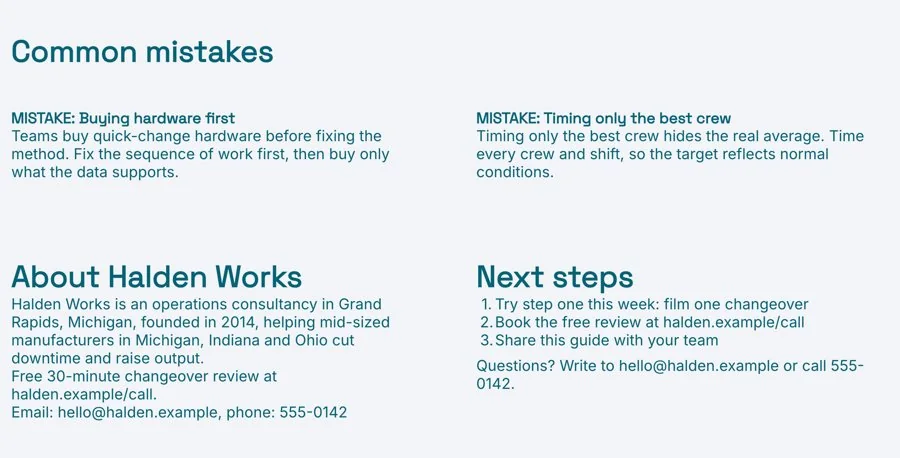
- Common mistakes, about you and a next step. What to avoid, who wrote it and how to get help.
The Client Guide Template has all six sections in this order, with a short prompt in each one telling you what to write, and a finished example to follow.
Make a Clear Promise in the Title
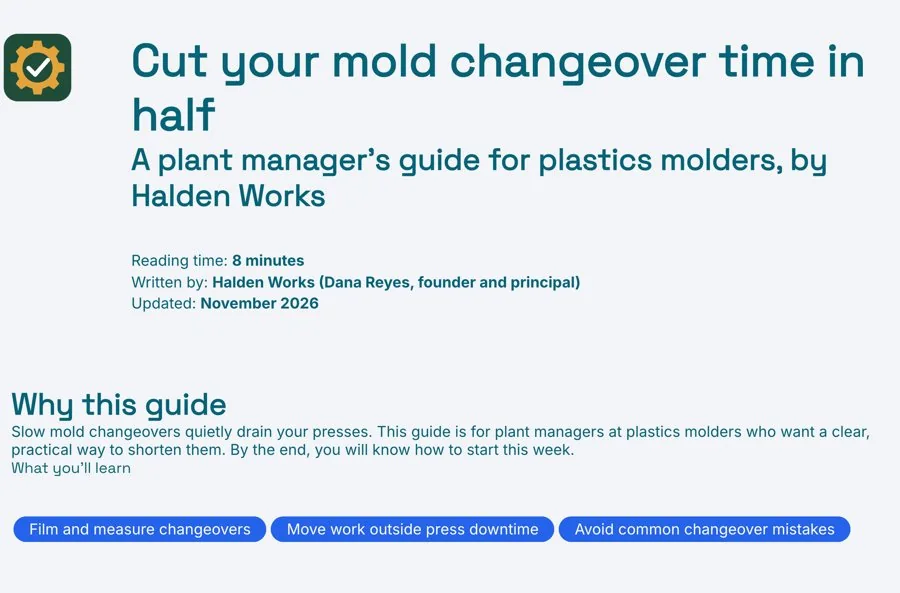
The title and the line under it decide whether anyone reads further. Say exactly what the reader gets: “How to prepare for a website rebuild, so your project starts on time and stays on budget”. Avoid clever titles. A reader skimming a list of resources should know in two seconds whether this one is for them.
Describe the Problem in the Client’s Words
Before the method, show the reader you understand their situation. Describe the problem the way a client would describe it to you, and say what it costs when it goes wrong: delays, a bigger bill, a result nobody is happy with. Keep it to a short paragraph or a few bullet points. The reader already knows they have the problem; they want to know you recognize it.

Teach the Method in Three to Five Steps
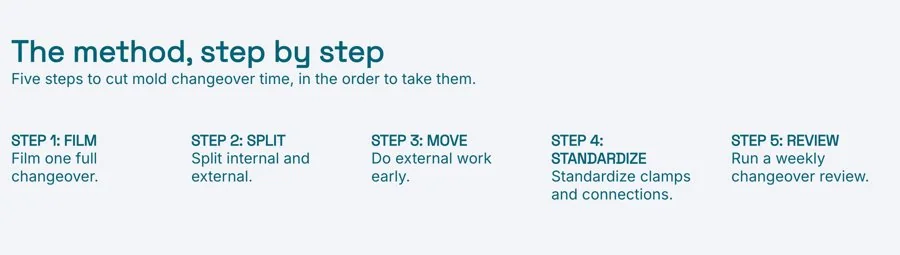
This is the part readers come for. Break your approach into three to five steps, each with a short heading and a paragraph explaining what to do and why. Write the steps as actions: “List every page you have today”, not “Content inventory”.
Give away the real method. It can feel like handing over the work, but most clients who read a good guide realize how much is involved and want help doing it well. The ones who do it themselves will remember who taught them.
Show It Working With an Example
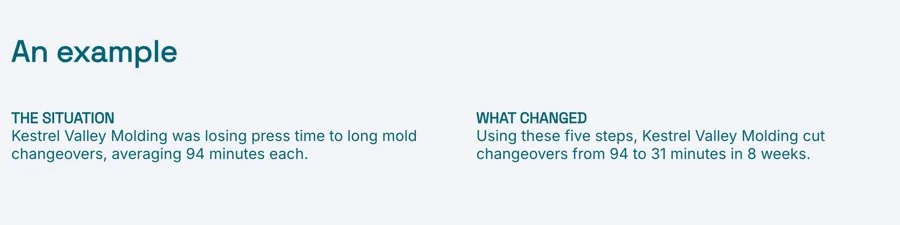
An example turns the method from theory into something the reader can picture. Walk through the steps for one realistic case, such as a small firm preparing for a site rebuild, with the decisions they made at each step. Keep client details anonymous unless you have permission to use them. Short and concrete is better than long and general.
Add a Checklist the Reader Can Use
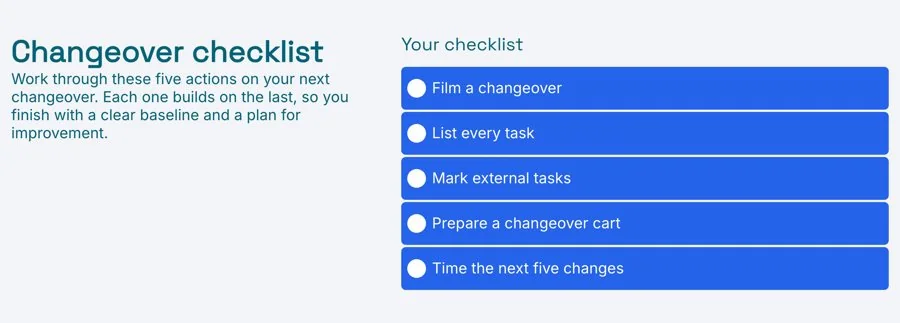
A checklist is the part most readers come back to. Turn each step into one or two short items they can tick off, in the same order as the method. Start each item with a verb and keep it to one line, so the list works as something to print or keep open during a project rather than a summary to read once.
End With Mistakes, Who You Are and One Next Step
List the mistakes you see most often, each with a sentence on how to avoid it. Mistakes drawn from real projects are the clearest proof that you have done this many times. Then add a short paragraph about you or your firm and one clear next step: book a call, reply to an email or read a related resource. A long sales pitch at the end undoes the trust the guide built.
Share It as a Live Link, Not an Attachment
A client guide gets better each time you use it. A client asks a question the guide did not answer, a step needs a clearer example, a link changes. If you sent it as a PDF, every improvement stays with you while old copies keep circulating.
Share a live link instead. Put it on your site, in your email signature or in a follow-up after a call, and every reader sees the latest version. For a current client, add the guide to the project workspace you share with them, next to the plan and deliverables. With engagement analytics you can see when a prospect opened it, which is a useful signal for when to follow up.
Common Client Guide Mistakes
- Covering too much. One problem, one method. Write a second guide for the next problem.
- Holding back the method. A guide that hints at the answer and then asks for a call reads as an advert.
- No example. Steps without a worked case are hard to follow.
- Jargon. Use the words your clients use, not the terms your industry uses.
- A long sales pitch at the end. One short paragraph about you and one next step is enough.
Prefer to start with AI? The AI Client Guide Generator writes a first draft from the problem you want to cover and a few notes on your method, with the steps, an example and a checklist, ready for you to edit.
Related Templates and Guides
- Client Guide Template
- Case Study Template
- Services Overview Template
- Company One Pager Template
- Marketing Plan Template
Frequently Asked Questions
What is a client guide?
A short document that teaches clients how to solve one specific problem, written by a consultant or agency that solves it for a living. It is useful on its own and shows how you work.
How long should a client guide be?
Long enough to teach the method with one example, usually a few pages or a short scroll. If it runs much longer, the topic is probably too broad.
Should I put it behind a sign-up form?
That depends on what you want from it. An open link is easier to share and gets read more, while asking for an email gets you fewer readers but a way to follow up.
Is a client guide the same as a case study?
No. A case study tells the story of one client’s result. A client guide teaches the method so the reader can apply it themselves, often with a short example.
How many guides should I write?
Start with one, on the question clients ask most. Add more as you notice other questions repeating.
Ready to write your first client guide?
Start from the template, pick one problem your clients ask about, and share the guide as a live link. Free, no credit card required.

