How to Make a Digital Brochure (With Template and Examples)
Updated by Xtensio
Your digital brochure should captivate customers with visually engaging, interactive content that is easy to understand. A good digital brochure can help maximize leads, increase conversion, and establish brand awareness. Use this step-by-step guide to create your digital brochure, easily. Explore this template.
Xtensio is your team space for beautiful living documents.
Create, manage and share business collateral, easily.
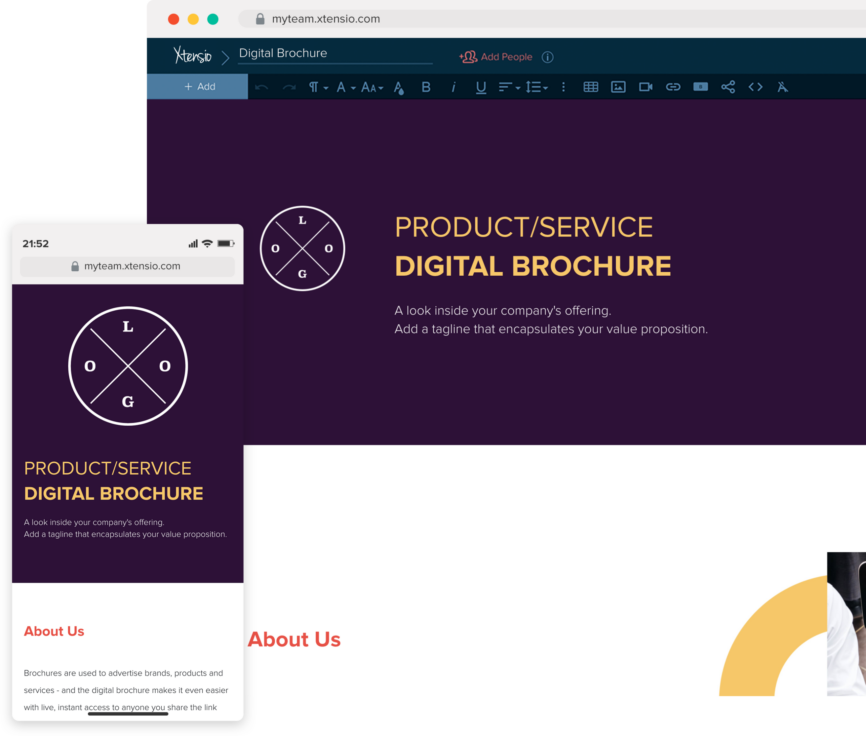
Table of Contents
What Is a Digital Brochure
A digital brochure is an online document that showcases your product, service, or organization in a visually engaging format. Unlike a printed brochure, a digital version can include clickable links, embedded videos, dynamic layouts, and real-time updates — making it far more versatile for modern marketing.
Digital brochures serve the same purpose as their print counterparts — educating prospects and reinforcing brand credibility — but with significant advantages. They cost nothing to print and distribute, they can be updated instantly when pricing or features change, and they reach a global audience through a single shared link.
Common use cases include product launches, corporate overviews, event programs, recruitment packages, and service catalogs. Any time you need to present information in a polished, branded format to an external audience, a digital brochure is a strong choice.
The shift from print to digital also changes how you measure success. Instead of guessing how many brochures were read, you can track exactly who opened it, how long they spent, and which sections they focused on — data that informs your follow-up strategy.
Types of Digital Brochures
Product brochures focus on a single product or product line. They lead with the primary benefit, detail key features with supporting visuals, include pricing (or a call to request pricing), and close with a clear next step — book a demo, start a trial, or contact sales.
Corporate brochures tell your company’s story. They cover your mission, history, team, clients, and capabilities. These are most useful for partnership conversations, investor meetings, and recruitment — situations where the audience needs to understand who you are, not just what you sell.
Event brochures promote conferences, workshops, trade shows, or webinars. They include the agenda, speakers, venue details, and registration information. Since event details change frequently (speakers cancel, times shift), a live digital version eliminates the risk of outdated printed materials.
Service brochures are common in consulting, agencies, and professional services. They describe your service offerings, methodology, case study highlights, and engagement models. Keep these as live links so you can update case studies and pricing without creating a new version every quarter.
Digital Brochure Design Best Practices
Start with visual hierarchy. The most important message should be the largest and highest element on the page. Use size, color, and whitespace to guide the reader’s eye from headline to supporting details to call-to-action. If everything looks equally important, nothing stands out.
Keep text concise. A brochure is not a white paper. Use short paragraphs (two to three sentences), bullet points for feature lists, and bold text for key phrases. Most readers scan rather than read — design for scanning first, reading second.
Choose images that show your product in context, not generic stock photos. If you are a SaaS company, show screenshots of your actual interface. If you are an agency, show real deliverables from client projects. Authenticity builds trust; stock photos do not.
Design mobile-first. Over half of business emails are opened on mobile devices, which means your brochure link will often be viewed on a phone. Use a single-column layout, large tap targets, and readable font sizes (minimum 16px body text) to ensure a good experience on any screen.
How to Distribute Your Digital Brochure
Share your brochure as a live link rather than a PDF attachment. Links load faster, work on any device, bypass email attachment size limits, and let you update the content after sending. With engagement analytics, you can also see who opened it and how long they spent.
Embed the brochure link in your email signature, LinkedIn profile, and website contact page for passive distribution. For active outreach, include it in sales follow-up emails, conference follow-ups, and partner proposals. A single link serves all these channels.
For trade shows and in-person events, generate a QR code that links to the brochure. Attendees scan it with their phone and have instant access — no paper to carry, no business card to lose. Update the brochure after the event with any new information and the same QR code still works.
Track which distribution channels drive the most engagement. If prospects from LinkedIn spend twice as long on the brochure as those from cold email, that tells you where to invest more effort. This data turns your brochure from a static marketing asset into a feedback loop.
Your guide to creating an interactive brochure for your product, service or organization
The digital brochure is used to advertise brands, products and services. Basically, it’s a digital version of your product catalog. Digital brochures have many key benefits that businesses can take advantage of to maximize leads, conversions and brand awareness.
The digital brochure will allow you to:
- Make updates in real-time to help your sales team sell better and stay informed.
- Share across all digital channels (email, social, forums, etc.). Your link is responsive and looks good on any device.
- Captivate customers with visually-engaging, interactive content that is easy to understand.
- Build a lead generation channel by adding CTA buttons to your digital brochures.
Engaging content and design are key components to making a great impression of your products and services in the digital brochure, regardless of what industry you work in. Here are steps you can follow along with when designing and writing your digital brochures.
How to Make a Digital Brochure | Step 1
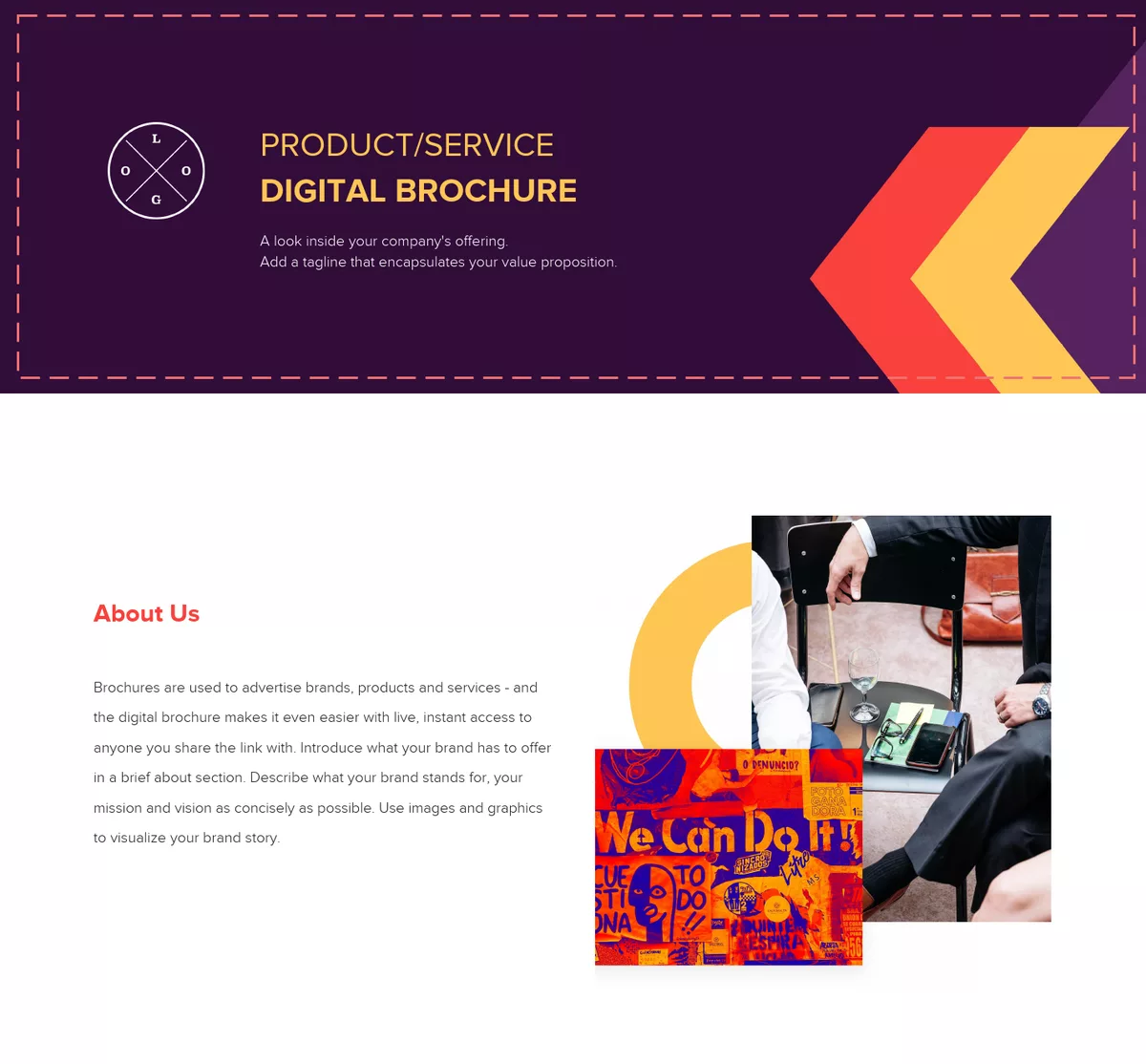
Create a cover image with a clear, engaging message.
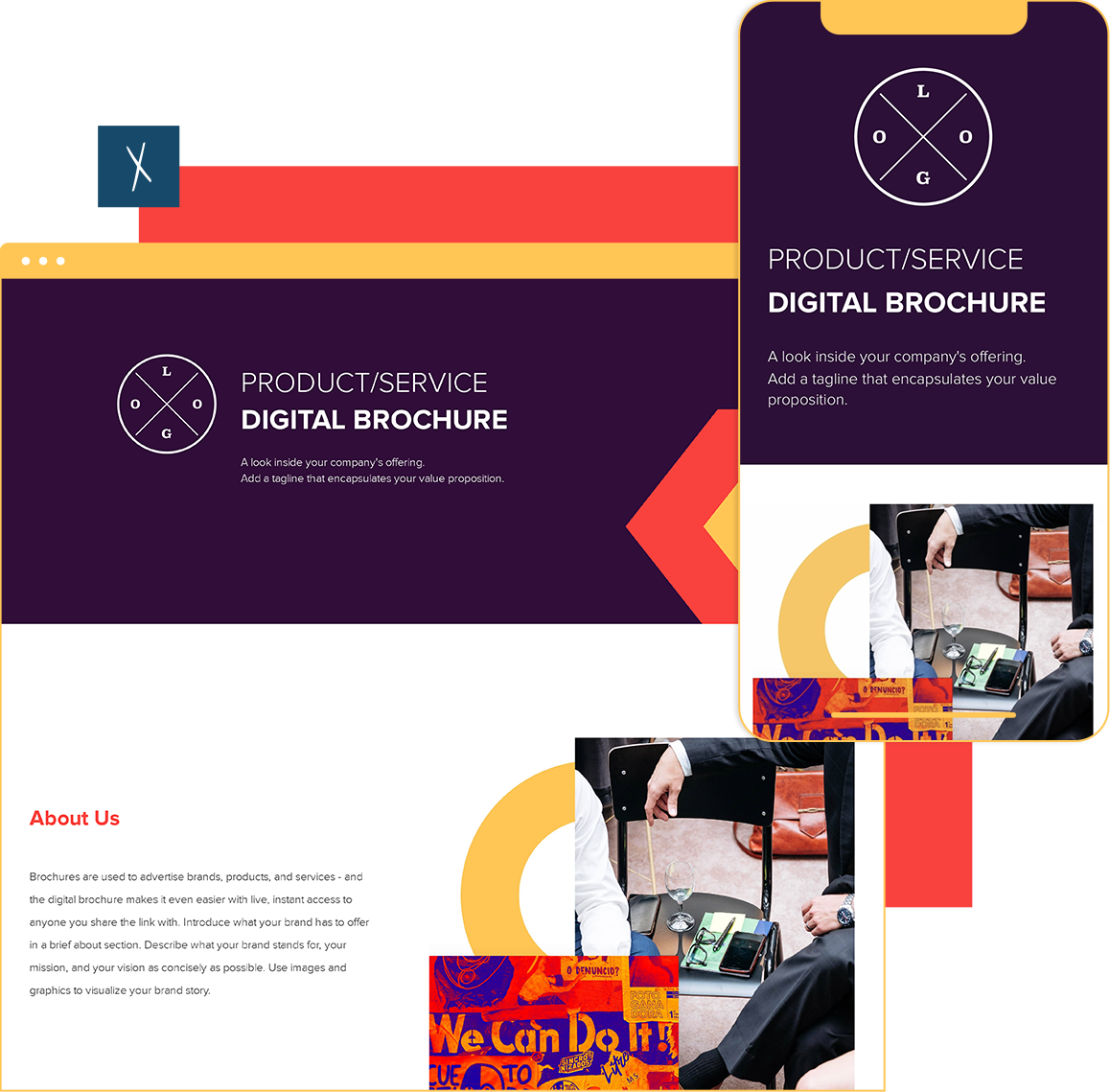
Be sure to include your logo and a background image that captivates the audience and aligns with your branding. Add the name of your product or service and a tagline that encapsulates your value proposition.
How to Make a Digital Brochure | Step 2
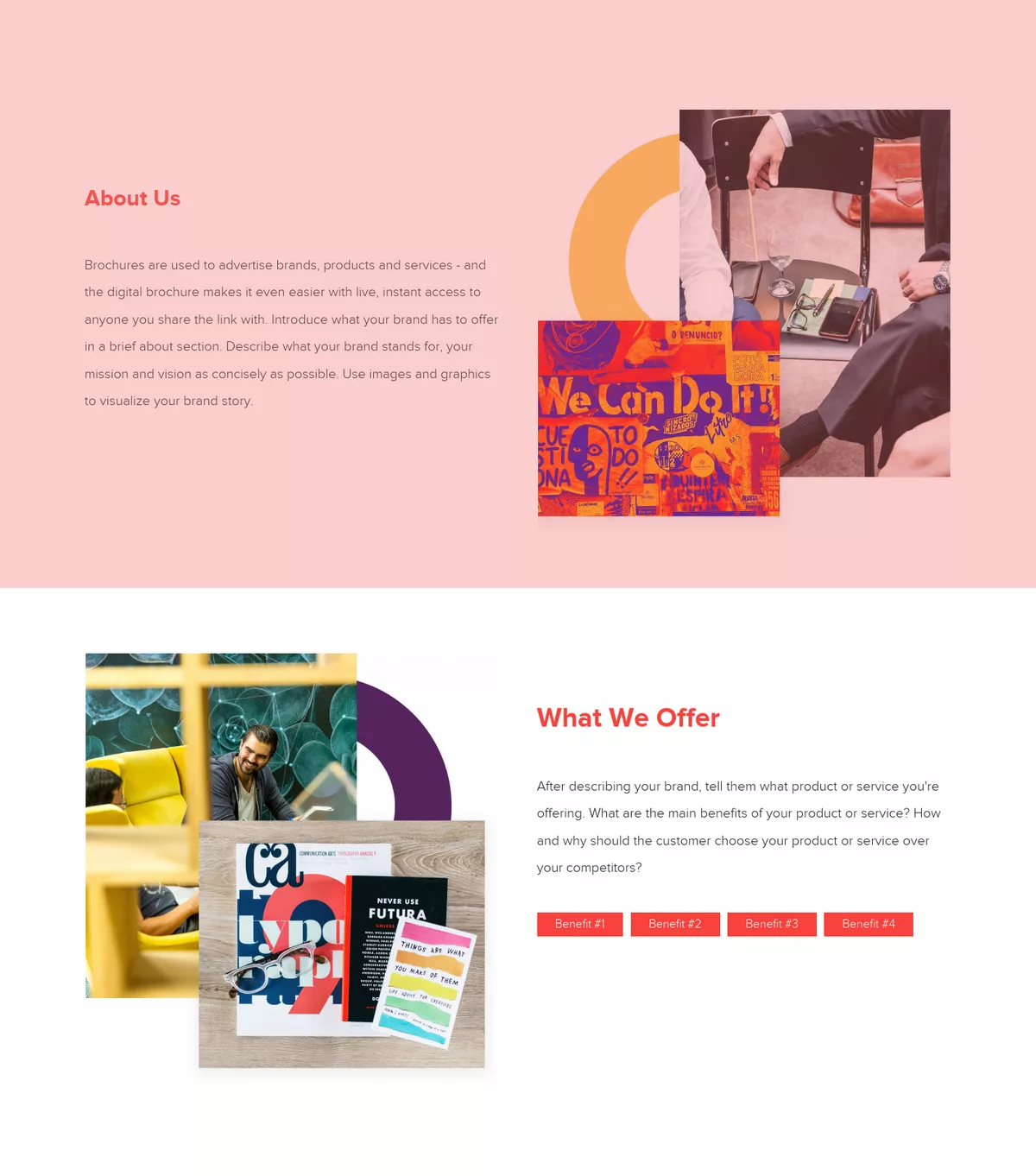
Concisely describe your brand mission
Introduce what your brand has to offer in a brief about section. Describe what your brand stands for, your mission and vision as concisely as possible. Use images and graphics to visualize your brand story.
- Make the main content of your brochure swimmable by using descriptive headers. And keep paragraphs to a maximum of four lines, subheadings for every two to three paragraphs, and incorporate lists and bullet points.
- Don’t use more than two or three colors and fonts.
- One of the most important elements of your brochure design is the call to action. It needs to be prominent in your brochure because it leads to the action you want your clients to take (the purpose of the brochure).
How to Make a Digital Brochure | Step 3
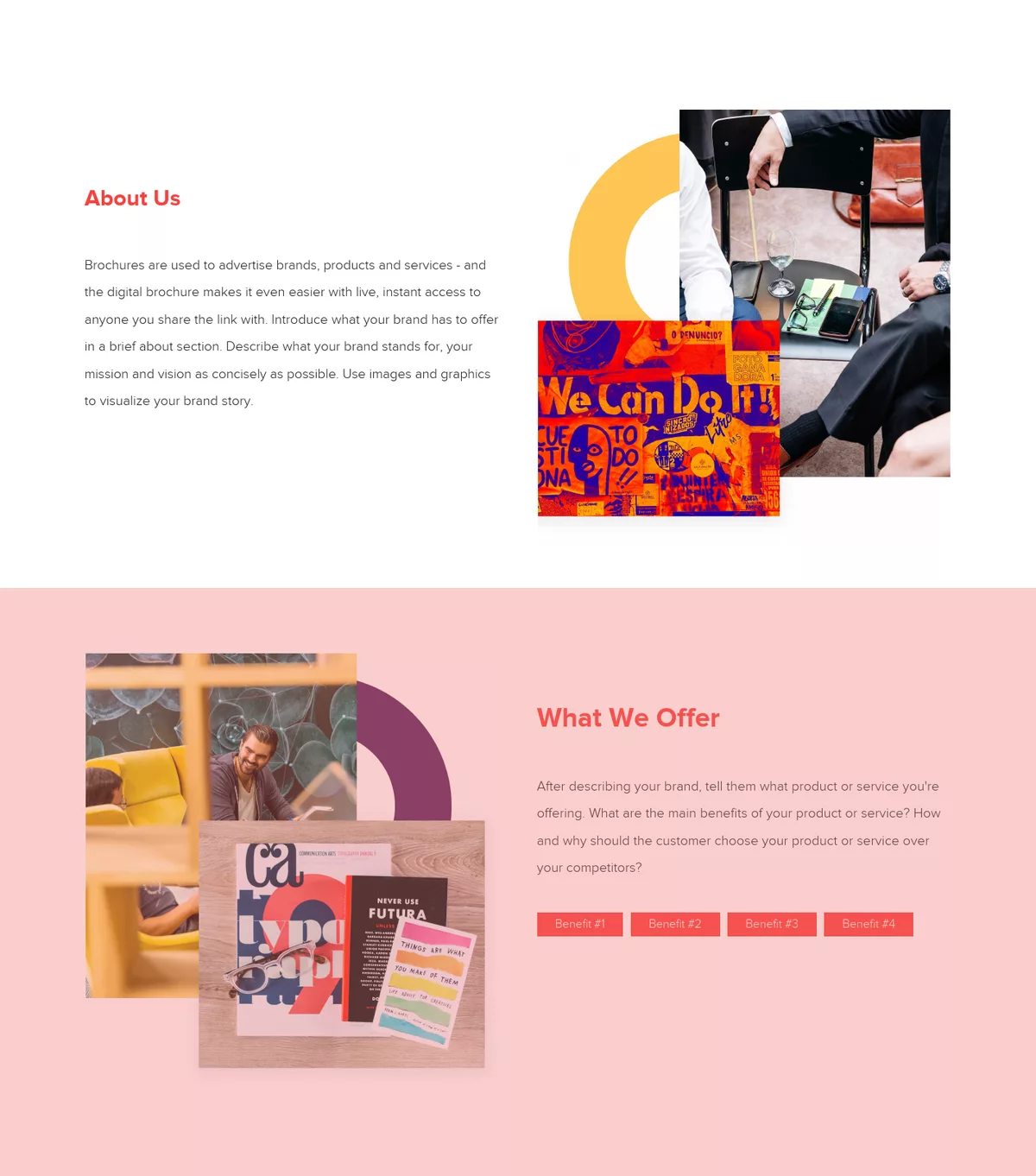
Clearly explain your product or service and key benefits
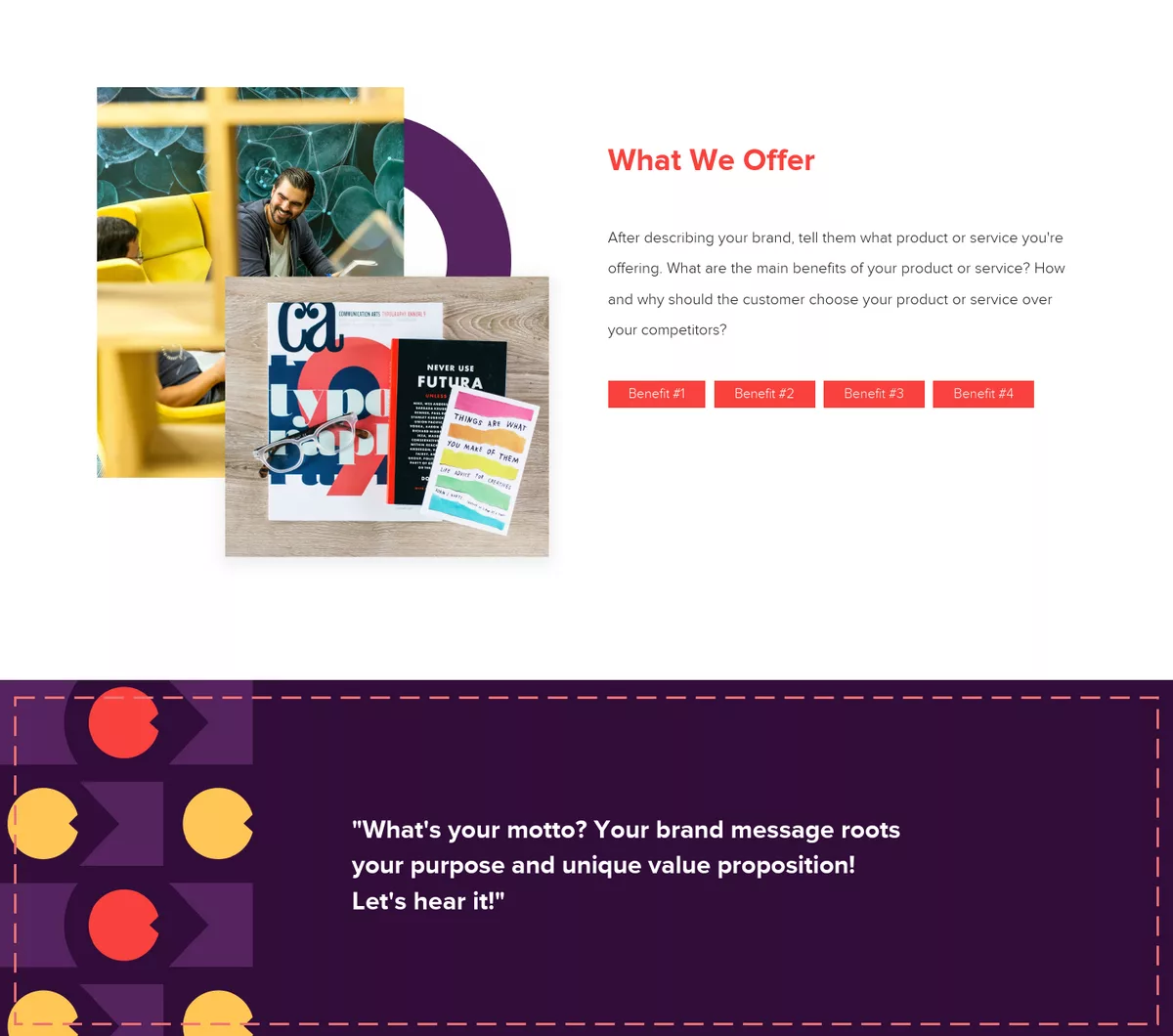
After introducing your brand, describe the product or service you’re offering. How and why should the customer choose your offering ove the competitors? Use sub headers and incorporate lists, bullet points or Xtensio’s tag module to visually outline what the main benefits of your product or service are.
How to Make a Digital Brochure | Step 4
Add a quote that highlights your value proposition.
Visuals are key in the brochure. Break sections up by using background colors or images. And highlight your value proposition with a quote or tagline to break up larger blocks of paragraph text. “What’s your motto? Your brand message roots your purpose and unique value proposition! Let’s hear it!”
How to Make a Digital Brochure | Step 5
Feature your packaging and add a clear call-to-action.
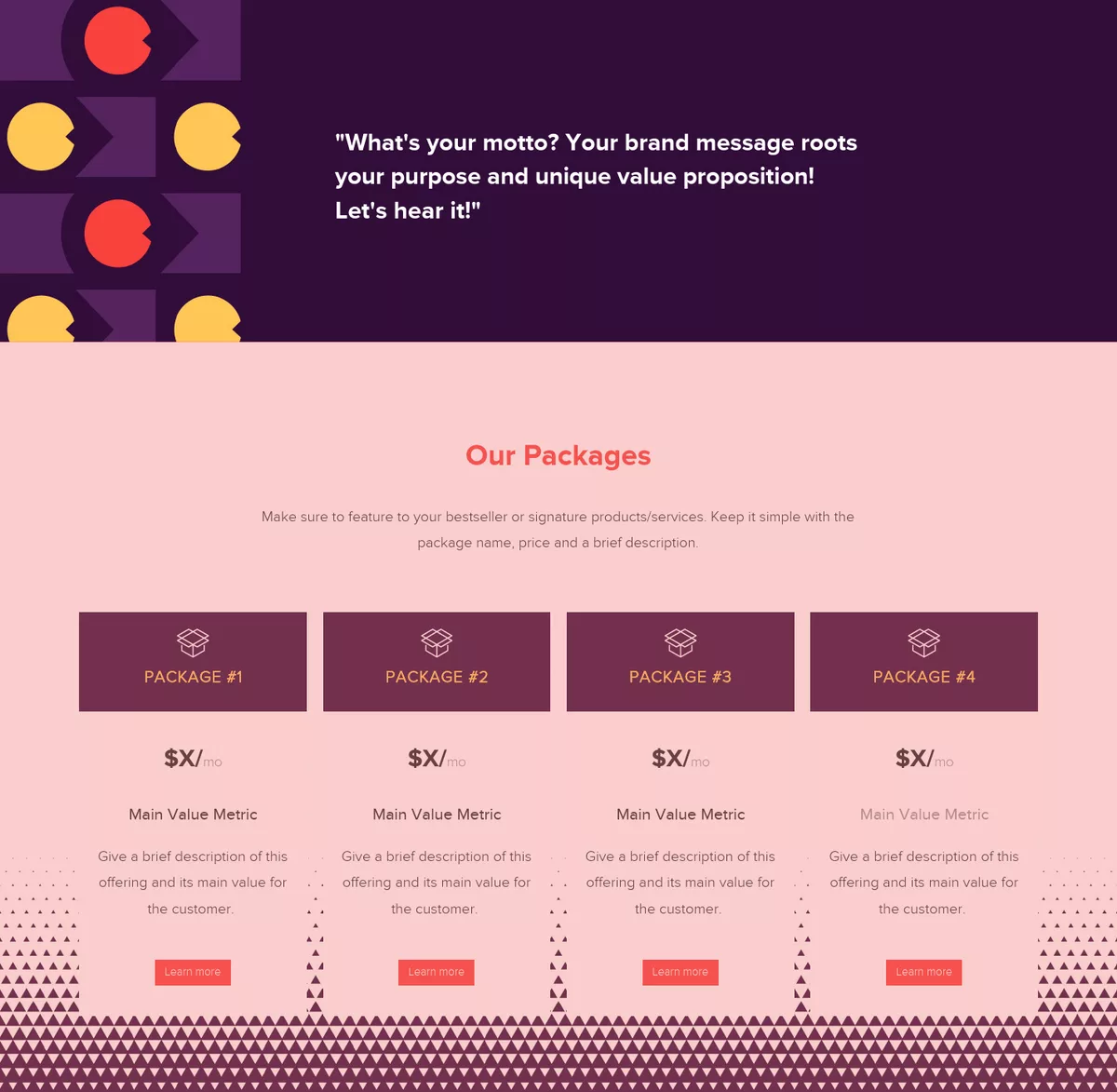
This is the most important element of your brochure design. You need a clear call-to-action to lead your clients to the next steps (i.e. the purpose of the brochure!). Make sure to feature your bestseller or signature products/services. Keep it simple with the package name, price and a brief description.
Quick Tip: Use Xtensio’s pricing strategy exercise template to help you define your product or services pricing packages.
How to Make a Digital Brochure | Step 6
Include a footer with your company’s contact information
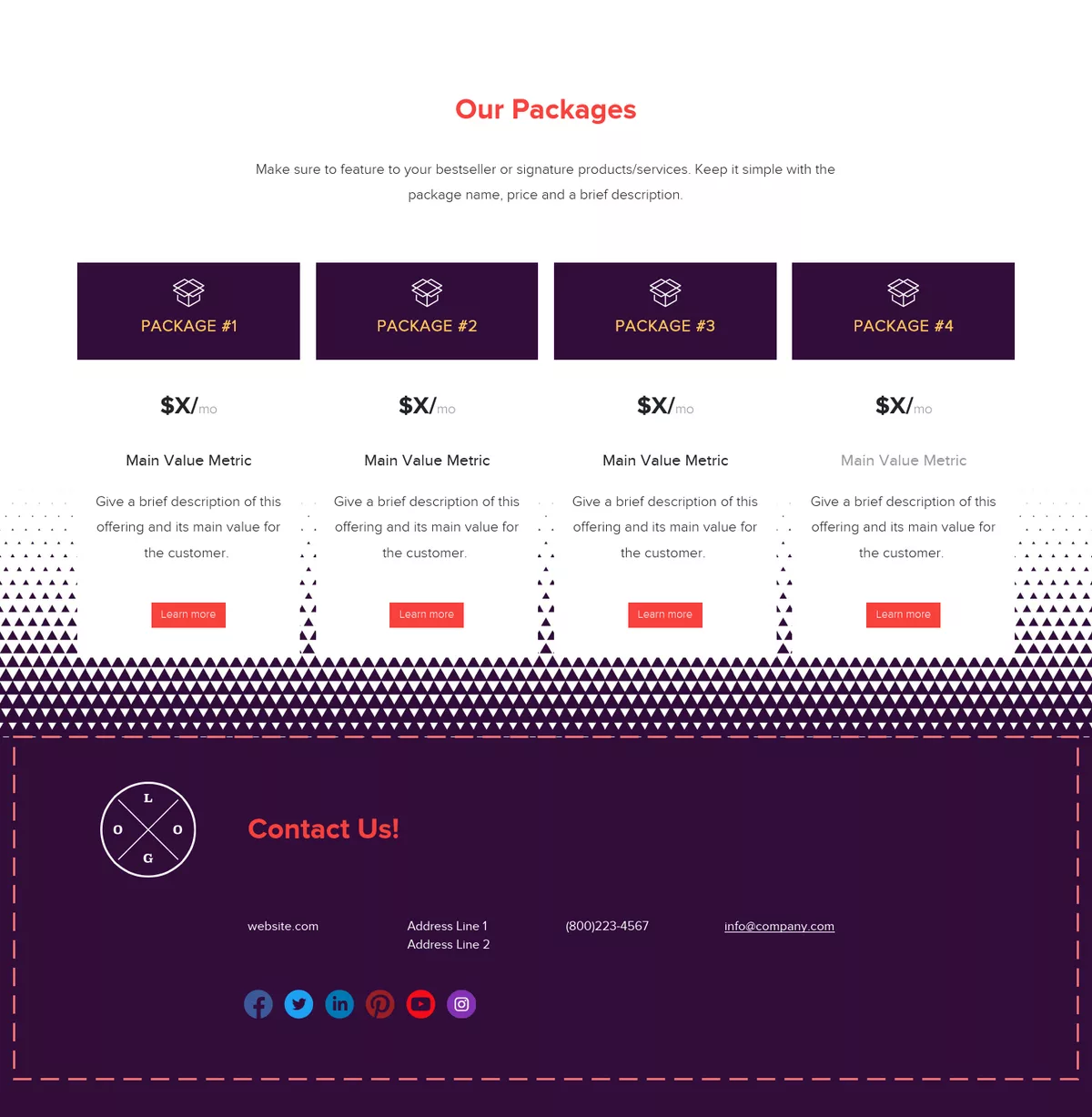
Your footer should include your logo again and all contact information: phone number, address, website, email…any way potential clients can get in touch with your team. You can also use the social module to add a visual element that links to your social profiles.
Share your digital brochure as a link, monitor and evaluate
When you’ve finished creating your brochure with Xtensio’s editor, you can send the live link to your folio to share it as a responsive webpage (and add password protection). The template is adaptable just like other Xtensio tools, it can and should be repurposed, revisited, and revised as your products and services evolve.
Written by

Design, manage and share beautiful living documents… easily, together. Explore Xtensio
- Click and edit anything… together.
- Customize to match your branding.
- Share with a link, present, embed or download.
Digital Brochure vs PDF Brochure vs Website Landing Page
Before you start designing, it helps to understand how a digital brochure compares to other common formats. Each serves a different purpose, and choosing the wrong one can cost you engagement.
A digital brochure is an interactive, multi-section document you share as a link. Recipients open it in their browser, scroll through visual layouts, click embedded media, and always see the latest version. It works best when you need to present detailed information (product lines, service packages, property listings) in a visually rich format that you can update after sending.
A PDF brochure is a static file that recipients download to their device. Once downloaded, the reader sees a frozen snapshot. If you update pricing, swap an image, or fix a typo, you need to re-export the PDF and re-send it to everyone. PDFs work for print-ready materials and situations where offline access matters, but they create version confusion the moment your information changes.
A website landing page is a single, conversion-focused page built to drive one specific action: sign up, book a demo, or make a purchase. Landing pages are excellent for advertising campaigns, but they are not designed to hold the depth of content a brochure needs. They typically have minimal navigation, a single CTA, and no multi-page structure.
Here is a quick comparison:
- Best for detailed product/service overviews: Digital brochure
- Best for print distribution: PDF brochure
- Best for single-action conversion: Landing page
- Easiest to keep current after sharing: Digital brochure (shared as a live link, updates without re-sending)
- Best for tracking who viewed it: Digital brochure (with engagement analytics built in)
If your goal is to create a polished, multi-section piece that you send to prospects, partners, or stakeholders and want to keep it accurate over time, a digital brochure is the right format. You can build one in minutes with a digital brochure template and share it as a live link that stays current.
5 Digital Brochure Mistakes That Lose Readers
A beautiful design does not guarantee engagement. These five mistakes are responsible for most digital brochure drop-offs, and every one of them is preventable.
1. Too much text per section. Digital brochures are visual-first documents. When a section has more than 150 words of unbroken text, readers skip it entirely. Break content into short paragraphs, use bullet points, and let images carry the narrative. Each section should make one point clearly.
2. No visual hierarchy. If every section looks the same, nothing stands out. Use size, color, and spacing to guide the reader’s eye. Headlines should be significantly larger than body text. Key statistics or quotes deserve their own visual treatment. Without hierarchy, readers feel lost and leave.
3. Broken links or outdated information. Nothing damages credibility faster than a price that changed last quarter or a team photo featuring someone who left the company. This is where static PDFs create real problems. With a living digital brochure shared as a link, you can update any detail at any time, and every recipient sees the current version without needing a new file.
4. No clear call to action. Every brochure needs to answer one question for the reader: “What should I do next?” Whether it is booking a call, requesting a quote, or visiting a specific page, make the CTA obvious. Place it at the end of each major section, not just at the very bottom.
5. Requiring a download instead of sharing a link. When you attach a PDF to an email, you add friction. The recipient has to download, find the file, and open it. Many mobile users abandon downloads entirely. A live link opens instantly in any browser, loads on any device, and lets you track who actually viewed your brochure and for how long.
Digital Brochure Best Practices by Industry
The best digital brochures are tailored to what the audience expects. Here is how different industries use brochures effectively, with specific structural tips for each.
Real estate: Property tour brochures. Real estate brochures should lead with high-resolution images of the property, followed by key details (square footage, price, location, amenities). Embed a map or virtual tour link if available. Include a section for comparable properties and a clear CTA to schedule a showing. The key advantage of a digital format here is that you can update availability and pricing the moment something changes, so you never send a prospect a listing that is already under contract.
Travel and hospitality: Destination guides. Travel brochures work best as visual stories. Use full-width images of destinations, break itineraries into day-by-day sections, and include pricing tiers side by side. Add embedded videos of locations when possible. The live link format lets you update seasonal pricing, add new excursions, or swap out sold-out packages without creating a new brochure each time.
Education: Program overviews. University and training program brochures should organize information by program, with clear sections for curriculum, faculty, outcomes, and application deadlines. Include testimonials from current students or alumni. Because application deadlines and tuition rates change each cycle, sharing the brochure as a link you update once ensures prospective students always see accurate information.
B2B services: Capability showcases. Service firms (agencies, consultancies, IT providers) use brochures to demonstrate expertise. Lead with the problems you solve, not the services you offer. Include two or three case study summaries with measurable results. Add a section for your process or methodology, and close with a clear next step. Organize deliverables by client type or project in workspaces, and share each capability brochure as a live link you can reuse and update across proposals.
Nonprofits: Impact reports and fundraising. Nonprofit brochures should balance emotional storytelling with hard data. Open with a compelling story of impact, follow with key metrics (funds raised, communities served, programs launched), and close with a donation or volunteer CTA. Use engagement analytics to see which sections donors spend the most time on, so you can optimize future outreach.

Create and deliver beautiful work, professionally.
Build, brand, and deliver living documents your clients actually engage with.



Join 409,687 professionals delivering work with Xtensio.