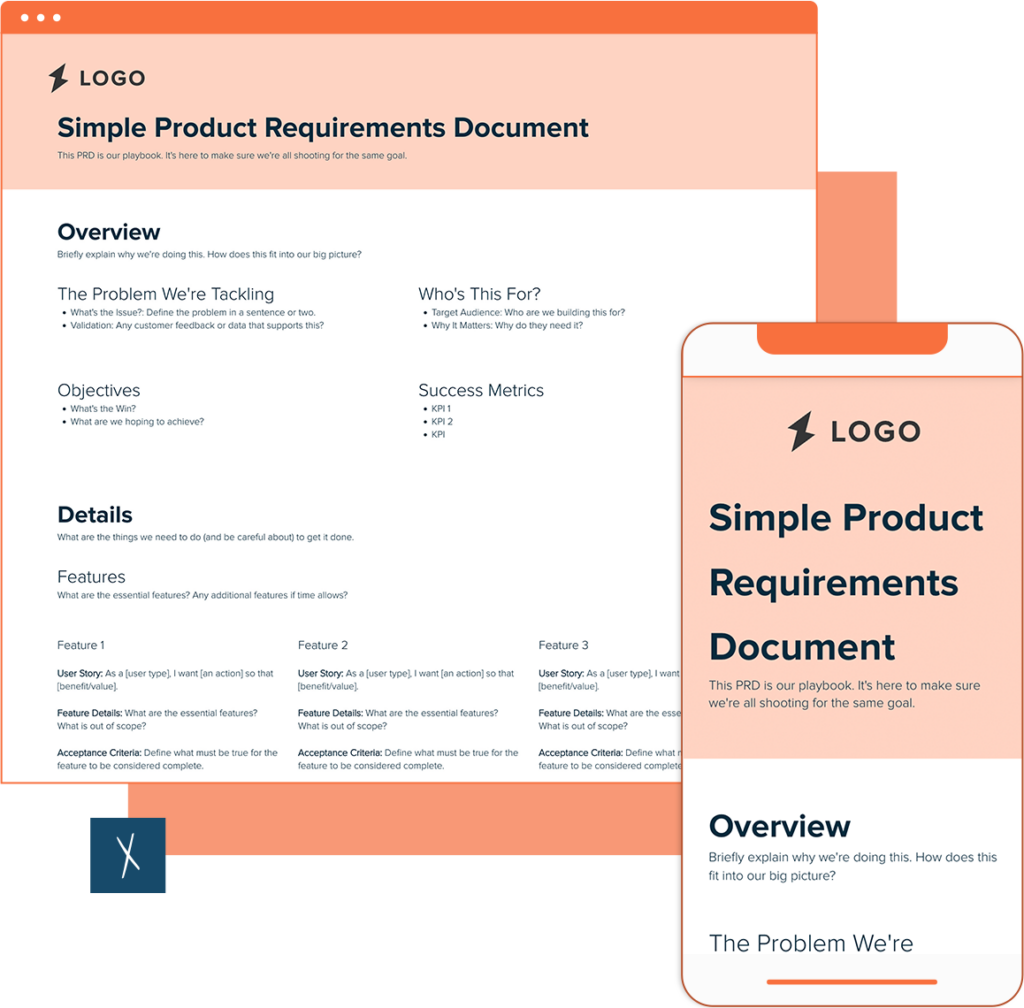
Simple Product Requirements Document Template
A Product Requirements Document (PRD) serves as a lighthouse, guiding the project through the phases of its life cycle. However, crafting a PRD can sometimes feel like navigating through a storm. Here’s where our Simple Product Requirements Document Template steps in, acting as a compass to steer your project in the right direction.
Beautiful living documents, built like web pages.
Join 409,969 professionals using Xtensio.
Xtensio is the workspace for professional deliverables.
Make one deliverable today—then build a repeatable system for every client and project.
This is where teams create, collaborate, organize, and deliver the documents that run their work.
Everything stays on-brand, current, and ready to share.

Organize every deliverable
Keep strategy, sales, marketing, and client docs together by workspace.
Create fast, stay consistent
Start from 200+ templates or AI drafts, then apply your brand kit.
Collaborate in the doc
No more “final_v7.pdf” loop.
Standardize across deliverables
Apply your brand kit + reusable modules so every deliverable matches.
Improve what you send
See engagement, iterate, and reuse what works across projects.
Exploring the Anatomy of Our Simple PRD Template
This template isn’t just a document; it’s a narrative of your project’s journey. Let’s explore its segments:
- The Playbook Overview:
- This section is the essence of why the project exists. It’s about painting the big picture that everyone can visualize and rally around.
- Addressing The Core Problem:
- Define the problem succinctly, backed by customer feedback or supporting data.
- Identifying the Target Audience and Why It Matters:
- Know who you are building for and why it’s crucial for them.
- Setting Clear Objectives and Success Metrics:
- Lay down what success looks like through achievable objectives and measurable Key Performance Indicators (KPIs).
- Detailing Essential and Additional Features Through User Stories:
- Break down the features into user stories, outlining the benefits, essential characteristics, and acceptance criteria for each.
- Anticipating Risks, Roadblocks, and Contingencies:
- Foresee potential hurdles and have a Plan B ready.
- Establishing a Timeline and Communication Channels:
- List major milestones and ensure everyone stays in the loop with regular updates.
- Open Questions:
- A section to address any lingering uncertainties or to explore further discussions.
Benefits of Utilizing a Simple PRD Template
The simplified structure of our PRD template clears the fog often associated with project initiation. It fosters clear communication, ensures an efficient project kick-off, and minimizes the chances of overlooked requirements, making the project’s pathway less rocky.
Comparing Alternatives: Why Our Template Triumphs
Our template stands tall due to its simplicity, comprehensiveness, and user-centric approach:
This is a living document that you can keep up to date. It is easy to customize and flexible to share in any way you’d like. Xtensio also makes it easy for you to keep your PRDs organized as your projects evolve and progress.
The Xtensio Ecosystem
Our Simple PRD Template isn’t just a standalone document; it’s a part of a larger Xtensio ecosystem. Real-time collaboration and editing become a breeze, making project management a less daunting task. This document is a part of the Product Management templates and resources.
Getting Started
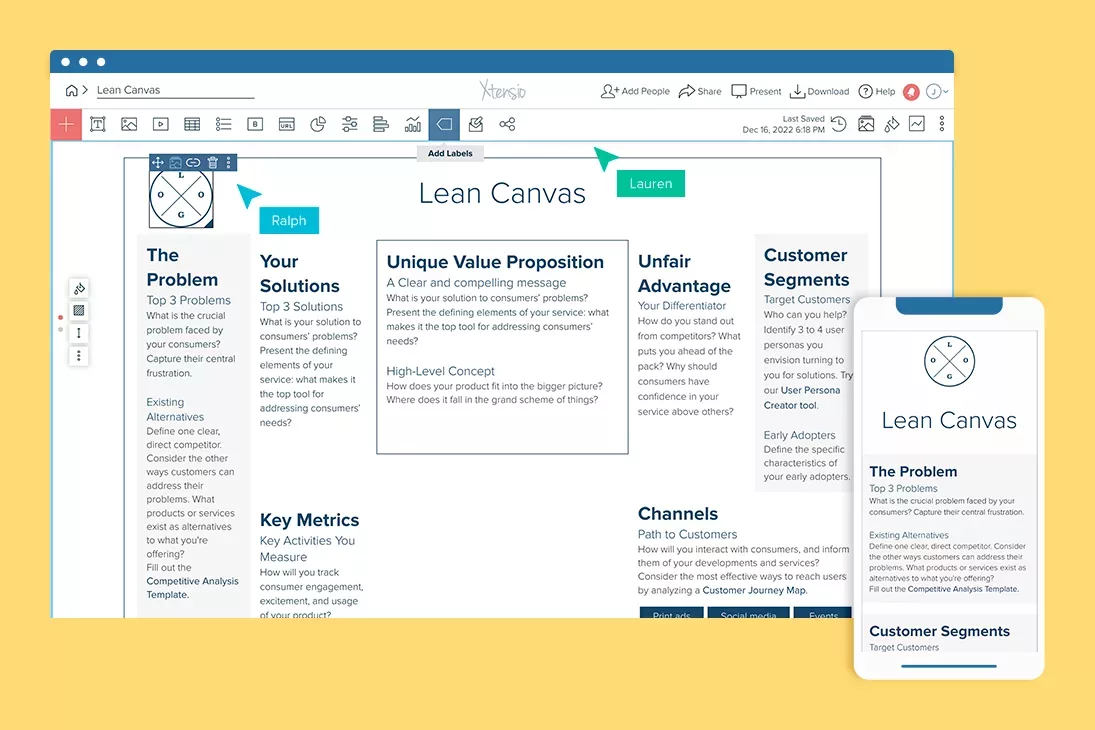
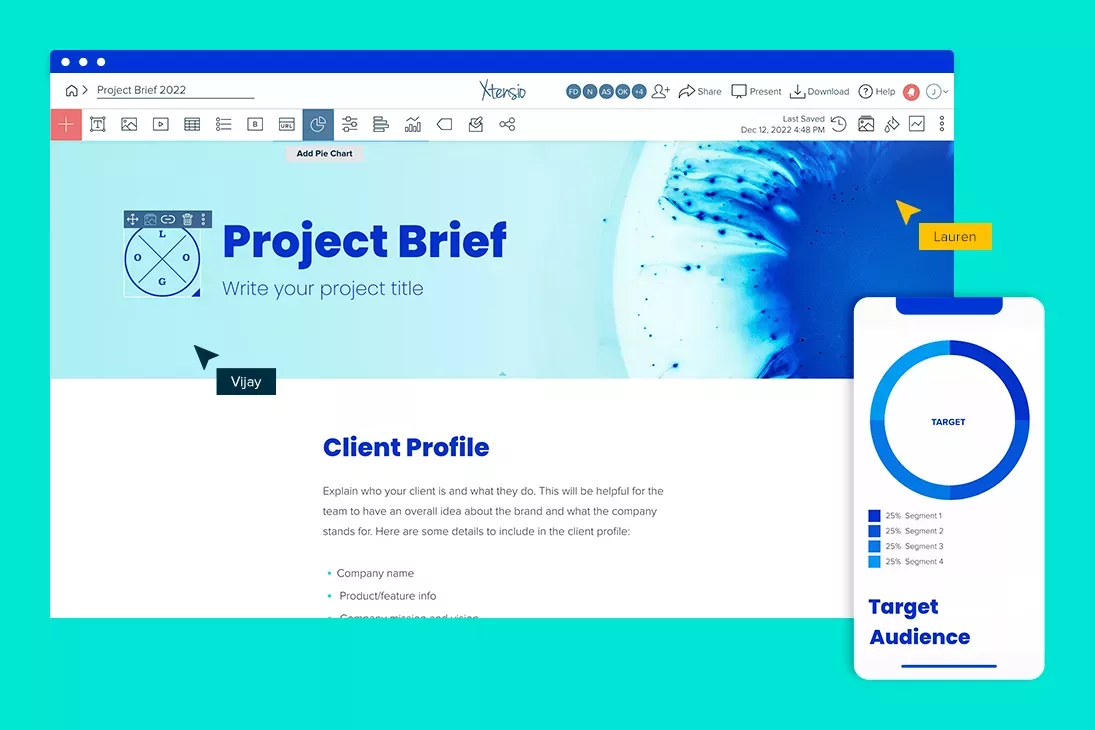
Accessing the template is straightforward. Just click and start editing. Plus, our guidance on filling out the template ensures you hit the ground running. You can add your team members and work together and share your PRD with a link, embed it, or send it as a PDF. you can even present it as a full-screen slideshow!
PRD vs MRD vs BRD vs User Story
Product teams use several requirement document types, and confusing them is one of the fastest ways to derail a project. Each document answers a different question and serves a different audience. Understanding the distinctions prevents scope confusion and ensures the right people get the right level of detail.
Product Requirements Document (PRD) answers “What are we building and how should it behave?” A PRD describes features, user stories, acceptance criteria, and success metrics. Its primary audience is engineering, design, and QA. The PRD is the source of truth for what gets built in a given release cycle. It lives at the feature level and changes as the product evolves.
Market Requirements Document (MRD) answers “Why should we build this?” An MRD describes the market opportunity, customer pain points, competitive landscape, and revenue potential. Its primary audience is leadership and strategy teams. The MRD precedes the PRD: it justifies the investment before anyone defines features. A product manager writes the MRD to secure a green light, then writes the PRD to guide execution.
Business Requirements Document (BRD) answers “What does the business need this system to do?” A BRD describes high-level business objectives, compliance requirements, and organizational constraints. Its primary audience is executives, legal, and finance. BRDs are common in enterprise environments where procurement, regulatory, or cross-departmental alignment is required before development begins. The Business Requirements Document template is purpose-built for this use case.
User Story answers “What does one user need to accomplish?” A user story follows the format “As a [role], I want [action] so that [benefit].” User stories are the smallest unit of requirements. They live inside a PRD and map directly to development tasks. A single PRD feature may contain 5 to 15 user stories, each with its own acceptance criteria.
The hierarchy works like this: MRD (market justification) feeds into BRD (business constraints) feeds into PRD (feature specification) feeds into user stories (development tasks). Most startups skip the MRD and BRD and go straight to the PRD. Most enterprises require all four. Regardless of which documents your organization uses, keeping them connected in a single workspace prevents the disconnect that happens when requirements live in disconnected files.
5 PRD Mistakes That Cause Scope Creep
Scope creep is rarely caused by bad intentions. It is caused by vague requirements that leave room for interpretation. Here are five PRD mistakes that consistently lead to scope expansion, delayed timelines, and frustrated teams.
1. Vague acceptance criteria. “The search feature should be fast” is not an acceptance criterion. “Search results load within 200ms for queries under 50 characters” is. Every feature in your PRD needs criteria that a QA engineer can test without asking the product manager what “good” means. If your acceptance criteria require a conversation to interpret, they are not acceptance criteria.
2. No prioritization framework. When every feature is labeled “must-have,” nothing is prioritized. Use MoSCoW (Must, Should, Could, Won’t) or a simple impact-effort matrix to rank features. The PRD should make it clear which features ship in v1, which are deferred to v2, and which are out of scope entirely. Without this, stakeholders will continue adding “just one more thing” because the PRD never drew a line.
3. Missing stakeholder sign-off. A PRD that engineering starts building before leadership approves is a PRD that will be rewritten mid-sprint. Include a sign-off section with names, roles, and dates. Make the sign-off a gate: no development starts until the listed stakeholders confirm alignment. This feels like bureaucracy until the first time it saves you from rebuilding a feature because a VP had a different vision.
4. Requirements without success metrics. “Build a dashboard” tells engineering what to build but not how to measure whether it worked. Every feature should connect to a metric: adoption rate, task completion time, error reduction, or revenue impact. When you review the PRD at the end of the cycle, success metrics tell you whether the feature achieved its purpose or just shipped.
5. Treating the PRD as a frozen document. A PRD written in week one and never updated is a fiction by week four. Requirements change as the team learns from prototypes, user testing, and technical discovery. The PRD should be a living deliverable that updates as decisions are made. Share it as a live link so every stakeholder always sees the current version, not a PDF snapshot from three sprints ago.
How to Write Requirements Different Teams Actually Use
A PRD that only the product manager understands is a PRD that will be misinterpreted by every other team. The best PRDs are written once and read by four different audiences, each of whom needs different information from the same document. Here is what each team looks for and how to structure your requirements to serve all of them.
Engineering needs technical specificity. Engineers read the PRD to determine what to build and how it should behave. They need: API specifications or integration requirements, data models, performance benchmarks, edge case handling, and dependencies on other systems. Write requirements in testable language. Instead of “users can upload files,” write “users can upload files up to 25MB in PNG, JPG, or PDF format with a progress indicator and retry on failure.” The PRD how-to guide walks through this level of detail step by step.
Design needs user context. Designers read the PRD to understand the user’s goal, not just the feature specification. They need: user personas or segments, the problem the feature solves, the user’s workflow before and after the feature, and any brand or accessibility constraints. Include a “User Context” paragraph for each major feature that describes who is using it, when, and why. This gives design enough context to make informed decisions about layout, interaction patterns, and information hierarchy.
QA needs test boundaries. QA engineers read the PRD to write test cases. They need: acceptance criteria (positive and negative), boundary conditions, supported browsers or devices, and expected error states. A PRD that defines the happy path but ignores error handling creates a gap QA will discover during testing, when it is most expensive to address. Define both “it works when…” and “it fails gracefully when…” scenarios.
Leadership needs business impact. Executives and stakeholders read the PRD to understand why this work matters. They need: the business objective this feature supports, the expected impact on a key metric, the resource investment required, and the timeline. Keep this section at the top of the PRD. If a VP has 5 minutes, the business case should be the first thing they read, not the last.
The structure that serves all four audiences: start with business context and success metrics (leadership reads this), then user context and personas (design reads this), then detailed feature specifications with acceptance criteria (engineering and QA read this). Keep the PRD in a shared workspace where all four teams can comment, flag questions, and see updates in real time. A PRD that sits in someone’s local drive serves nobody.
Conclusion
Our Simple Product Requirements Document Template is more than just a document; it’s your project’s success blueprint. Embrace clarity, foster teamwork, and steer your project to success by using our template today.

Related to the Simple Product Requirements Document Template
Fully customizable templates that you can make your own.

Jerome Katz
Professor of Entrepreneurship @

Jake Peters
CEO @

Robin Bramman
Founder and Chief Brand Mixologist @

Alix Han
VP Product Experience @

Marc Anthony Rosa
Product Manager @

Anna Yunker
Content Strategist @

Robin Eyre
Owner @

Adam Sher
CEO @

Humma Arshad
Salesforce Project Manager @

Create and deliver beautiful work, professionally.
Build, brand, and deliver living documents your clients actually engage with.






Join 409,969 professionals delivering work with Xtensio.